When I first started out as a CNG cylinder inspection equipment supplier over a decade ago, I spent countless late nights on industry forums, sitting across from station managers who’d just had their operations halted by a failed cylinder inspection, and even poring over half-translated manuals from overseas equipment makers. The question that came up in almost every one of those conversations, without fail, was: “Are there actual standards for this stuff, or am I just guessing if my equipment is doing the job right?” Back then, the answer felt messy—patchy, region-specific, and full of gaps that left both small station operators and suppliers like me navigating a minefield. Today, that’s shifted a lot, but navigating those standards is still one of the most important parts of what I do for every customer, whether they run two stations or two hundred. CNG Cylinder Inspection Equipment CNG
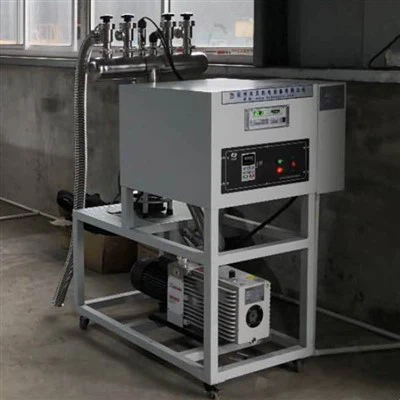
Let’s start with the core: CNG cylinder inspection isn’t some random task you make up on the fly. It’s not just “check if the cylinder looks dented” or “hit it with a tool and hope it doesn’t crack.” These cylinders hold highly pressurized gas—any failure can be catastrophic, so every step, every tool, every procedure has to line up with strict, recognized industry standards. The two big global frameworks that most of the world follows come from two organizations that’ve been leading this work for decades: the International Organization for Standardization (ISO) and the United Nations Economic Commission for Europe (UN ECE).
ISO, for example, has a whole suite of standards built specifically for CNG cylinder inspection. ISO 11439 is the big one for the cylinders themselves, laying out all the design and manufacturing rules for high-pressure gas cylinders used for automotive and industrial use. But the real meat for inspection equipment is ISO 14229, which covers the in-service inspection of high-pressure gas cylinders. That standard doesn’t just say “inspect every five years”—it spells out exactly what equipment you need to use for each test, and how that equipment has to perform. For example, the ultrasonic testing tools used to check for internal corrosion or wall thinning on CNG cylinders have to meet specific sensitivity thresholds laid out in ISO 14229. If your ultrasonic machine can’t pick up a 0.5mm defect at a depth of 10mm, it’s not just “bad”—it’s out of compliance with the standard. Then there’s the pressure testing equipment, which has to be calibrated to within 0.25% accuracy of the test pressure for CNG, which usually runs between 200 and 250 bar. Even the software that records test data for traceability is covered in ISO standards now, since falsified or incomplete inspection records are one of the biggest causes of non-compliance at regulatory audits.
The UN ECE plays a huge role too, especially for regions with heavy cross-border vehicle traffic, like Europe, the Middle East, and parts of Asia. UN Regulation R110 is specifically dedicated to CNG equipment, including cylinders and the inspection tools used to keep them safe. What makes R110 different is that it’s a harmonized standard, meaning if your inspection equipment meets R110 requirements, it’s recognized across all 58 UN ECE member states (and a lot of non-member states too, which have adopted it voluntarily). For example, R110 mandates that all visual inspection tools for CNG cylinders include a high-resolution camera capable of capturing clear images of cylinder serial numbers, date codes, and any external damage like dents or scratches—something that a lot of cheap, uncertified inspection tools skip, but which is required for every audit.
But here’s the catch: global standards are the baseline, but almost every country and region has their own additional requirements that you have to follow. As a supplier, that’s one of the first things I walk through with a new customer—if you’re based in Texas, your inspection equipment has to meet requirements from the Pipeline and Hazardous Materials Safety Administration (PHMSA), not just ISO. If you’re in China, you have to line up with standards from the General Administration of Quality Supervision, Inspection and Quarantine (AQSIQ). If you’re in Brazil, it’s the National Institute of Metrology, Quality and Technology (INMETRO). These regional standards almost always align with the global ones, but they add extra layers of specificity. For example, PHMSA in the U.S. requires that all CNG cylinder pressure testing equipment has a built-in fail-safe mechanism that stops the test immediately if pressure drops below a set threshold, a rule that’s not explicitly called out in ISO 14229. I’ve had customers come to me with equipment that worked in Europe, only to find it didn’t pass U.S. regulatory audits because of that extra fail-safe requirement. That’s why I never sell just a one-size-fits-all inspection machine—we customize every unit to meet the exact regulatory standards of the region the customer operates in.
A common misconception I run into is that all inspection equipment is created equal, and that as long as it does the job of checking a cylinder, it’s compliant. That’s just not true. The standards don’t care if you think your machine works—they care about third-party certification. For example, ISO 14229 requires that all ultrasonic inspection equipment for CNG cylinders has to be tested and certified by an accredited third-party body, like TÜV or UL, to prove it meets the specified sensitivity and accuracy levels. Last year, I had a small independent station owner come to me because he’d bought a cheap imported ultrasonic machine online for half the price of our certified units. He’d been using it for six months, and had just failed a state audit because the machine’s sensitivity was 30% lower than what’s required in his region. The auditor marked 12 of his cylinders as unsafe, and he faced fines that were 10 times what it would’ve cost to get a certified unit from our company. That’s the reality of these standards—they’re not just suggestions; they’re legal requirements, and using non-compliant equipment puts your business, your customers, and the general public at risk.
Another big part of the standards that most people don’t talk about is equipment calibration and maintenance. The standards don’t just set rules for when you buy the equipment—they set rules for how you keep it working properly for its entire lifespan. ISO 14229 says that pressure testing equipment has to be calibrated at least once every 12 months, and ultrasonic tools have to be tested for accuracy before every use. That’s why all the inspection equipment we supply comes with a scheduled calibration reminder system, and free annual calibration checks for the first three years of ownership. I had a customer in Mexico City a couple years ago skip calibrating his pressure testing machine for 18 months, and his readings were off by 2 bar. That led him to incorrectly reject three perfectly good cylinders, and keep a fourth that had a small, undetected wall defect. He lost thousands of dollars in unnecessary cylinder replacements, and almost had an accident when the defective cylinder was put back into service. That’s how serious these maintenance rules are, and that’s why the standards tie every part of the equipment’s lifecycle together, not just its initial purchase.
As an equipment supplier, one of my biggest roles is not just selling a machine—it’s guiding customers through the maze of standards so they don’t have to figure it out on their own. A lot of new operators in the CNG space don’t even know that different cylinder types require different inspection tools. For example, Type 1 cylinders (all-metal steel cylinders) require different pressure testing protocols than Type 4 cylinders (composite cylinders with a plastic liner and fiber wrap), and the equipment has to be calibrated for each type. The ISO standards spell that out, but it’s easy to miss if you’re just starting out. Last year, we helped a logistics company that runs a fleet of 500 CNG trucks set up their inspection program, and we had to adjust their equipment to meet both UN ECE standards (since they operate cross-border into Germany and France) and PHMSA standards for their home base in Ohio. That meant adding a dual-data logging system that could store records in both English and Spanish, and meet the different traceability requirements of each regulatory body. Without that, they would’ve faced delays at border checks and failed U.S. state audits.
I also want to be honest about gaps that still exist in the standards, because no system is perfect right now. For example, as more CNG stations start using smart, connected inspection equipment, there’s no global standard yet for how that data is shared between stations, regulatory bodies, and fleet operators. Some regions require data to be stored in a local server, while others allow cloud storage, and there’s no unified format for the records. That’s a gap I’m working with other industry stakeholders to fill, because the last thing anyone needs is for a standard to hold back innovation that makes CNG operations safer and more efficient. But even with those gaps, the core standards for CNG cylinder inspection equipment are solid, well-established, and designed to prevent accidents.

At the end of the day, if you’re operating a CNG station, whether you run one truck or a hundred, the question isn’t “are there standards?”—it’s “do I have the right equipment that meets those standards, and do I understand how to use it correctly?” For my team and I, that’s what this business is about. We don’t just sell machines—we provide the guidance, support, and certified equipment that keeps our customers compliant, keeps their operations running, and keeps the people who use CNG safe. If you’re looking for inspection equipment that meets the latest global and regional standards, or you have questions about what’s required for your specific location, we’d be glad to help you navigate every step.
Liquefied Gas Cylinder Inspection Equipment References:
- International Organization for Standardization. ISO 14229:2020, Gas cylinders — In-service inspection of transportable gas cylinders. ISO, Geneva, 2020.
- United Nations Economic Commission for Europe. Regulation No. 110 — Uniform provisions concerning the approval of components of alternative fuel systems and of their installation on vehicles. UN ECE, Geneva, 2022.
- U.S. Department of Transportation Pipeline and Hazardous Materials Safety Administration. 49 CFR Part 180 — Continued qualification of cylinders. PHMSA, Washington D.C., 2021.
- General Administration of Quality Supervision, Inspection and Quarantine of the People’s Republic of China. GB 19533-2011, In-service inspection of compressed natural gas cylinders for road transport. AQSIQ, Beijing, 2011.
Hangzhou Dongbei Mechanical And Electrical Equipment Co., Ltd.
Hangzhou Dongbei Mechanical And Electrical Equipment Co., Ltd. is one of the most professional cng cylinder inspection equipment cng manufacturers and suppliers in China. Please feel free to buy high-grade machinery made in China here and get pricelist from our factory. All customized machines are with high quality and low price.
Address: No.6, Gangcheng Shang, Group 15, Sanbaitan Village, Renhe Street, Yuhang District, Hangzhou, Zhejiang Province, China
E-mail: antonioshen@126.com
WebSite: https://www.db-cylinder.com/
