Alright, let’s break down what a reducer butt fusion fitting actually is—no stuffy textbook jargon, just straight talk from someone who’s spent way too many years working with these things. If you’ve ever wondered why certain pipe systems don’t all run the same size, or how industries move fluids efficiently without wasting money, this is for you. I’m not here to give you a thesis; I’m here to explain it like I would to a mechanic, a plumber, or even a new guy on the jobsite asking, “What the hell is this weird connector?” Butt Fusion Fittings
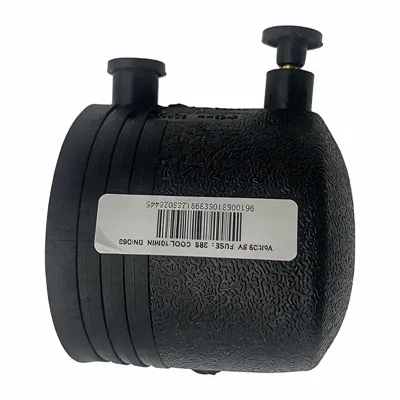
First off, let’s start with the basics you probably already know: butt fusion (let’s just call it BF from here on out, ‘cause no one wants to say the whole thing every time) is the process where you heat two plastic pipe ends, push ‘em together, and they melt into one solid piece—no leaks, no clamps, nothing that’s gonna fail on you a year later. It’s the gold standard for HDPE, PP, PVDF pipes, especially in water, gas, and chemical industries. But here’s the thing: not all pipe is the same size. Maybe you have a big 12-inch main water line feeding a neighborhood, but then you need to hook up a smaller 6-inch line to a fire hydrant. Or a chemical plant where a 10-inch process line narrows down to 4 inches to feed a specific reactor. You can’t just jam two different-size pipes together and hope they stick—they’re different diameters, so their ends won’t fit right, and you’ll get a weak point, or even a leak. That’s where a reducer butt fusion fitting comes in.
Wait, so what exactly is it? Let me put it simply: a reducer BF fitting is a short plastic component (same material as the pipes you’re working with—super important, by the way, you can’t mix materials for BF) that connects two pipes of different sizes, using the same butt fusion process you use for straight pipes. Unlike a regular coupling (which connects two same-size pipes), this one’s got two ends: one big, one small, sloped just right in the middle to make a smooth, gradual transition. No sudden jumps that cause turbulence, no spots where flow gets messed up, no weak joints. It’s literally the middleman that makes different-size pipes play nice together.
Let’s get a little more specific so it doesn’t sound like I’m making it up. The design of these fittings isn’t random. The transition from the larger to smaller end (we call that the “contour” or “taper”) is calculated based on the pipe material, the pressure the system’s gonna handle, and the flow rate. For example, in HDPE water lines, a 12-inch to 6-inch reducer won’t have a steep taper—you need at least a 4:1 taper ratio for most applications, so the change in diameter isn’t too sharp. If you make it too steep, when you butt fuse it, the heat might not distribute evenly, or the flow will create turbulence that erodes the pipe over time. That’s the stuff we spend hours testing in our warehouse lab, not just slapping something together and sending it out.
Now, why would you use this instead of, say, cutting down a pipe and making your own joint? I hear that all the time from new guys trying to save a buck. Let me tell you why that’s a terrible idea, and why reducers are non-negotiable for most projects. First, consistency. When we manufacture reducers, every single one is machined to exact tolerances—so the big end is perfectly round, the small end is exactly the right OD (outer diameter) and ID (inner diameter) to match your pipes. If you cut a pipe yourself, you might not get the end square, or the taper wrong, which leads to a bad fusion. Second, pressure ratings. Our reducers are tested to hold up to the same pressure as the pipes they connect—way higher than anything a hand-cut joint will ever do. If you’re working on a gas line for a refinery, you can’t afford a joint that bursts at 100 psi when it’s rated for 200. Third, safety. BF fittings (including reducers) are designed to eliminate crevices where bacteria can build up, which is huge for drinking water systems. A hand-cut joint? It might have gaps that let mold or harmful bacteria grow—something you’d never pass a health inspection for.
Let’s talk about the different types, ‘cause not all reducers are created equal. There are two main categories: concentric reducers and eccentric reducers. Concentric means the center lines of both ends line up—so it looks like a smooth funnel if you’re looking end-on. Eccentric means the center lines are offset, which we use when we don’t want air or gas to get trapped in the system. For example, in a gas pipeline, if you use a concentric reducer, air could pool in the top of the small end and cause flow issues, or even lead to condensation that freezes and clogs the line. Eccentric reducers have the flat side on the top (so no air) or the bottom (so no solids like sludge get stuck)—that’s the kind of detail we think about when we make these. We don’t just sell one size and call it a day; we work with our customers to figure out which type they need for their specific setup.
Now, a question I get all the time: how do you actually butt fuse a reducer? It’s not that different from fusing two straight pipes, but there are a couple of tricks you need to know. First, you have to make sure both ends of the reducer are cut square—same as pipes. We always recommend using a saw specifically for plastic pipe fittings, not a hacksaw that’ll leave jagged edges. Next, set up your BF machine: the heater plate has to be the right temperature for your material (HDPE is around 200-230°C, PP is a bit lower, PVDF higher). Clamp the reducer in the machine, along with the two pipes you’re connecting, so everything’s aligned. Let the ends melt for the exact amount of time—too short, and they won’t fuse; too long, and you’ll get too much “mushroom” (that excess plastic that squeezes out when you push them together). Then, remove the heater plate quickly, push the pipe and reducer together with the right amount of pressure, and hold it there until it cools. It’s not rocket science, but it’s got to be precise—one wrong setting, and you’re redoing the whole joint.
Let’s talk about where these are used, ‘cause it’s not just water lines. We sell reducers for all kinds of industries: municipal water and wastewater treatment plants (they need to connect the big main lines to smaller feeder lines), oil and gas (process lines that narrow or widen based on pressure), chemical processing (handling different chemicals that might corrode metal fittings, so plastic is the way to go), even mining (slurry lines that carry heavy materials, so plastic is durable enough to handle the abrasion). Last year, we shipped a bunch of 18-inch to 10-inch concentric HDPE reducers to a mine in Wyoming for their slurry system—they needed to narrow the line to speed up the flow without causing wear on the pipes. That’s the kind of real-world use that makes these fittings matter, not just a random part.
Now, let’s get to the stuff that matters to you, the person reading this who probably needs one. When should you reach for a reducer BF fitting instead of other options? If you’ve got two different-size plastic pipes that need a permanent, leak-proof joint—this is your guy. It’s way better than using a mechanical coupling (those have rubber gaskets that can fail over time, especially if exposed to UV or harsh chemicals) or welding metal (which is way more expensive and can corrode). It’s also way faster than fabricating your own reducer on-site—our reducers are ready to go, so you don’t have to waste time cutting, shaping, and testing something that might not hold up.
Wait, let’s clear up a common misconception: some people think BF reducers are only for small sizes, but that’s not true. We make ‘em from 2-inch all the way up to 48-inch—big enough for main pipeline projects, small enough for residential plumbing. The only limit is the material: we only use virgin plastic (no recycled stuff that might have impurities messing with fusion), so you know every reducer is consistent. We also test every batch for fusion strength—we pull them apart in our lab to make sure they hold up way beyond the rated pressure, so you don’t have to worry about callbacks.
Now, if you’re still not sure if a reducer is what you need, or what size or type to get, that’s what we’re here for. We’ve been doing this for years, so we know the ins and outs of every application. A lot of our business comes from repeat customers who trust us ‘cause we don’t just sell a part—we help them figure out the right part for their job. Maybe you’re working on a new subdivision and need reducers for the water lines, or a factory that’s expanding their chemical system. Just reach out, tell us what you’re working with, what sizes you need, what material, and what pressure it’s under, and we’ll hook you up. No sales pitches, no confusing jargon, just straight answers and good quality fittings.
Let’s wrap this up so it’s not too long, but let’s make sure you get the point. A reducer butt fusion fitting isn’t just a random connector—it’s a precision-made, tested component that makes different-size plastic pipes work together smoothly, safely, and permanently. It’s the unsung hero of any plastic pipe system, whether you’re laying a small residential line or a giant industrial pipeline. You can try to cut corners and make your own, but you’ll end up spending more time fixing leaks, redoing joints, and dealing with callbacks than if you just use the right fitting from the start.
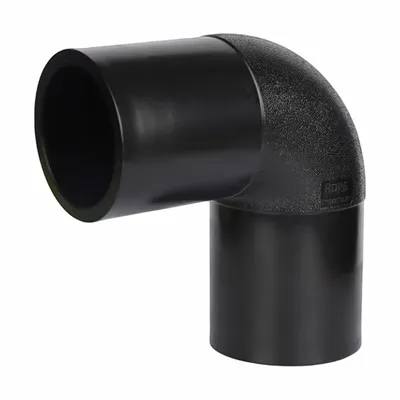
If you’re in the market for reducer BF fittings, or you just have questions about butt fusion in general, don’t hesitate to get in touch. We’re here to help you get the job done right, on time, and on budget. No matter how big or small your project is, we’ve got you covered.
References
ASTM IPS Inch Butt Fusion Fittings ASTM D2657: Standard Practice for Electrofusion and Butt Fusion Joining of Polyolefin Pipe and Fittings
ISO 21307: Plastic pipes and fittings for pressure applications—Butt fusion joining of polyolefin pipes and fittings
Plastics Pipe Institute (PPI) Handbook of Polyethylene Pipe, 2nd Edition
Qingdao Polyfusion Machinery Co., Ltd.
As one of the most professional butt fusion fittings manufacturers and suppliers in China, we have world-leading production equipment and strong manufacturing capabilities. Please feel free to buy bulk high quality butt fusion fittings from our factory.
Address: Chengyang Industry Zone, Chengyang, Qingdao, Shandong, China
E-mail: export01@qdpolyfusion.com
WebSite: https://www.polyfusionfittings.com/
