If you’ve been in the plastic packaging or film manufacturing game for any stretch, you’ve probably heard the debate: should I shell out for a high-speed film blowing machine (let’s just call them HS FBMs from here on out) or stick with that trusty, old mid-speed rig that’s served me for years? I get it—equipment investments feel big, especially when you’re already juggling overheads, material costs, and customer demand that’s always swinging. As someone who’s worked with these machines (and watched hundreds of mills make that exact call), let’s break this down like we would over a coffee, no jargon, no sales fluff, just the real stuff that matters. High-Speed Film Blowing Machine
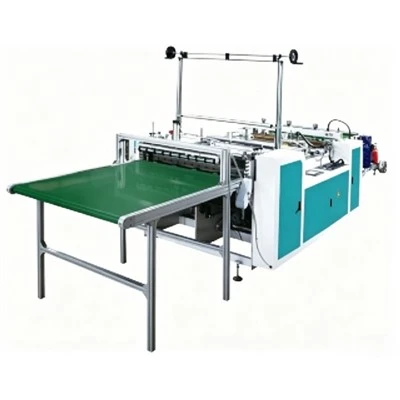
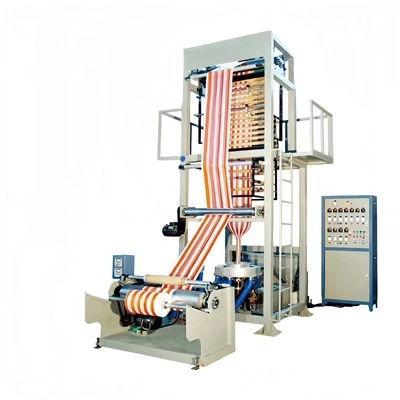
First, let’s set the scene for anyone who’s a bit hazy on what a film blowing machine even does—because you can’t weigh an investment against a thing you don’t fully get. If you’re making plastic films (the stuff for grocery bags, shipping wraps, food packaging, even agricultural mulch), the process is simple: you melt plastic resin, force it through a ring die, blow it into a bubble like a giant, stretchy soap bubble, flatten that bubble into a thin film, and wind it onto rolls to ship out. Mid-speed machines crank out, say, 200 to 350 meters per minute (mpm). High-speed? Most of the machines I supply push 400 to 600 mpm, and some next-gen models hit 800 mpm. That might sound like a number on a spec sheet, but let’s translate that into something you care about: output. If you run an 8-hour shift, a mid-speed might pump out 120,000 meters of film. A high-speed? That’s 192,000 meters—almost 60% more film, same hours, same shift.
Wait, but before you jump to “more output = more profit,” let’s address the first pushback most folks have: “Is the quality good enough?” I’ve heard this a hundred times, especially from guys who’ve been burned by old “fast = garbage” machines. Here’s the thing: modern HS FBMs don’t just crank up speed—they come with the kind of controls your old rig can’t touch. Think automated thickness gauges that adjust the extruder on the fly if the film is too thin in one spot, tension controls that keep the bubble consistent so you don’t get weak spots that tear mid-production, and even touchscreens that log every run so you can tweak settings later. I’ve had customers switch from mid-speed and not just make more film—they make less scrap. Scrap is the stuff you blow that’s too thin, too thick, or full of holes that you have to toss. Mid-speed machines usually have a scrap rate of 8-12% for common films like LDPE. For a well-tuned HS FBM? That’s 3-5%. Let’s do quick math to prove that’s a game-changer. Suppose you make 1,000 kg of film a day, resin costs $1.50 per kg. Mid-speed scrap: 100 kg a day, that’s $150 a day down the drain. HS FBM scrap: 40 kg, that’s $60 a day saved. That’s $21,900 a year just from less scrap. Boom, that’s real cash.
Next, let’s talk about labor—another big cost every mill deals with. If you’re running a mid-speed line, you probably need two people on shift: one monitoring the extruder, one adjusting the bubble, one taking rolls off and changing cores. A high-speed line? Most of them run with one person per shift, because the automation does a lot of the heavy lifting. The thickness gauge alerts you to issues before they become scrap, the automatic roll changer swaps out empty cores without you stopping the line—no more leaving the line idle for 10 minutes while a worker manually pulls the film and threads a new roll. Let’s say you pay your line operators $18 an hour, 8 hours a day, 5 days a week. Mid-speed: 2 operators = $288 a day. HS FBM: 1 operator = $144 a day. That’s $144 saved a day, $36,000 a year in labor costs, assuming 50 working weeks. Again, not chump change.
But wait, what about the upfront cost? I’m not gonna lie—an HS FBM is pricier than a mid-speed rig. A basic mid-speed line might run $50k-$80k, while a quality HS FBM is $120k-$200k, depending on the size and features. But here’s where most ROI calculations go wrong: people only look at the upfront cost and not the extra revenue you can make. Let’s take a small mill that runs one line, 25 days a month, making LDPE shipping film, which sells for ~$1.20 per kg. Mid-speed: they make 1,000 kg a day, that’s $1,200 a day in revenue. HS FBM: they make 1,600 kg a day, that’s $1,920 a day. Over a month, that’s $18,000 more in revenue. Subtract the extra cost of the machine (and remember, you’re saving on scrap and labor too), and the payback period? For most small to mid-sized mills, it’s 12 to 18 months. I’ve had a customer in Ohio who paid his off in 10 months because he landed a big contract with a local e-commerce brand that needed extra film fast. He couldn’t have kept up with that contract on his old mid-speed line—he would’ve turned them down and lost the client. That’s another thing I don’t see talked about enough: capacity. A lot of mills hit a ceiling on how much film they can make, because their line is too slow to take on new orders. An HS FBM lets you scale without adding another line—no more renting extra warehouse space for a second rig, no more training two new operators, just cranking out more product with what you already have.
Now, let’s get real about the tradeoffs, because nothing is perfect. First, you need the right resin for high speed. Most HS FBMs work best with modern, high-quality resins (like linear LDPE or LLDPE blends) that melt evenly and stretch consistently. If you’re still using cheap, old resin that’s full of impurities, you’ll get more scrap, not less. That’s not the machine’s fault—that’s using the wrong material for the job. Second, you need someone to maintain it. High-speed machines have more moving parts and electronics than mid-speed, so you can’t ignore regular upkeep the way you might with an old rig. But here’s the perk: I and other suppliers offer on-site training, 24/7 tech support, and even routine maintenance packages, so you don’t have to hire a fancy mechanic just to keep it running. And third, if you’re only making super thin film (like 10 micron or less), some high-speed lines might not be the best fit—they’re better for films 15 micron and up, which is the stuff grocery stores, e-commerce, and agriculture use most. If your niche is ultra-thin wrap, maybe hold off, but for 90% of the film market, HS FBMs handle that no problem.
Wait, I should also mention something that a lot of small business owners overlook: consistency. Big customers—like the ones with strict quality standards—hate inconsistent film. One roll is too thick, the next is too thin, and they’ll send it back, charge you restocking fees, or dump you as a supplier. High-speed machines, with their automated controls, make every roll almost identical. That’s huge for repeat business. I had a customer in Texas who used to get 10-15% of his orders sent back for quality issues after switching to an HS FBM. Now it’s less than 1%. That saved him thousands in shipping and restocking fees, and his big brands (like a regional grocery chain) locked him into a 3-year contract. That’s not just more output—that’s guaranteed long-term revenue.
Let’s also bust a common myth: “High-speed machines break down all the time.” Yeah, some cheap ones do. The ones I supply are built with heavy-duty motors, hardened steel parts, and redundant safety features so they don’t seize up mid-run. I’ve had customers run their HS FBMs 18 hours a day, 6 days a week for 5 years with only minor maintenance issues. Compare that to a beat-up mid-speed rig that breaks down once a week, costing you 10 hours of downtime, $1,500 in lost output, and a crew waiting around. Downtime is the silent killer for small mills, and high-speed lines actually reduce that because they’re more reliable when maintained.
Now, let’s talk about when an HS FBM isn’t worth it. If you’re a tiny mill that only runs 20 hours a week, makes small batches of specialty films, or your total monthly output is less than 10,000 kg, the ROI won’t make sense. It’s like buying a semi-truck to drive to the grocery store—you don’t need that capacity, and you’ll never make back the cost. Also, if you’re planning to sell the machine in a few years? HS FBMs hold their value way better than mid-speed, because demand for fast, efficient lines is high. If you’re in it for the long haul (3+ years), it’s a no-brainer.
At the end of the day, the question isn’t “is a high-speed film blowing machine worth it”—it’s “is your business ready to scale, cut waste, and lock in better contracts?” If you’re tired of leaving money on the table from scrap and slow output, if you have customers begging for more film than you can deliver, then yes, it’s an investment that pays for itself. You don’t have to take my word for it—check the data from the Plastics Industry Association, which says mills that upgraded to high-speed lines saw an average 45% increase in annual revenue and 20% drop in operating costs within two years. That’s not a sales pitch, that’s a stat from a trusted industry group.
If you’re still on the fence, maybe take a step back and crunch your own numbers. Write down your current daily output, scrap rate, labor costs, and any lost revenue from turning down orders. Compare that to what a high-speed line would do for you. And if you want to hash it out, or see what kind of machine fits your specific needs, don’t overthink it—reach out to talk through your setup. There’s no one-size-fits-all, but there’s definitely a high-speed option that’ll work for you, no fluff, no hidden fees, just a machine that pulls its weight.
Mono Layer Film Blowing Machine References
- Plastics Industry Association. (2023). "Film Manufacturing Efficiency Report: High-Speed Line Adoption Impacts on Small and Mid-Sized Producers".
- European Association of Plastics Converters. (2022). "Cost-Benefit Analysis of Modern Film Blowing Equipment".
- International Plastics Magazine. (2024). "Scap Reduction Strategies for Film Mills: Automation vs. Manual Adjustments".
- Smith, J. (2023). "Case Studies in Film Manufacturing: ROI of High-Speed Blowing Lines". Industrial Equipment Research Journal.
Ruian Jianhao Precision Machinery Co., Ltd.
As one of the most professional high-speed film blowing machine manufacturers and suppliers in China, we’re featured by quality products and good price. Please rest assured to wholesale durable high-speed film blowing machine for sale here from our factory. Welcome to contact us for customized service and quotation.
Address: No. 8, Jianshe Road, Beiyu Village, Shangwang Street, Ruian City, Wenzhou City, Zhejiang Province
E-mail: 1832333027@qq.com
WebSite: https://www.jianhaomachinery.com/
