If you’ve ever stood in front of a pipeline control station, wondering which valve to pick for your high-pressure application, you’ve probably asked yourself the same question I get every week at the shop: what’s the real difference between a high pressure ball valve and a gate valve? I’ve been selling high pressure ball valves for over a decade, and I’ve watched engineers and maintenance teams mix these two up more times than I can count. Most of the time, it’s not because they don’t know what valves do— it’s because both look like simple pipe plugs from a distance, and the “high pressure” label amplifies every small choice you make. Let me break this down the way I explain it to the guys who walk in with a notebook full of specifications. High Pressure Ball Valve
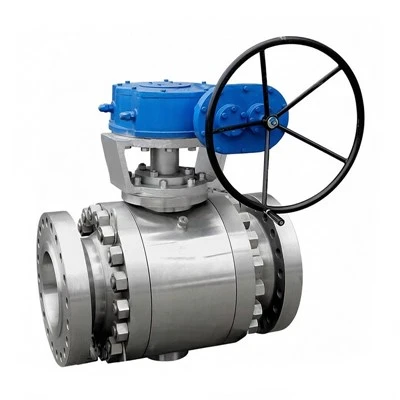
First, let’s start with the basics of how each valve works, because that’s where all their differences stem from. A high pressure ball valve, like the ones we stock, uses a hollow, perforated sphere inside the pipe body to control flow. When the handle is turned 90 degrees, the sphere twists so that its hole lines up with the pipe, letting fluid pass. Turn it another 90, and the solid part of the sphere blocks the flow completely. It’s a quarter-turn mechanism— fast, clean, and for the most part, it either works open or closed, with almost nothing in between.
A gate valve, on the other hand, uses a thin, wedge-shaped gate that slides up and down perpendicular to the pipe flow. When you turn the handwheel, a stem pulls the gate up into the valve body, opening a passage; turn it the other way, and it presses the gate down against a seat to shut off flow. It’s a linear motion, not a quarter-turn, and the gate never sits fully out of the flow path when open— it just moves above it. That’s the core mechanical difference, and it changes everything about when you use each one.
Let’s talk about pressure, because if you’re here, that’s probably why you’re looking at high pressure valves in the first place. Gate valves have been around for a long time, and for low to medium pressure applications, they’re solid. But when the pressure starts climbing— anything above 1,500 PSI, which is where our high pressure ball valves begin to shine— gate valves start to show their weaknesses. The wedge in a gate valve has to press against its seat with enough force to stop high-pressure fluid from leaking past. Over time, that constant pressure wears the seat and the gate down, especially if the fluid has any grit or debris in it. We’ve seen customers come back with gate valves that leak after a year of use in 2,000 PSI lines— the gate’s seal was compressed too hard, and it deformed.
High pressure ball valves don’t have that problem. The sphere in a properly engineered high pressure ball valve is pressed against soft (but heat-resistant) seats, usually PTFE or bronze, when closed. But because it only needs a 90-degree turn to seal, the force of the pressure helps push the sphere tighter against the seats— it’s a self-sealing effect, not just a manual push. That means at 10,000 PSI, the seal actually gets better, not worse, as pressure rises. We test every one of our high pressure ball valves at 1.5 times the rated pressure before it leaves the warehouse, and I’ve never had a customer report a seal failure at rated pressure. Gate valves, even high-pressure models, rely on the stem to tighten the gate every time you close it, which means more room for human error when turning the handwheel too tight or not tight enough.
Next, flow characteristics. This is where a lot of my customers regret picking a gate valve when they should have gone with a ball valve. When a gate valve is fully open, the flow path is almost as wide as the pipe itself— so flow is smooth, no turbulence, very little pressure drop. That’s a plus if you need full flow with no restrictions. But here’s the catch: gate valves are terrible for throttling. If you leave the gate partially open, the thin wedge acts like a speed bump in the pipe. Fluid hits the edge of the gate, creates turbulence, and over time, that erodes the gate and the seat. We’ve seen gate valves that were left half-open for flow control develop a hole in the wedge after 18 months because of that constant erosion. They’re basically on or off— anything in between is a quick way to break them.
High pressure ball valves, though, are great for partial flow, if you need it. That quarter-turn mechanism lets you stop at any point between fully open and fully closed, so you can adjust flow rate without the turbulence a gate valve creates. The hollow sphere doesn’t create the same sharp edge in the flow path; even when partially open, the fluid moves around the sphere smoothly. That makes ball valves perfect for applications where you might need to tweak flow occasionally, or for systems that run part-time. The only time a ball valve loses here is if you really do need 100% unrestricted flow— but even then, the difference in pressure drop between a fully open high pressure ball valve and a gate valve is tiny, especially at high pressure. Most pipe systems can’t tell the difference.
Now, durability and maintenance, which is a big one for anyone who’s had to replace a valve in a tight, hard-to-reach spot. Gate valves have a lot of moving parts: the stem, the gate, the seat, the handwheel. If there’s grit in the fluid (like in oil and gas lines, or water with sediment), that grit can get stuck between the gate and the seat, making it hard to turn the handwheel. I’ve had customers come to us with gate valves seized so tight they needed a pipe wrench to turn them, and by the time they got it free, the seat was already scratched, leading to leaks. And when a gate valve does break, you usually have to take the whole valve out of the line to fix it— not just replace a part.
High pressure ball valves are built simpler, with fewer moving parts. The sphere is inside the body, and the seats are replaceable, so if a seal wears out, you don’t have to swap the whole valve. Most of the time, you can do that maintenance without even removing the valve from the line. And because the mechanism is a quarter-turn, there’s less surface for grit to catch on. Sure, you have to lubricate the stem occasionally, but that’s a 5-minute job, not a full valve replacement. The biggest wear on a ball valve is the seats, which we engineer to last 10,000+ operations in high pressure lines— way more than a gate valve can handle.
Wait, but let’s not pretend gate valves don’t have a place. I don’t sell only high pressure ball valves, and I tell people that if you’re running a 300 PSI water line, a gate valve is cheaper and will last longer. The problem is when people stretch gate valves beyond their limit. For low-pressure, long-duration flow applications where you never need to throttle, gate valves work great. They’re less expensive upfront, and for 300 PSI, the seal is more than enough. But once pressure goes up, or you need to open and close the valve multiple times a year, or you might need to adjust flow occasionally, the high pressure ball valve is the clear choice.
I’ve seen this play out too many times. Last year, a customer came in with two gate valves for his 2,500 PSI compressor lines. Six months later, both were leaking— the seats had worn out from the high pressure, and the gates were scratched by small metal shavings in the line. We installed high pressure ball valves in their place, and a year later, they called to say they hadn’t had a single leak. The initial cost was a bit higher, but they saved thousands in downtime and replacement parts. That’s the thing about high pressure valves: the upfront cost is small compared to the cost of a leak or a valve failure. A leak in a high pressure line can shut down a whole operation for hours, and that downtime costs way more than the difference between a ball valve and a gate valve.
Another common mix-up: people think gate valves are better for “tight shut-off.” But in high pressure, that’s not true. A well-made high pressure ball valve will have a bubble-tight seal every time, because the pressure itself pushes the sphere against the seats. A gate valve, even when you think it’s fully closed, can have a small gap between the gate and the seat, especially after a few cycles. That’s why gate valves are often used where a tiny leak won’t cause a problem, like in low-pressure water systems. In high pressure lines, a small leak from a gate valve can turn into a big problem fast.
Let’s also talk about size, because if you’re working with large diameter pipes, that matters too. Gate valves are often larger for the same pipe size, because they need space for the gate to move up and down. High pressure ball valves are more compact, so they’re easier to install in tight spaces. That’s a big deal for refineries or chemical plants where pipe racks are cramped, and you can’t afford to take up extra space with a big valve.
I don’t want to make it sound like gate valves are obsolete. They’re a proven technology, and they’re perfect for their own use cases. But when you’re dealing with high pressure, the differences in mechanics, pressure handling, flow control, and maintenance all add up. A high pressure ball valve isn’t just a better gate valve— it’s a different tool for a different job.
If you’re still not sure which one you need, think about three questions: What’s your operating pressure? How often do you open and close the valve? Do you ever need to adjust flow in between open and closed? If your pressure is above 1,500 PSI, or you open and close the valve more than a few times a year, or you might need to throttle flow, go with a high pressure ball valve. If it’s low pressure, you only use the valve for on/off, and it’s in a place where you can easily replace it, a gate valve might work.
At the end of the day, I sell high pressure ball valves, but my job isn’t to just push my products. It’s to help people pick the right valve for their application, so they don’t end up with a leak, a seized valve, or downtime that costs more than the valve itself. If you’re working on a high pressure system and you’re not sure which valve will work for you, reach out to our team to discuss your specific needs. We can help you pick the right size, rating, and configuration to fit your line, no matter what you’re working on.
Metal Seated Ball Valve For further reading on valve design and high-pressure system requirements:
- Valve Engineering Handbook, 6th Edition, American Society of Mechanical Engineers
- Fluid Power Control Valves: Selection, Application, and Installation, CRC Press
- Industrial Valves: Selection, Operation, and Maintenance, McGraw-Hill Professional
- High Pressure Pipeline Valve Technology, International Association of Oil & Gas Producers
- ASME B16.34 Standard for Valves – Flanged, Threaded, and Welding End, American Society of Mechanical Engineers
Zhejiang Chenxiang Valve Co., Ltd.
We are one of the most professional high pressure ball valve manufacturers and suppliers in China, also support customized service. We warmly welcome you to wholesale high quality high pressure ball valve in stock here from our factory. If you have any enquiry about quotation, please feel free to email us.
Address: No. 126 Zhongxing Road, Wenzhou Industrial Park, Longwan District, Wenzhou City, Zhejiang Province
E-mail: vip@chenxiangvalve.com
WebSite: https://www.cxindustrialvalve.com/
