If you’re in the import/export game, you’ve probably heard shipping folks throw around “CY to CY” like it’s some secret code. As a full container load (FCL) and less than container load (LCL) supplier, I get a ton of questions about what that actually means—especially when clients are booking their first big ocean shipment. Let me break this down straight, no fancy jargon, just the real deal. FCL/LCL
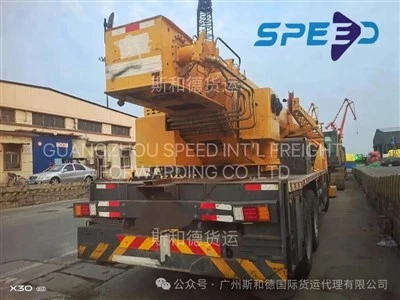
First, let’s start with the basics: CY stands for Container Yard. That’s the locked, fenced area at a port where shipping lines stack empty and full containers 24/7. Every port has a couple of these yards, split into import and export bays—no one’s messing around with cross-over, it’s too chaotic. Now, “CY to CY” isn’t just a phrase; it’s a type of international freight term that defines who’s responsible for the container and its stuff at every step of the journey. When you book an FCL shipment, this is one of the most common terms we use, and for good reason—it’s straightforward, low-hassle for most shippers.
Wait, let’s clarify FCL first, just in case. If you’re moving FCL, you’re filling up an entire container (or close to it, anyway) with your goods. No sharing space with other companies’ stuff—you get the whole 20ft, 40ft, or 40ft high-cube container to yourself. LCL is the opposite: you share a container with others, so you only pay for the space your pallets take. But when it comes to responsibility, CY to CY hits different for FCL.
Here’s how CY to CY works step by step, from our side as a supplier. First, when we pick up your full export container from your warehouse, we drop it off at the origin port’s CY. That’s the last point we (and you, the shipper) have any control over the container’s interior, right? Once that container is sealed with your security seal and rolled into the port yard, it’s the shipping line’s problem. Then, at the destination port, the line drops that same container off at the destination CY. That’s the first point where you or your trucking company get access again to unload your goods. No extra stops in between—no one’s opening the container to mess with your stuff at random ports, no handling fees for middle steps. That’s the core of CY to CY.
Now, why is this a big deal for FCL specifically? If you were moving LCL, you’d usually use something like CFS to CFS (Container Freight Station to Container Freight Station), which means other people handle your goods between stuffing and stripping. But for FCL, since it’s your container, CY to CY is the default because it cuts down on handling, which cuts down on costs and damage risk. I’ve had clients come to us after a bad experience with a non-CY term—like door to door where the line stuffed their container at a random facility instead of the port yard, and a forklift dented a high-value sofa mid-move. CY to CY eliminates that middle stuff, so less opportunity for things to go wrong.
But let’s be real, it’s not all sunshine. CY to CY does shift risk, and it’s super important for shippers to know what they’re on the hook for. The “shipment responsibility” split is key here. When your container leaves your warehouse sealed, you’re responsible for making sure the goods are properly packed, secured, and that the seal number is correct. If that seal is broken after it’s at the origin CY, that’s the line’s fault—they’re the ones who have to file a claim with insurance, not you. But if the seal is broken before it gets to the origin CY, that’s on you. I always tell new shippers to double-check the seal number when our driver drops off the empty container at their place—write it down, take a photo, that small step saves so much headache if something goes missing.
Also, wait—there are other CY terms? Yeah, but they’re not for most FCL shippers. CY to door is one, but that means the line will deliver the full container straight to your warehouse at the destination, instead of dropping it at the port. That sounds easier, but it adds fees, and you give up some control. CY to CFS is rare for FCL, that’s more LCL. For most FCL moves, CY to CY is the sweet spot for balance of cost and control.
Let me give a real example, something I last month with a client out of Chicago. He was moving a full 40ft container of industrial machinery to Rotterdam. He was using a different supplier before, who quoted a door to door rate that sounded cheap but hidden fees popped up at every port—storage at the origin CFS, a handling charge when the line moved the container from the CFS to the CY, a documentation fee for the door delivery. We quoted CY to CY, he was skeptical at first because he thought it’d be more work. But when we laid it out: he packs his machinery in Chicago, our driver drops the sealed container at the Chicago port’s CY, no extra stops. At Rotterdam, the line drops it at their CY, he books his own local truck to pick it up. His total cost was 18% lower, and he didn’t have to deal with three different vendors at the port. He’s been back twice since, that’s the kind of win we live for.
Another thing a lot of people mix up: CY to CY is not the same as “port to port.” Port to port just means moving the container from origin port to destination port, no mention of responsibility. CY to CY is a responsibility term, port to port is a location term. That’s a common mix-up, I get at least one a week. If a shipper books port to port but means CY to CY, they might be surprised when they have to deal with the container stuffing at a private facility instead of the port, which opens them up to more risk.
What about special cases? Like if you’re moving perishables, or high-value goods? CY to CY still works, but there are add-ons. For refrigerated containers (reefers), the port’s CY has specific temperature controls, so you don’t have to worry about a middle facility messing with the cool chain. We always flag that to clients moving reefers: stick to CY to CY, because any other term could break the cold chain and ruin your product. For high-value stuff like electronics, the security at port CYs is top-notch—fencing, cameras, 24/7 patrols, way more secure than a random freight station.
Wait, should you ever not use CY to CY? Sure, if you’re too busy to coordinate local transport at the origin or destination. Then door to door makes sense, but that’s a different set of responsibilities. Or if your warehouse is right next to the port and you want to drop the container yourself, you can do that too, that still falls under CY to CY as long as the drop-off is at the port’s yard. I had a small business client last quarter who runs a warehouse 10 minutes from Los Angeles port, he brings his FCL container right to the export CY himself, saves a couple hundred bucks on drayage fees. That’s a hack I tell all nearby clients about, and it still counts as CY to CY.
Let me wrap this up for anyone who’s still confused. If you’re moving FCL, CY to CY is the most common, most practical term because it’s simple, cuts down on handling and costs, and keeps responsibility clear between you and the shipping line. You drop the container at the origin CY, pick it up from the destination CY—no middle stops, no extra fees for random handling. Just make sure you do your part: pack securely, check the seal, have all your documentation ready. That’s it.
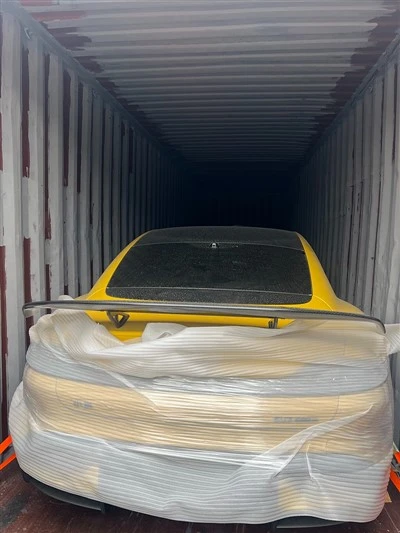
If you’re planning your next FCL or LCL shipment, and you want to chat through rates, timing, or whatever questions come up about terms like CY to CY, hit us up. We’re here to walk you through every step, no confusing fine print.
Special Container Shipping References
- International Chamber of Commerce. (2020). Incoterms® 2020: Official Rules for the Use of International Trade Terms.
- Federal Maritime Commission. (2023). Guide to Ocean Shipping Terms and Responsibilities for Commercial Shippers.
- World Shipping Council. (2022). Container Yard Operations and Best Practices for Freight Forwarders.
Speed Supply Chain (Guangzhou) Co., Limited
Speed Supply Chain (Guangzhou) Co., Limited is a licensed NVOCC and first-level freight forwarder in China. With a professional team, we deliver reliable, efficient and cost-effective fcl/lcl service for global customers. If you have any enquiry about quotation, please feel free to email us.
Address: Room 2001-2002, Dongzhao Building, No. 515 Dongfeng Middle Road, Yuexiu District, Guangzhou, Guangdong, China
E-mail: mika.li@speedsucc.com
WebSite: https://www.speedsupplychain.com/
