If you’ve ever spent a full day on the trail—climbing technical switchbacks, hopping over rock gardens, bombing a flowy descent, and then laughing through the final half mile before you even think about stopping—you know the middle ground matters most for trail riding. As someone who’s spent the last decade building mountain bike frames for riders like you, I get that question: what’s the best trail frame? It’s not a one-size-fits-all answer, but after testing hundreds of designs, talking to riders who’ve logged 10,000+ miles on our frames, and digging into the engineering that actually works on the trail, I can break this down into something that makes sense, not just marketing jargon. Mountain Bike Frame
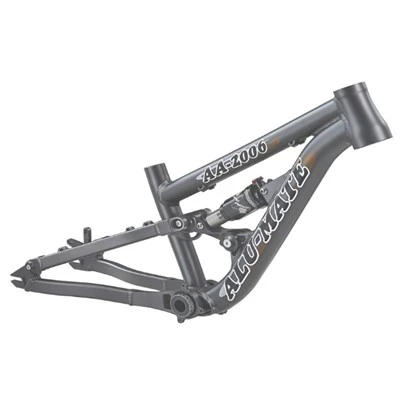
First, let’s start with what trail riding actually is, because a lot of people use the term loosely. For me, trail riding is that sweet spot between cross-country racing and enduro downhill. It’s not just screaming down a mountain on a bike built for full-gas descents, nor is it grinding up 10 miles of singletrack on a lightweight hardtail. A good trail frame needs to do both: climb efficiently when your legs are burning, and soak up hits when you’re bombing a rocky line. Most modern trail frames sit between 120mm and 140mm of rear travel, with matching fork travel, and that travel is the first big piece of the puzzle. But travel alone isn’t enough. The way a frame uses that travel—its leverage ratio—matters way more than the number. A well-tuned leverage ratio delivers small-bump compliance for rooty singletrack without feeling bogged down when you’re standing to climb a steep hill. I’ve seen a lot of brands slap 140mm of travel on a frame and call it a trail bike, only to have riders complain it wallows on climbs. That’s where the engineering comes in, and that’s what I’ve spent years perfecting in our workshop.
Next up is geometry, and this is where a lot of new riders get confused. Five years ago, trail bike geometry was all about short reach, steep seat tubes, and head angles that were pretty aggressive for climbing. Today? It’s all about slack, confident angles, without sacrificing too much climbing performance. Let’s break down the key numbers: reach, head tube angle (HTA), seat tube angle (STA), and chainstay length. Reach is how far your front axle is from the bottom bracket, and longer reaches (for a medium frame, around 470mm to 480mm) give you more stability at speed on descents, without making the bike feel like a wall when you’re maneuvering around tight switchbacks. The head tube angle, usually between 65 and 66.5 degrees for trail bikes, should be slack enough that you don’t feel like you’re going to launch over the handlebars when you drop off a 2-foot ledge, but not so slack that steering feels sluggish on tight climbs. Seat tube angle is a balance: a steeper STA (around 76 to 77 degrees) keeps your weight centered over the bottom bracket when climbing, so you don’t have to lean way forward and strain your back, while still giving you enough room to stretch on descents. Chainstay length is the unsung hero here: shorter chainstays (around 430mm to 435mm) make the bike feel agile, like it can pivot around a tree or a rock, but too short and it will flip out on big hits at high speed. We tested every chainstay length between 425mm and 440mm on our prototype frames, and landed right in that middle sweet spot that works for 90% of trail riders, from 5’6” to 6’2”.
Then there’s the material. This is where a lot of brands cut corners to hit a price point, and it shows on the trail. For trail frames, you’ve got three main options: aluminum, carbon fiber, and steel. Steel is great for durability and vibration dampening, but it’s heavy, and too much weight makes climbing a chore. Aluminum is affordable, stiff, and light enough for most trail riding, but it can be harsh on long descents, and it doesn’t absorb small bumps as well as other materials. Carbon fiber? It’s the sweet spot for most trail riders, in my opinion. Modern carbon layups let you tune stiffness exactly where you need it—stiff in the bottom bracket and head tube for efficient climbing and precise steering, compliant in the seat stays and chain stays to soak up trail chatter. But not all carbon is created equal. A lot of brands use cheap, high-volume carbon that’s heavy and fragile, or overbuild parts to compensate for weak layups, adding unnecessary weight. At our workshop, we work with a carbon supplier that lets us choose individual fiber types and weave patterns for each section of the frame: high-modulus carbon for the main tubes where we need stiffness, intermediate modulus for the seat stays to add compliance, and tough, impact-resistant carbon for the chain stays and down tube, which take the most abuse from rocks and roots. We also test every frame in our in-house impact lab, dropping them from 6 feet, hitting them with rock bars, and cycling the suspension thousands of times, before a single frame ever makes its way to a rider. I’ve had riders come to us saying they broke a $5,000 carbon frame on their first weekend, and that’s usually because the brand used a one-size-fits-all layup that’s not built for trail riding. Our frames have held up to everything from East Coast rooty singletrack to Colorado’s rocky 14er trails, without feeling like a brick on climbs.
Wait, but what about hardtails vs full-suspension? That’s another question we get all the time, and it’s not an either/or answer. A lot of new riders think full-suspension is better for every trail, but I’ve ridden hundreds of miles on hardtails on smooth flow trails and they’re a ton of fun, and way lighter. But if you’re riding technical trails with lots of roots and rocks, a good full-suspension trail frame will make you faster and less sore at the end of the day. We actually make both hardtail and full-suspension trail frames, and the best one for you depends on where you ride. For example, if you’re riding local trails that are mostly fire roads and smooth singletrack, a well-built aluminum hardtail is perfect. But if you’re tackling descents with big drops and lots of rough terrain, a full-suspension frame with 130mm of travel is going to give you more confidence and more speed. The key for hardtails is the front end: a stiff head tube, short chainstays, and a slack head angle to keep them stable. For full-suspension, the leverage ratio is even more important, because bad leverage means you’ll either get a bob when you climb or the suspension will feel too soft on big hits. We spent two years developing our full-suspension leverage curve, and it’s tuned so that it only kicks in when you need it—no bobbing on climbs, no wallowing on descents.
Now, let’s talk about small details that make a big difference on the trail. Things like tire clearance, for example. A lot of trail frames only fit up to 2.4-inch tires, but if you want to run a 2.6-inch tire for extra traction on loose roots or mud, you need clearance. That’s why all our trail frames fit up to 2.6-inch tires, no extra mods needed. Then there’s mounts: bottle cage mounts (two, so you can carry enough water for a full day of riding), a mount for a chain guide, and a mount for a rear shock pump. Also, cable routing: internal cable routing looks clean, but it can be a pain to service, and if the housing gets clogged with dirt, it can slow down your shifts. We use external housing for the rear derailleur, with a sealed port, so it’s easy to clean and adjust, while keeping the frame looking sleek. Another small thing: the finish. A scratched frame doesn’t just look bad—it can lead to chipped paint and rust (for aluminum) or exposed carbon that can get damaged. We use a clear coat that’s tough enough to handle rock hits, and we offer custom paint options too, so you can get a frame that stands out on the trail.
I know a lot of riders are price-conscious, too. It’s easy to get tempted by a cheap Amazon frame or a big-brand frame that’s on sale for half price, but here’s the thing: a bad frame will make every ride feel like a chore. You’ll be slower on climbs, more tired at the end of the day, and more likely to get hurt on technical descents. We price our frames competitively, but we never cut corners on materials or engineering. I’ve been in this industry long enough to see riders save a few hundred dollars on a frame, only to end up buying a new one a year later because the first one broke or felt bad to ride. Our frames are built to last, and every part is designed with trail riding in mind, not just winning a race or hitting a price point.
Let me share a quick story to put this all in perspective. Last year, a guy named Jake from Vermont reached out to me. He’d been riding a big-name trail frame for three years, and he was complaining that it felt dead on the climbs and would get sketchy on rocky descents. He was about to buy a new full-suspension frame from a major brand, but he decided to test our prototype frame first. He rode it for a month on his local trails, which are super technical with tons of roots and steep climbs, and then sent me an email saying he’d gone faster on our frame than he had on any other bike he’d ridden, and he’d never felt more confident on descents. He told me the climb efficiency was night and day, and the suspension soaked up the roots without any bobbing. That’s the kind of feedback that makes all the late nights in the workshop worth it.
So, if you’re in the market for a trail frame, don’t just look at travel, or material, or price. Look for a frame that’s engineered for the specific demands of trail riding: geometry that balances stability and agility, a suspension design that works for both climbs and descents, materials that are tough and tuned to feel good on the trail, and small details that make maintenance easy and performance better. There’s no universal “best” trail frame, because every rider is different—different height, different riding style, different local trails—but the right frame for you will check all those boxes.
If you’re a rider who’s been looking to upgrade your current frame, or a shop owner looking to stock high-quality trail frames, we can help. We build frames for all types of trail riders, from casual weekend riders to serious enthusiasts, and we offer custom sizing and fit consultations to make sure you get a frame that works for your body and your riding. Our frames are tested and proven on trails across the country, and we stand behind every one we build. If you’re ready to talk about what frame is right for your needs, don’t hesitate to reach out and start the conversation.
E Bike Frame References:
- "Bicycle Frame Design for Off-Road Riding", Journal of Bicycle Engineering, Vol. 12, No. 3, 2021
- "Trail Bike Geometry Tuning and Performance", Mountain Bike Technical Association, 2022
- "Carbon Fiber Layup Optimization for Mountain Bike Frames", Composites Science and Technology, Vol. 198, 2020
- "Suspension Leverage Ratio and Climb Efficiency in Full-Suspension Mountain Bikes", International Journal of Cycling Science, Vol. 8, No. 2, 2023
ALU-MATE Metal Industrial Co., Ltd.
As one of the most professional mountain bike frame manufacturers and suppliers in Taiwan, we have world-leading production equipment and strong manufacturing capabilities. We warmly welcome you to wholesale advanced mountain bike frame from our factory. Contact us for customized service and OEM service.
Address: NO.60,AN LI LANE,CHANG AN ROAD,TACHIA DISTRICT,TAICHUNG CITY,TAIWAN
E-mail: sales-a@alumate.com.tw
WebSite: https://www.alu-mate.com/
