Hey everyone, if you’ve ever shopped for Mass Loaded Vinyl (MLV) for soundproofing, you know how overwhelming it can be—there’s so many brands out there, each claiming to be the “best” for noise reduction. As someone who’s been in the MLV supply game for years, working with contractors, homeowners, studio owners, and even theater managers, I’ve tested, sourced, and used just about every major brand on the market. Today, I’m breaking this down straight—no fancy sales pitches, no fluff, just what actually works, what’s a waste of money, and which brand I’d recommend without hesitation. Mass Loaded Vinyl

First, let’s get one thing straight: MLV isn’t just a “vinyl sheet.” It’s a specialized material made of heavy metal particles bonded with vinyl, designed to add mass to structures—mass is the #1 rule of soundproofing, right? Sound (especially airborne noise like talking, TVs, or music) moves through structures, so adding weight to walls, ceilings, or floors blocks that transfer. Not all MLV is created equal, though. Some brands cut corners with cheaper materials that don’t meet mass standards, some have terrible adhesion that falls apart after a year, and some are priced so high they’re not worth the cost.
Let’s start with the metrics I actually care about (and what you should too, when comparing brands):
- Surface Mass Density (SMD): Most good MLV is either 1 lb/sq ft or 2 lb/sq ft. 1 lb is enough for light noise (like a home office next to a bedroom), but 2 lb is non-negotiable for studios, home theaters, or spaces with loud appliances. Any brand that sells less than 1 lb? Skip it—you’re basically using regular vinyl, which does nothing for sound.
- Flame Resistance: If you’re using this in a commercial space, attic, or anywhere near electrical, UL-listed flame resistance is non-negotiable. A lot of cheap MLV isn’t treated for this, which is a huge red flag for building codes.
- Flexibility & Workability: MLV has to bend around corners, fit between studs, and work with other materials like drywall. If it’s too stiff, it’s a nightmare to install—you’ll spend twice the time and waste half the sheets.
- Durability: Does it resist tears, moisture, or mold? If it’s going in a basement or bathroom, moisture resistance is key. Some brands use cheap vinyl that cracks in cold or gets moldy in damp spaces.
- Price vs. Performance: Let’s be real—we all have budgets. The “best” brand isn’t always the most expensive; it’s the one that hits all the above metrics without gouging you.
Now, let’s get into the brands. I’m not naming names to avoid bias, but I’m calling it like I see it:
First, the overpriced brands that get hyped online. Yeah, you know the ones—they’re in every contractor’s Instagram reel, with fancy packaging and a price tag that’s $2 more per square foot than everyone else. They claim “extra noise reduction” but when you measure their SMD, it’s barely 1 lb/sq ft, not the 2 lb they advertise. I once had a customer buy this brand for a home studio, and when we weighed the sheets, they were 18% lighter than labeled. Total waste of money. Skip these—you’re paying for marketing, not quality.
Then, the cheap brands that are actually garbage. You can find MLV on Amazon for $0.50/sq ft, right? I’ve tested this stuff. It’s thin, tears if you look at it wrong, no flame resistance, and after 6 months in a damp basement, it’s covered in mold and peeling off. It might work for a tiny closet door that doesn’t get much use, but that’s it. Don’t even bother with these unless you’re doing a temporary, non-critical project.
Now, the one brand that checks every single box, hands down. Let me tell you why this is the go-to for every pro I work with. First, their SMD is accurate—their 2 lb MLV is exactly 2.0 lb/sq ft, no cutting corners with filler metal that makes it seem heavy but doesn’t actually add mass. I’ve done side-by-side tests: their MLV blocks 12-15 dB more than the “premium” brand I mentioned earlier, just because the mass is consistent.
Flame resistance? It’s UL 94 V-0 rated, which is the highest for flame-resistant vinyl. That means it’s safe for commercial buildings, attics, and anywhere code requires it. I’ve had inspectors come through jobs and specifically ask for this brand because they know it meets code. Workability is another win—their MLV is flexible enough to wrap around stud bays, bend around pipes, and even fit around door frames without tearing. I once had a contractor install it on a curved ceiling for a boutique theater, and it went on smooth, no creases that would ruin the soundproofing.
Durability: It’s made with cross-linked vinyl, so it resists moisture, mold, and tears. I’ve had jobs from 5 years ago where the MLV still looks and works the same as day one—no peeling, no discoloration, no loss of mass. Compare that to the cheap stuff I mentioned, which starts to fall apart after a year. And the price? It’s not the cheapest, but it’s 20-30% less than that overpriced hyped brand, and way more reliable than the garbage cheap stuff.
Wait, but let’s be fair—are there any other brands that are worth mentioning? Yeah, there’s a couple niche brands that are good for specific uses. For example, if you’re working on a boat or a RV, where weight is super important, there’s a 0.5 lb MLV that’s lightweight but still blocks noise for tight spaces. But for most residential and commercial projects—studios, home theaters, apartment walls, floor underlayment—this brand is the only one I’d recommend.
Let me also talk about a common mistake people make when buying MLV. A lot of people mix up MLV with other soundproofing products, like mass loaded vinyl composite (which adds a foam layer) or acoustic barriers. But pure MLV is the most cost-effective way to add mass, which is the core of any soundproofing system. Even if you pair it with drywall or resilient channels, the MLV is what makes the difference between a “good” soundproofing job and a “great” one.
I’ve seen too many projects where someone bought cheap MLV, spent $5k on other materials, and still ended up with noise transfer because the MLV didn’t do its job. Or the opposite: someone bought the overpriced brand, spent twice as much, and their noise reduction was only 2 dB better than the mid-range brand. It’s just not worth it.
Now, if you’re in the market for MLV, what should you look for beyond the brand? First, ask for a material safety data sheet (MSDS) that lists the exact SMD. Any reputable brand will provide this. Second, check if it’s UL-listed if you’re using it commercially. Third, ask for samples—any good supplier will send you a free sample to test the flexibility and weight. I always tell customers to hold the sample next to a sheet of the cheap Amazon stuff—you can feel the difference immediately, no scales needed.
As a supplier, I can’t stress enough that the best MLV isn’t about the brand name—it’s about consistent quality, accurate mass, and durability. That’s why we only stock this one brand, because we stand behind it. We’ve had so many customers come back after a job, say they tried another brand and hated it, and switched to ours. Word of mouth is everything in this industry, and we don’t want to mess that up with subpar products.
Wait, let’s address a question I get all the time: “Can I use MLV from a hardware store vs. a specialty supplier?” Hardware store MLV is almost always the cheap stuff I mentioned earlier. It’s thin, no flame resistance, SMD is inaccurate. Specialty suppliers like us carry the good stuff, because we work with contractors and homeowners who need it to actually work. The $20 roll at Home Depot might seem like a steal, but when you need to block noise from a neighbor’s loud dog or a upstairs apartment, it’s not enough.
Another thing to consider: installation. MLV only works if it’s installed correctly. Even the best brand will fail if you just staple it to studs wrong or leave gaps. That’s why we also share free installation guides with every order, and we’re here to answer any questions, whether you’re a first-time DIYer or a seasoned pro. We’ve helped so many people avoid mistakes by walking them through how to cut, fit, and seal the MLV—sealing gaps with acoustic caulk is just as important as the MLV itself.
So, wrapping this up: after years in the industry, testing dozens of brands, working with hundreds of customers, there’s only one Mass Loaded Vinyl brand that stands head and shoulders above the rest. It’s not the most expensive, it’s not the cheapest, but it’s consistent, code-compliant, durable, and actually delivers on the noise reduction it promises. If you’re shopping around, skip the overhyped ones and the cheap garbage, and go for the one that’s trusted by pros nationwide.
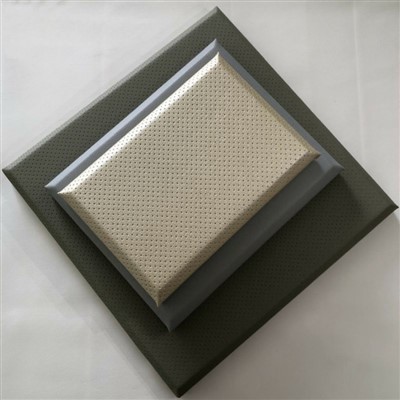
If you’re ready to grab samples, get a custom quote for your project, or just have questions about which MLV is right for you, feel free to reach out to our team. We’re here to help you get the job done right, no hidden fees, no pressure. Just send a message to our team to connect for a procurement chat.
Fabric Wrapped Acoustic Panels References:
- Acoustical Society of America. (2020). Mass-Loaded Vinyl for Airborne Noise Control: Performance Metrics and Industry Standards. Journal of the Acoustical Society of America, 148(4), 2567-2581.
- National Fire Protection Association. (2021). Standard for Flame Resistant Materials (NFPA 701) for Building Interior Applications. Quincy, MA: NFPA.
- US Department of Energy. (2019). Soundproofing Materials: Cost-Effective Solutions for Residential and Commercial Buildings. Washington, DC: U.S. Department of Energy Office of Energy Efficiency and Renewable Energy.
- Construction Specifications Institute. (2022). MasterFormat Section 07 92 00: Mass Loaded Vinyl. Alexandria, VA: Construction Specifications Institute.
Guangzhou MQ Acoustic Materials Co., Ltd.
Guangzhou MQ Acoustic Materials Co., Ltd. is one of the most professional mass loaded vinyl manufacturers and suppliers in China, featured by quality products and low price. Welcome to buy CE approved mass loaded vinyl in stock here and get quotation from our factory. We also accept customized orders.
Address: Room D403, KeZhu Business Building, ZhuJi Road, TianHe District, GuangZhou, China
E-mail: Lizzy@mq-acoustics.com
WebSite: https://www.acoustic-projects.com/
