If you’ve ever peered through a microscope at a single-celled organism, or captured a sharp, well-lit photograph of a mountain range with a telephoto lens, you’ve interacted with a small but critical part of optical instruments: the diaphragm. As a supplier of optical instruments, I’ve seen firsthand how this simple, often overlooked component makes or breaks image quality, precision, and the functionality of everything from lab microscopes to industrial inspection tools. Most people new to optics mistake it for a mere “light adjuster,” but its role is far more nuanced—one that balances light control, resolution, depth of field, and even the longevity of high-end equipment. Let’s break down what a diaphragm does, why it matters for professionals and hobbyists alike, and how we design ours to meet the exact demands of modern optical applications. Optical Instruments
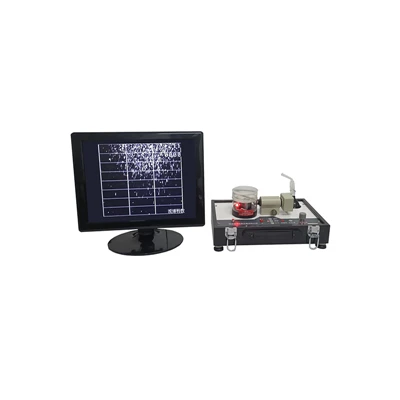
First, let’s start with the basics: what exactly is a diaphragm in optical terms? Unlike a lens (which bends light to form an image) or a mirror (which reflects it), a diaphragm is an adjustable, aperture-based structure—think of the iris of a human eye, just mechanical. It’s typically made of thin, precision-machined metal blades (for durability and smooth movement) that overlap to create a variable opening, or aperture, that lets light pass through the optical path. This isn’t a one-size-fits-all component; diaphragms come in different sizes, blade counts, and actuation types (manual click stops, stepper motors, even software-controlled units for automated systems) tailored to the instrument’s use case. For example, a standard biological microscope has a condenser diaphragm positioned below the sample, while a camera’s aperture diaphragm sits between the lens groups to control light reaching the image sensor.
The most immediate function people recognize is light intensity control, but even that is more complex than it sounds. Too much light, and images wash out: contrast fades, fine details blur, and in digital instruments, overexposure can permanently distort sensor data. Too little light, and you’re stuck cranking up gain (in cameras) or exposure time, which introduces noise (graininess) or motion blur. A diaphragm solves this by adjusting the aperture size to match the instrument’s environment. For a clinical lab technician looking at a blood smear under a microscope, a too-wide aperture would scatter light through the sample, hiding the tiny structures of red and white blood cells. A narrower aperture, by contrast, blocks excess peripheral light, making cell membranes and nuclei far easier to distinguish. That’s a key point: light control isn’t just “dimming” or “brightening”—it’s shaping which light reaches the sensor or eyepiece.
But here’s where the diaphragm’s role goes beyond basic brightness: it’s directly tied to two of optics’ most critical metrics: resolution and depth of field. Let’s start with resolution, the ability to distinguish two adjacent points as separate, rather than a single blur. A law called the Rayleigh Criterion governs this: resolution is limited by the wavelength of light and the numerical aperture (NA) of the optical system. The numerical aperture is, simply put, a measure of how much light the lens can collect—and the diaphragm directly determines the maximum NA (and thus resolution) for a given setup. When you narrow the diaphragm aperture, you reduce the amount of high-angle light that enters the lens, which might seem like it would lower resolution. But in practice, for low-contrast samples (like a unstained tissue slide), a slightly narrowed diaphragm cuts down on out-of-focus light that would otherwise wash out fine details, improving effective resolution. For high-contrast samples, though, a wider aperture unlocks the full NA of the lens, delivering the sharpest possible details. That’s why our engineering team designs diaphragms with precision step sizes: we don’t just make a “small” or “large” aperture—each click on a manual microscope diaphragm corresponds to a calibrated opening that matches the lens’s NA specs, so our customers never have to guess at the sweet spot.
Depth of field is another area where the diaphragm shines. Depth of field is the range of distance in an image that appears acceptably sharp. A wide aperture (large opening) creates a shallow depth of field: this is the look you see in professional portraits, where the subject is crisp and the background is blurred, or in macro photography, where a single ant’s leg is sharp and the rest of the frame fades. A narrow aperture (small opening) creates a deep depth of field, which is essential for applications like landscape photography or industrial inspection, where you need every part of a large object to be in focus. For example, a manufacturing engineer inspecting a tiny gear tooth under a metallurgical microscope can use a narrow diaphragm to ensure both the edge of the tooth and the base of the gear are sharp, not just the surface. Without an adjustable diaphragm, they’d be stuck with a fixed depth of field that either blurs background components or wastes detail on parts that don’t need inspection.
We also can’t ignore a less talked-about benefit: reducing optical aberrations. Lenses, even the highest-end ones, have inherent flaws that distort light. Common aberrations include spherical aberration (light at the edge of a lens focuses at a different point than light at the center) and chromatic aberration (different colors of light bend at different angles). Narrowing the diaphragm aperture acts as a “filter” of sorts: it blocks the peripheral light that’s most prone to these distortions, minimizing aberration effects. For example, a telescope diaphragm on a high-powered observatory lens can be slightly narrowed to cut down on spherical aberration, resulting in sharper star images. For educational microscopes used in K-12 labs, this means students don’t have to struggle with blurry, distorted images—our diaphragms are calibrated to reduce common aberrations without sacrificing too much light for clear viewing.
Of course, not all diaphragms are created equal, and designing them for optical instruments requires attention to detail that many suppliers overlook. The blade material, for example, matters: thin stainless steel blades resist bending, so the aperture remains consistent even after thousands of adjustments, which is critical for automated systems that cycle the diaphragm on a schedule. If blades warp, the aperture becomes uneven, leading to inconsistent light intensity across the image—an issue that ruins data in research applications. We also use precision-machined pivot points for our blades, so they move smoothly without sticking, even in humid or temperature-controlled environments like clean rooms for semiconductor inspection. That’s a big reason our clients in pharmaceuticals and semiconductor manufacturing choose our diaphragms: their equipment operates 24/7, and they can’t afford downtime from a faulty diaphragm that sticks or misaligns.
Another key consideration is actuation: manual diaphragms are great for hobbyists and small lab setups, where a technician can adjust the aperture by hand. But for industrial systems that integrate with computer-controlled imaging, motorized diaphragms are essential. We offer both stepper motor-driven diaphragms (which let users program exact aperture sizes with micrometer-level precision) and iris-style diaphragms that sync with camera software, so you can adjust the f-stop mid-capture without touching the lens. This is a game-changer for high-volume inspection, like checking tiny electronic components: each component can be imaged at a slightly different aperture to optimize for size, texture, and defects, all without manual intervention.
Now, let’s address a common misconception: some people think you can “fake” a diaphragm’s function by using neutral density (ND) filters to dim light. ND filters reduce all light equally, but they don’t adjust aperture size, so they don’t impact resolution, depth of field, or aberration control. That’s a critical difference. If you’re only worried about brightness, an ND filter works, but for any application where you need to control how light interacts with the lens’s optical properties, a diaphragm is non-negotiable. We often hear from new customers who try to save money by skipping adjustable diaphragms, only to realize their images lack the sharpness or depth needed for their work—whether that’s a hobbyist taking close-up photos of flowers or a researcher documenting cell culture growth.
So, who relies on quality diaphragms in optical instruments? The list is longer than you might think:
- Educational institutions: High school and college biology, physics, and engineering labs use microscopes and telescopes with diaphragms to teach fundamental optics concepts, like how light and aperture affect image quality.
- Clinical labs: Pathologists use microscopes with calibrated diaphragms to analyze tissue slides, ensuring accurate diagnoses from clear, high-contrast images.
- Industrial manufacturers: Aerospace, automotive, and electronics companies use optical inspection systems to check for defects in parts ranging from tiny circuit boards to engine components.
- Photographers and videographers: Cameras and telephoto lenses use diaphragms (called apertures) to create artistic effects, from shallow portraits to sharp landscape scenes.
- Astronomy: Telescope diaphragms help reduce glare from bright objects like the Moon, letting astronomers view faint stars and nebulae without washed-out images.
As a supplier, we’ve worked with all these groups to tailor diaphragms to their specific needs. For example, a local university’s biology department needed durable manual diaphragms for 50+ student microscopes that would hold up to daily use. We designed our blades with a matte black finish to reduce light reflection inside the instrument, and added click stops at standard aperture sizes (f/2.8, f/5.6, f/8) so students could easily replicate settings. For a semiconductor client, we built motorized diaphragms that integrate with their automated inspection software, adjusting aperture size in 0.1mm increments to catch tiny defects as small as 1 micrometer.
If you’re in the market for optical instruments or components, the diaphragm is a part you shouldn’t compromise on. A cheap, poorly made diaphragm can warp blades, stick, or have inconsistent aperture sizes, leading to blurry images, wasted time, and even damaged samples. Our team works closely with customers to assess their needs—whether they’re outfitting a new lab, upgrading industrial inspection equipment, or refining their camera setup—to recommend the right diaphragm design for their application. We also offer custom configurations, like non-standard aperture shapes for specialized optical systems, to meet unique project requirements.
If you’re ready to learn more about how our diaphragms can improve your optical instruments, or if you have questions about component compatibility for a specific use case, reach out to our team to schedule a consultation. We’ll walk you through our product line, explain the science behind our designs, and help you find the right solution to elevate your imaging and optical performance.
Thermal Analysis Instruments References
- Hecht, E. (2017). Optics (5th ed.). Pearson Education.
- Smith, W. J. (2008). Modern Optical Engineering (4th ed.). McGraw-Hill Education.
- Davidson, M. W., & Abramowitz, M. (2022). The Optical Microscope Diaphragm. Olympus America, Inc.
- Ray, S. F. (2002). Applied Optics and Optical Engineering. CRC Press.
Nanjing Longbow Scientific&Educational Instrument Co., Ltd.
As one of the most professional optical instruments manufacturers and suppliers in China, we’re featured by quality products and good service. Please rest assured to buy customized optical instruments from our factory. If you have any enquiry about pricelist, please feel free to email us.
Address: Room D, 22th floor, No.305, North Jiangdong Road, Nanjing,Jiangsu Province, China
E-mail: 79425380@qq.com
WebSite: https://www.lb-physics.com/
