Alright, so you’re here because you’ve fought with product labels more times than you’d like to admit. You peel back the backing, line it up perfectly on your product, and bam—a stupid bubble pops up right in the middle. It doesn’t look professional, it makes your brand seem sloppy, and worst of all? Sometimes that bubble makes the label peel off early, which is a nightmare for returns or customer complaints. As someone who’s spent over 8 years running a product labels supply company, I’ve heard this exact frustration from hundreds of small business owners, Etsy shop owners, and even big retail teams. Today, I’m breaking down the science (and the hacks) to get bubble-free labels, plus how we as your label supplier can make this way easier for you. Let’s dive in. Product Labels
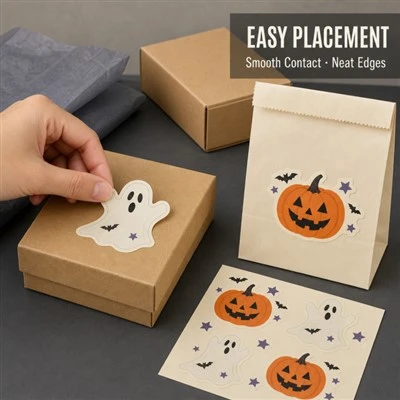
First, let’s get real: bubbles aren’t just “bad luck.” There’s a actual physics behind them. When you press a label to a surface, the air that’s trapped between the adhesive and the label needs an escape route. If you rush, the adhesive grabs too fast, trapping air pockets that turn into those annoying bumps. But here’s the good news—most of the time, this is totally avoidable with a few small tweaks, none of which require fancy tools or a degree in materials science.
Let’s start with prep work, because this is where 90% of label problems start. I see so many people skip cleaning their product surfaces, and that’s a huge mistake. Dust, oil, or even tiny water droplets on the surface act as barriers between the adhesive and the product, so when you apply the label, those little particles trap air under them. Even something as minor as the fingerprint you left on a beer bottle can cause a bubble later. Here’s what to do: use a lint-free cloth (microfiber works great) with a little isopropyl alcohol (70% is fine—no need for the 91% stuff) to wipe down the area you’re labeling. Let it dry completely for 10-15 seconds—rushing this part will leave tiny moisture spots, which also cause bubbles. Pro tip: don’t touch the area after you clean it. Even a second of contact leaves oil residue. We actually tell all our new label buyers to stock up on microfiber cloths with their order—small add-on, but game-changing.
Next, let’s talk about the label itself. Not all labels are created equal, and the type of label you use can make or break your bubble-free application. As a label supplier, we’ve noticed two big factors here: adhesive type and label material. First, permanent vs. removable adhesive. Permanent adhesive is stickier, right? That means it grabs faster, so less room for air to escape. If you’re working with curved surfaces (like jars or bottles), permanent adhesive labels are way more prone to bubbles because they stick before you can smooth them out. We recommend removable or “permanent low-tack” adhesive for curved or non-flat surfaces. It gives you a little wiggle room to adjust the label before the adhesive sets, so you can push out air as you go.
Then there’s label material. Glossy vinyl labels are super durable, but they’re also stiffer, so they don’t conform to small curves as easily—making bubbles more likely. If you’re labeling something with a slight curve (like a mason jar), matte paper labels or clear film labels with a little flexibility are way better. We design our labels to match the most common application needs, so if you tell us you’re labeling cylindrical bottles, we’ll suggest a more flexible material with low-tack adhesive to cut down on bubbles. A quick note: never use labels that are too old or stored wrong. If your label roll has been sitting in a hot garage or left in the sun, the adhesive can dry out or get too sticky, which leads to bubbling. We always tell customers to store labels in a cool, dry place—like a pantry or desk drawer—for best results.
Now, the actual application process. This is where most people mess up: they peel the entire backing off the label at once and slap it on. Don’t do that. Let’s break this into steps that work for every label size, from tiny price tags to full shipping labels. First, peel off only the first ½ inch of the label backing. That tiny tab is what you’ll use to hold the label, and it keeps the adhesive from touching the surface before you’re ready. Line up that exposed edge exactly where you want it—take 10 extra seconds here, it’s worth it. Then, press that small exposed edge firmly to the surface. For flat surfaces (like boxes), press with the palm of your hand for 2-3 seconds to make a solid bond. For curved surfaces, press that edge where it touches first (like the top of a jar) to keep it from sliding.
Now, here’s the key step: don’t peel the rest of the backing off all at once. Instead, peel back the backing slowly, about 1-2 inches at a time, as you smooth the label down with your other hand. Use a smooth, rigid tool—like a credit card, a squeegee, or even a clean ruler—to push from the center of the label out to the edges. That’s right, start in the middle. That forces any trapped air to move toward the edges instead of getting stuck in the center. For edges, don’t just press lightly—run your tool over the perimeter of the label a couple times, holding at a slight angle, to seal any small air pockets that might have formed. If you’re working with a super big label (like a shipping label for a pallet), have a friend help you—one holds the top edge, the other peels back the backing and smooths. We’ve even had a customer use a cheap wallpaper smoother (the kind for wall decals) and it worked way better than a credit card for their large wine bottle labels.
What if you do get a bubble? Don’t panic—you don’t have to throw the product away. Small bubbles (under a centimeter) can be fixed with a pin. Just poke the bubble gently with a sharp pin (don’t pierce the product, obviously) and press the air out toward the edge. If the bubble is bigger, you can peel the label back carefully, wipe the surface again to make sure no dust got on it, and reapply. Pro tip: only peel a label back once. If you do it twice, the adhesive loses its stickiness, and you’ll get even more bubbles the second time. We always tell customers to keep a few extra labels on hand for touch-ups—no one wants to reorder mid-batch because they ruined 10 labels from a bad peel.
Wait, let’s talk about automated applications too, because a lot of our clients use label printers (like for shipping or product labels). If you’re using a desktop label printer, bubble problems are often from the settings. First, check your printer’s roll settings—if the label roll is too tight, it can curl the label when it dispenses, making it hard to apply straight. We recommend making sure your label roll is loaded loosely enough that it can spin easily, but not so loose that it slips. Also, the print settings: if your printer is set to “high tack” adhesive for a smooth finish, that’s good, but if you’re applying to porous surfaces (like paper boxes), it can absorb too much adhesive, leading to bubbles. We include a quick sheet with every label order that has printer tips specific to the labels we supply—small thing, but it’s saved so many customers from frustration.
Now, let’s get to why this matters for your business. A bubble-free label doesn’t just look nice—it builds trust with your customers. When someone gets a product with a smooth, perfectly applied label, they think, “This brand cares about details.” A bubbly label? It makes the product feel cheap, like it was rushed. Also, bubbles can cause labels to peel off during shipping, which leads to lost packages, which leads to upset customers and higher return rates. As your label supplier, we don’t just send you a roll of labels—we want you to have labels that work for you, and that’s why we customize adhesive and material for your exact use case. If you’re selling hand soaps on cylindrical bottles, we’ll send labels with low-tack adhesive that conforms to curves. If you’re making shipping labels for flat boxes, we’ll send durable permanent adhesive that sticks tight without bubbling.
A quick common mistake I see: using water or a spray bottle to apply labels. Wait, I know some people swear by this, but unless you’re using wet-apply specialty labels (which we also sell, by the way), it can cause bubbles. The water gets trapped under the adhesive as it dries, creating more pockets. Wet apply is only for specific materials, so stick to the dry method unless you know your labels are made for it. We once had a customer try wet apply on our matte paper labels, and he ended up with 50 bubbled labels—he switched back to the dry method and had zero issues after that.
Another tip for tiny labels (like price tags or ingredient labels): use tweezers to hold the label instead of your fingers. Your fingers have oil, which can leave marks and cause bubbles, plus tiny labels are easier to line up with tweezers. We actually include a small pair of precision tweezers with our bulk label orders for this exact reason—free little add-on, but it makes such a difference.

Now, let’s wrap this up. The main takeaways for bubble-free labels are: prep the surface (clean it!), pick the right label (we can help you choose), peel the backing slowly in small sections, smooth from the center out, and don’t panic if you get a bubble—there’s a fix. If you’re still struggling, or you need labels customized for your specific product (curved surfaces, large labels, specialty materials), that’s where we come in. We’re a label supplier that’s been in the game for years, and we work directly with small businesses and large brands to make labels that are easy to apply, durable, and look great. Don’t waste time fighting with bubble-prone labels—reach out to our team to chat about your needs. We’ll help you pick the perfect label type, adhesive, and material so you can apply labels fast, clean, and bubble-free. No hassle, no extra stress, just great labels that make your product stand out.
Security & Anti-Counterfeit Labels References:
- Surface preparation for pressure-sensitive adhesive labels, Journal of Adhesion Science and Technology, 2019
- Conformability of pressure-sensitive label materials to curved substrates, Packaging Technology and Science, 2021
- Bubble formation in label application: Causes and mitigation strategies, International Journal of Retail and Distribution Management, 2020
SpeedPrint Era (Xiamen) Digital Co., Ltd.
SpeedPrint Era (Xiamen) Digital Co., Ltd. is one of the most professional product labels manufacturers and suppliers in China, featured by quality products and low price. Please rest assured to wholesale advanced product labels made in China here and get quotation from our factory. We also accept customized orders.
Address: Floor 1, No.27, Xianghong Road, Xiang’an District, 361101, Xiamen, Fujian, China
E-mail: hxmacka@gmail.com
WebSite: https://www.lumolabels.com/
