What’s the price range for industrial mixing equipment? As someone who’s been running a mixing equipment supply business for 8 years, I get it—when you’re outfitting a factory, bakery, or even a lab, that number isn’t just a random tag. It depends on so many little things, and I’ve seen way too many people guess wrong and end up either overpaying for stuff they don’t need or skimping so much they have to replace a machine 6 months later. Let me break this down like I would to a regular customer who just called me panicking about their budget. Mixing Equipment
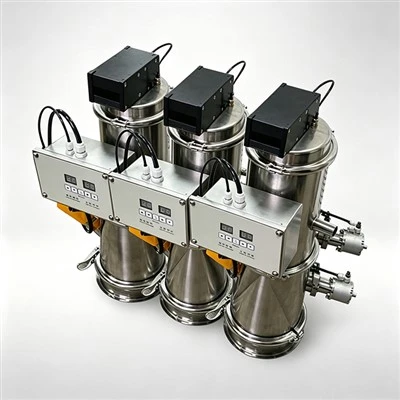
First, let’s get the basics out: industrial mixing equipment isn’t like the $50 stand mixer you use at home. These are built to run 12+ hours a day, handle anything from paint to liquid fertilizer to thick dough, and not break down when you toss in a weird ingredient or a bulk load. So prices start way higher, and go up fast depending on what you actually need. Let’s split it into the most common categories, since that’s how most folks shop.
Small-batch, lab, and light-duty equipment. If you’re a startup, a small craft bakery, or a research lab testing new formulas, you don’t need a 500-gallon mixer that can churn out 1,000 loaves an hour. This category includes things like bench-top lab mixers, small planetary mixers (think the kind bakeries use for 50-pound dough batches), and light-duty portable mixers for small tanks. What’s the price here? I’ve seen these range from $1,500 to $12,000. Wait, why such a big gap? A tiny 1-gallon lab mixer for testing epoxy resin is $1,500—super simple, just a motor and a spinning paddle. But a heavy-duty small planetary mixer that can handle 100 pounds of sticky cookie dough, has a stainless steel bowl, and a motor that doesn’t overheat after 2 hours? That’s closer to $12,000. I once had a craft baker come to me who’d bought a $800 home mixer for their commercial space—they burned out the motor in 3 weeks. Oops. Lesson here: even “small” industrial stuff needs a commercial-grade motor, not the cheap stuff from Amazon.
Mid-range production mixers. This is the sweet spot for most small to mid-sized factories—say, a specialty sauce maker, a paint shop, or a cosmetic lab that’s growing and needs to scale. Mid-range here covers drum mixers, large planetary mixers for 50 to 500-gallon batches, and inline mixers that blend liquids as they move through pipes. Prices here? I’d say $12,000 to $75,000. Let’s unpack that. A portable drum mixer for mixing 55-gallon drums of cleaning solution is around $12,000 to $18,000—great if you don’t need a fixed unit and just need to mix drums on site. But if you’re a sauce maker that needs 200-gallon batches of ketchup, you’re looking at a large planetary mixer or a twin-screw mixer, which is where that $75k number comes in. Wait, twin-screw vs single-screw? Twin-screw is better for thick, viscous stuff that would get stuck on a single paddle, so that adds cost. Also, if you need it made of food-grade stainless steel (which you do for sauces or lotions), that’s more than carbon steel. I had a customer who tried to save money with a carbon steel mid-range mixer for their salad dressing—they ended up with rust flecks in the dressing, had to replace it, and lost a big grocery client. Don’t cut corners on material if it’s for food, pharma, or cosmetics.
Heavy-duty industrial mixers for full-scale production. If you’re running a big factory—think a fertilizer plant, a bulk paint manufacturer, or a concrete supplier—this is the stuff that runs 16 hours a day, 6 days a week. These are batch mixers with 1,000+ gallon capacities, continuous inline mixers for high-volume output, and agitators that can handle super thick, abrasive materials. What’s the price here? Buckle up: $75,000 all the way up to $500,000, and sometimes more for custom builds. Wait, why the huge top end? A standard 1,000-gallon batch mixer for paint is around $80k to $100k. But if you need a custom mixer that can handle hot, abrasive fertilizer slurry, has explosion-proof motors (super important for chemical plants), and is integrated with your production line so it auto-fills and empties? That’s $300k to $500k easy. Last year, a construction company came to me needing a mixer for concrete that could handle 2,000 gallons per batch—we built them a custom unit for $420k, and it’s been running for 18 months with zero issues. The key here is: you’re not just paying for the machine, you’re paying for reliability, safety features, and integration with your existing setup. Skimp here, and downtime (when the mixer breaks) can cost you way more than the machine itself.
Now, let’s talk about the hidden costs that most people forget. I can’t tell you how many times a customer calls me looking for a $20k mixer, then gets shocked when we add up shipping, installation, calibration, and a year of maintenance. Shipping alone for a 500-gallon mixer is $1,500 to $5,000, depending on where you are. Installation? If it’s a big fixed unit, you might need a crane, plumbing for power or steam, and a tech to set it up— that’s another $2,000 to $10,000. And don’t skip maintenance: a $100 a year in replacement paddles or monthly motor checks is way cheaper than a $20k repair when your mixer seizes up. Also, parts: some cheap mixers use generic parts that you can only find from the original manufacturer, which is a pain. Our mixers use standard parts you can get at any industrial supply store, so that’s a big plus for customers.
Wait, what about used equipment? A lot of folks ask me about used mixers to save money, and that can work—but it’s risky. You can get a mid-range planetary mixer for $5k to $15k, but only if you have it inspected by a tech before you buy. I’ve seen used mixers with worn-out motors or corroded stainless steel bowls that look good but will die in a month. I always tell customers: if you go used, make sure the seller gives you a maintenance history, and pay to have a third-party tech check it out. Sometimes the $5k you save isn’t worth the thousands you’ll spend later fixing it.
Also, custom vs off-the-shelf. If you have a super specific need—say, you mix a 1,000-gallon batch of glue that’s extra thick, or you need it to fit into a tight space in your factory—off-the-shelf might not work, and that’s where the price jumps. Custom mixers can add 20% to 50% to the base price, but they’re worth it if they solve a problem you can’t fix with a standard unit. Last year, a small chemical company needed a mixer that fit into a 10-foot ceiling because their factory was retrofitted, not built for big equipment. We customized a mid-range twin-screw mixer to fit, and it cost them $25k extra, but it let them use their existing space so they didn’t have to move their whole factory. Win-win.
Now, let’s give you a quick cheat sheet to figure out what you actually need, so you don’t waste time. Ask yourself: 1) What material are you mixing? Thin liquids (like juice) need a different mixer than thick pastes (like toothpaste) or abrasive stuff (like concrete). 2) How big are your batches? Small batches = lower price, big batches = higher. 3) What industry? Food/pharma needs food-grade stainless steel, chemical needs explosion-proof motors, concrete needs heavy-duty abrasion-resistant parts. 4) Do you need it portable or fixed? Portable is cheaper for small jobs, fixed is better for high-volume, long-term use.
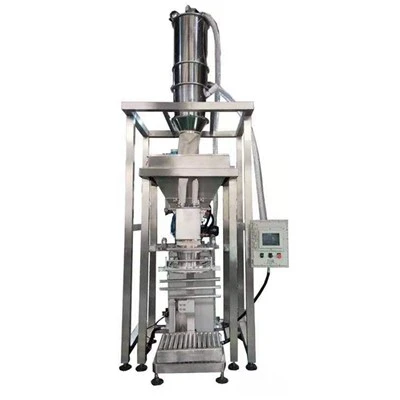
I get it, looking at these numbers can be overwhelming. But here’s the thing: the right mixer for you isn’t the cheapest, it’s the one that fits your needs, runs reliably, and doesn’t cost you a fortune in downtime. If you’re still not sure what you need, don’t guess—reach out. We can talk through your batch sizes, materials, and budget, and I’ll give you a straight quote, no hidden fees. No sales pitch, no confusing jargon, just what you need to make a smart call.
Coating Machine References:
- Industrial Mixers Market Size, Share & Trends Analysis Report by Product, by Application, by Region, and Segment Forecasts, 2024-2030. Grand View Research.
- "Selecting the Right Industrial Mixer: A Guide for Manufacturers." Machinery Lubrication Magazine, 2023.
- "Cost Factors for Industrial Mixing Equipment." Processing Magazine, 2022.
Nanjing Huozao Machinery Technology Co., Ltd.
Nanjing Huozao Machinery Technology Co., Ltd. is one of the most professional mixing equipment manufacturers and suppliers in China, also supports customized service. With abundant experience, we warmly welcome you to buy durable mixing equipment for sale here from our factory. For price consultation, contact us.
Address: No.2, Kuailu Road, Longtan Street, Qixia District, Nanjing
E-mail: hz@huozaodryer.com
WebSite: https://www.huozaodryer.com/
