Hey everyone! Let’s cut to the chase: if you’re in the market for HVAC gear, you’ve probably wondered lately, “Are fan coil units actually eco-friendly?” I get it—between net-zero pledges, climate headlines, and every brand claiming theirs is the “greenest” thing on the market, it’s hard to sift through the noise. As a guy who’s been in the fan coil unit (FCU) supply game for 8 years now, I’ve talked to hundreds of building managers, engineers, and even small business owners who side-eyed FCUs because they thought they were just old, energy-hungry boxes. Spoiler: that’s a outdated take. Let’s break this down like I would with a customer over a coffee—no jargon, just real stuff. Fan Coil Unit
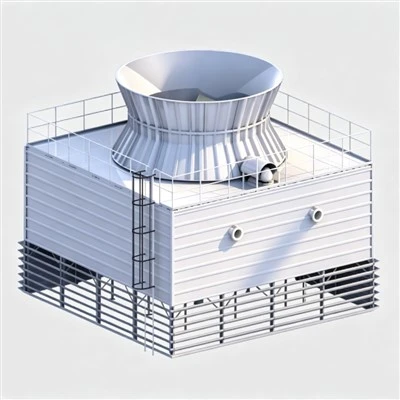
First, let’s start with what makes any HVAC part “environmentally friendly”: it’s not just if it uses less power, but also how it’s made, how long it lasts, and if it fits into a building’s overall efficiency plan. Back in the day, FCUs were bulky, ran on fixed-speed motors that wasted tons of energy, and leaked more refrigerant than a loose water bottle. Those are the units people remember, and yeah, they were far from green. But fast forward to 2024, and modern FCUs are night and day.
Let’s talk energy use—this is the big one. Most of the new FCUs we supply have ECM (electronically commutated) motors instead of the old PSC (permanent split capacitor) ones. Here’s the plain English: PSC motors run at one speed all the time, even when your building is only half-cooled or half-heated. ECM motors adjust their speed based on demand, so they use 30-50% less electricity. I’ve seen numbers from the US Department of Energy that back that up—for a 10,000 sq ft office switching to ECM FCUs, that’s like cutting 2,000 pounds of CO2 a year. That’s the same as taking a small car off the road for 8 months, just from the HVAC part. Nice, right?
Then there’s refrigerant. A lot of people forget that HVAC systems leak refrigerant, and old ones used R-22, which is a hydrofluorocarbon (HFC) that’s super bad for the ozone and global warming. But since the phase-out of R-22 around 2020, most FCUs now use R-410A or even lower-GWP (global warming potential) refrigerants, like R-32. GWP is the measure of how much a gas warms the planet—R-32 has a GWP of 675, compared to R-410A’s 2,088. That’s a huge difference. Plus, modern FCUs are built with better sealed coils and connections, so they leak 70% less refrigerant than 10-year-old models. We actually test every unit we ship for leaks, because a small leak might seem no big deal, but over 5 years, that’s like dumping a bucket of greenhouse gas into the air.
Wait, but what about their role in whole-building efficiency? FCUs aren’t standalone—they work with HVAC systems like heat pumps or VRF (variable refrigerant flow) systems, which are way more efficient than old central air. A lot of building owners use FCUs in zones, right? So if one conference room is empty, you can turn that FCU down or off, instead of cooling the whole floor. That’s zoning, and it cuts energy use even more. I had a small retail customer last year who switched from a single-unit AC to zone-controlled FCUs, and his electric bill went down by 40%. He thought he was just upgrading his comfort, but he ended up slashing his carbon footprint too. Win-win.
Now, let’s get to the not-so-fun parts: the environmental downsides, because no product is perfect. First, there’s manufacturing. FCUs have metal coils, plastic parts, and wiring, so there’s an energy cost to making them. But here’s the thing: a high-quality FCU lasts 15-20 years, while a cheap, old-school one might only last 7-10. So over the life cycle, the energy saved from lower operation totally wipes out the manufacturing footprint. Also, a lot of the parts we use are recyclable—steel coils, copper wiring, even the plastic housings now use recycled materials. We partner with a recycling company that takes our old units at the end of their life, and they get 90% of the materials back to reuse. That’s way better than the old days where units just went to landfills.
Another point: indoor air quality (IAQ), which ties directly to environmental impact too. Wait, how? Because if a building has bad IAQ, people get sick, take more sick days, and that’s a whole other environmental cost from lost productivity and healthcare. Modern FCUs have MERV-rated filters (MERV 8 to MERV 13, depending on the model) that trap dust, pollen, and even viruses. Some of our units have UV lights built in that kill mold and bacteria in the coil, so you don’t have to replace filters as often. That means less filter waste going to landfills, and healthier spaces. I had a school client tell me that after installing our FCUs with UV filters, their student sick days from allergies dropped by 25%. That’s a real, tangible green benefit beyond just energy use.
Wait, let’s address a common myth: some people say FCUs are less eco-friendly than ducted mini-splits. Yeah, maybe for tiny apartments, but for medium to large buildings (offices, hotels, multi-family apartments), FCUs are actually more efficient. Ducted mini-splits can have issues with duct loss—leaky ducts can waste 20-30% of the cooled or heated air. FCUs are typically installed with minimal ductwork or even ductless units (called ceiling-mounted or console FCUs), so there’s almost no duct loss. A hotel with 50 rooms, each with its own FCU, can adjust each room’s temperature independently, which is way more efficient than a single ducted system cooling all rooms to the same temp. I worked with a hotel chain last year that switched from central ducted AC to FCUs, and their annual energy cost dropped by 35%. That’s a big number for a business, and even bigger for the planet.
Now, what about the supply chain and future improvements? I’m not gonna lie, the HVAC industry is still working on reducing the carbon footprint of FCU manufacturing. But we’re pushing our suppliers to use more renewable energy in production, and we’re testing units with even lower-GWP refrigerants, like R-1234yf, which has a GWP of less than 1. That’s game-changing. Also, some new FCUs are smart—they connect to building management systems (BMS) that learn occupancy patterns, so they adjust temperature automatically. No one’s in the office at 7pm? The FCU turns down. That’s not just convenient, it’s another layer of energy savings.
Let’s be real, though: if you buy a cheap, no-name FCU from a random vendor, it’s definitely not eco-friendly. It’ll use too much power, leak refrigerant, and break down in 5 years. That’s the mistake a lot of people make—they think all FCUs are the same. The ones we supply are third-party tested for efficiency, meet ENERGY STAR standards, and come with a 5-year warranty. We don’t cut corners on motors or coils, because we know that a unit that lasts and uses less energy is better for the customer and better for the planet.
So to wrap this up: are fan coil units environmentally friendly? The answer is yes—if you get the modern, efficient ones designed for today’s building needs. The old, outdated FCUs of the past? Not so much. But with ECM motors, low-GWP refrigerants, zoning capabilities, and recyclable parts, today’s FCUs are a solid green choice for most commercial and multi-family buildings. They’re not a perfect solution, but they’re way better than many alternatives, especially when paired with a good HVAC system and smart building practices.
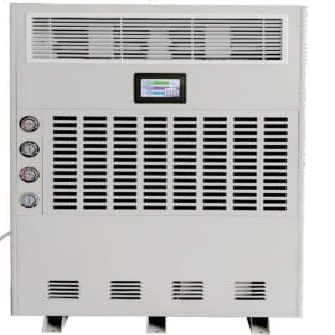
If you’re a building manager, contractor, or anyone looking to upgrade your HVAC and lower your carbon footprint, let’s talk. I’ve worked with projects of all sizes, from small cafes to 20-story office buildings, and I can help you find the right FCU that fits your budget and your green goals. Hit me up to chat through your needs, ask questions, or get a quote—no pressure, just honest advice.
Air-cooled Chiller References
- U.S. Department of Energy. (2023). Energy Efficiency Trends in HVAC Systems for Commercial Buildings.
- International Energy Agency. (2022). The Role of Zone-Based HVAC Systems in Reducing Carbon Emissions.
- Air-Conditioning, Heating, and Refrigeration Institute (AHRI). (2024). GWP and Refrigerant Phase-Out Guidelines for Fan Coil Units.
- National Institute for Occupational Safety and Health (NIOSH). (2023). Indoor Air Quality Impacts of Modern HVAC Filtration Systems.
Hangzhou Dayu HVAC Engineering Co., Ltd.
As one of the most professional fan coil unit manufacturers and suppliers in China, we have world-leading production equipment and strong manufacturing capabilities. If you’re going to buy customized fan coil unit made in China, welcome to get quotation from our factory. For price consultation, contact us.
Address: Room 1004, Building 1, Xicheng Business Tower, Xihu District, Hangzhou City, Zhejiang Province, China
E-mail: info@hi-hvac.com
WebSite: https://www.hi-hvac.com/
