Hey everyone, let’s cut to the chase—when you hear “machine learning,” your brain probably jumps to GPUs, fancy code, and datasets that are bigger than your old laptop. But here’s a question I’ve fielded a hundred times as a metal framework supplier: can actual metal itself be used for ML, or is that just some sci-fi nonsense? Spoiler alert—no, it’s not. And it’s already moving the needle for folks building next-gen ML hardware, which is exactly where our metal frameworks come into play. Metal Framework
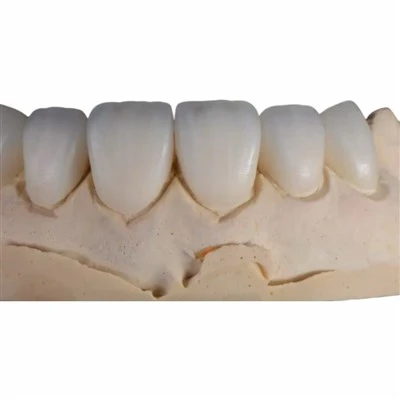
First, let’s get something straight. ML isn’t just code running on a server—most of the heavy lifting happens on specialized hardware, right? CPUs are too slow for the matrix math that makes ML models tick, GPUs work but waste a ton of power, and then there’s the new kids: AI accelerators, neuromorphic chips, even photonic chips. All of these rely on metal parts—super precise, custom-shaped metal frameworks that hold everything together, keep signals clean, and prevent overheating. But wait, why metal and not, say, plastic or ceramic? Let’s break it down without the boring jargon.
Metal’s superpowers here boil down to conductivity, durability, and thermal management. For ML accelerators, you need tiny circuits that pass electrical signals back and forth at lightning speed. Copper and aluminum—our bread and butter here—conduct electricity way better than any plastic, so there’s less lag and less energy wasted as heat. If a circuit is slow, your ML model takes longer to train; if it’s wasting power, you’re burning through electricity bills (or worse, overheating the whole rig mid-training). That’s where our metal frameworks step in—we machine them to tolerances so tight you couldn’t see the gap with your naked eye, and plate them with gold or nickel if extra corrosion resistance is needed. No frills, just metal doing what it does best: keep signals sharp and temperatures low, which makes your ML hardware run faster and last longer.
But let’s talk about the really cool stuff that’s not just your run-of-the-mill server hardware. Neuromorphic computing is a big one here—this is ML that mimics how the human brain works, with tiny “neurons” and “synapses” that fire data around. These chips are super delicate, with millions of tiny components packed into a space smaller than a credit card. To hold all that in place, you need a framework that’s rigid but not brittle, has enough space for the wiring, and doesn’t interfere with the tiny electrical signals. Metal is perfect for this—unlike ceramic, which can be hard to shape into those tiny, custom forms, we can mill our metal frameworks to fit exactly what a neuromorphic chip needs. We’ve already worked with a couple of startups building these chips, and their feedback? Our metal parts cut their assembly time in half, because the fit is so precise they don’t have to waste time adjusting misaligned components.
Then there’s edge ML—you know, the stuff that runs on your phone, your smart watch, even a sensor on a factory floor. Those little devices can’t have a big GPU, so they use tiny ML accelerators. Again, metal is key here. The metal frameworks hold the tiny chips, the sensors, and the antennae that send data back and forth. Edge devices need to be lightweight, tough enough to survive being dropped, and able to run on a battery for months. Plastic would break after a few drops, and ceramic is too heavy. Our metal frameworks are thin (some are only 0.2mm thick) so they don’t add extra bulk, but tough enough to handle whatever the device throws at it. We also work with clients to design frameworks that fit their specific edge ML chips—no one-size-fits-all nonsense.
Wait, but some folks will argue—can metal actually process ML itself? Not the code, obviously, but the hardware itself, right? That’s where terms like “metal-based ML” come up, and it’s not just marketing. Researchers have been testing metal oxide memristors—tiny metal parts that change their electrical resistance based on how much current passes through them. These can act like the synapses in the brain, so you can build an ML system that uses these memristors instead of regular digital circuits. They use way less power, which is a game-changer for edge devices and even big data centers. The problem? These memristors need a super precise environment to work, and you can’t just stick them on a random circuit board. That’s where our metal frameworks come in—we build the exact holders and wiring systems that keep the memristors aligned, shielded from external interference, and connected to the rest of the hardware. Without that metal framework, those metal memristors are just fancy little blobs on a lab bench.
Now, let’s be real—this isn’t a magic bullet. Metal won’t write your ML code, or train your model overnight. But it’s the unsung hero of ML hardware. A lot of people focus on the GPUs and the algorithms, but no one talks about the parts that hold those GPUs together. If your metal framework is off by a fraction of a millimeter, your GPU’s signals get crossed, your model slows down, or even crashes. We’ve seen clients who tried using cheap, off-the-shelf metal parts, only to have their ML accelerator overheat mid-test, because the cooling channels in the framework weren’t shaped right. That’s why custom metal frameworks matter—we don’t just send you a piece of metal, we work with you from the design phase to make sure it fits your exact ML hardware needs.
Let’s take an example. Last year, a team from a university hit us up because they were building a new ML-powered camera for agricultural drones. The camera needed to run real-time image recognition to spot crop diseases, but it had to be small enough to fit on a drone, and use barely any power (so the drone could fly for hours). Their original design used plastic frameworks, but the camera kept overheating when processing high-res images. We redesigned the metal framework—added tiny cooling fins that fit exactly around the ML accelerator, and used a copper alloy that conducts heat 3x better than their old plastic. The result? The drone’s camera ran 20% faster, used 15% less power, and the metal framework was still light enough that the drone didn’t need extra batteries. They told us that without our metal parts, the project would have been dead in the water. That’s the kind of impact metal has on ML—you don’t see it, but you can’t have the tech without it.
Another angle: sustainability. ML data centers are huge energy hogs—they use more power than some small countries. Part of that is because the hardware is inefficient. Good metal frameworks can cut that waste. If a framework is designed to cool the hardware better, the chips don’t need to run as hard to stay cool, so less energy is wasted. We’ve had a couple of big data center clients switch to our custom metal frameworks, and they reported a 12% drop in their power usage for ML training. That’s not just good for their bills—it’s good for the planet. A lot of people don’t connect metal hardware to ML’s carbon footprint, but it’s a big piece of the puzzle.
Now, let’s clear up a common myth. Some folks think “metal for ML” is just a way for metal suppliers to jump on the AI bandwagon. Sure, we’re a metal framework supplier, but we’re not just slapping the word “ML” on our products. We work with ML engineers, hardware designers, even material scientists to understand what they need. If a client needs a framework that works with photonic ML chips (which use light instead of electricity), we can adjust our metal plating to be transparent enough for the light signals. If they need a framework for a tiny neuromorphic chip, we can machine it with micro-sized holes for wiring. We don’t do generic—every project is different, and every metal part is tailored to the ML hardware it’s going into.
So, can metal be used for machine learning? The short answer is yes—maybe not in the way you thought, but it’s absolutely integral to how ML hardware works, and it’s only going to get more important as ML gets more powerful. As models get bigger (think GPT-5 or whatever comes next) and edge devices get smarter, the demand for custom, high-performance metal frameworks will only skyrocket.
Here’s the thing: if you’re building ML hardware—whether it’s a data center accelerator, a drone camera, a smart watch, or a new kind of neuromorphic chip—you don’t want to cut corners on the metal framework. A cheap, off-the-shelf part might work for a week, but it’ll fail when you’re training a big model or testing a new edge device. A custom metal framework from us? We work with you through design, prototyping, and production, so you get exactly what you need, no surprises.

If you’re looking to upgrade your ML hardware’s performance, reduce energy waste, or just build something that works reliably, let’s chat. We can take your existing design, tweak it for metal, or help you start from scratch. No sales pitches, no jargon, just metal that does what it’s supposed to for your ML projects.
Acrylic Denture References
- International Roadmap for Devices and Systems (IRDS) 2023: Advanced Packaging for AI Hardware
- Nature Electronics, "Metal Memristors for Neuromorphic Computing", Vol. 6, 2022
- U.S. Department of Energy, "Data Center Energy Efficiency: The Role of Thermal Management Hardware", 2024
- IEEE Transactions on Components, Packaging and Manufacturing Technology, "Custom Metal Frameworks for Edge ML Devices", Vol. 13, 2023
Shenzhen Tuomei Dental Technology Co., Ltd.
We are one of the most professional metal framework manufacturers and suppliers in China, featured by quality products and low price. Please rest assured to buy discount metal framework made in China here from our factory. Welcome to view our website for more information.
Address: Room 301, Building C Fuhe Industrial Park No.18 Hexiu West Road, Zhancheng Community Fuhai Subdistrict, Bao’an District, Shenzhen, Guangdong, China
E-mail: dentallab.works@gmail.com
WebSite: https://www.sztuomeidentallab.com/
