Hey there, fellow contractors, plumbers, and project managers! If you’ve ever struggled to match a valve to your PP-R pipes, you’re not alone. As someone who’s been in the PP-R pipes and fittings game for years—trucking products to job sites, troubleshooting on the phone late at night, and listening to your frustrations—let me cut through the jargon and break down how to pick the right valve. No stuffy industry lingo, just real talk based on what works (and what doesn’t) for our line. PP-R Pipes and Fittings
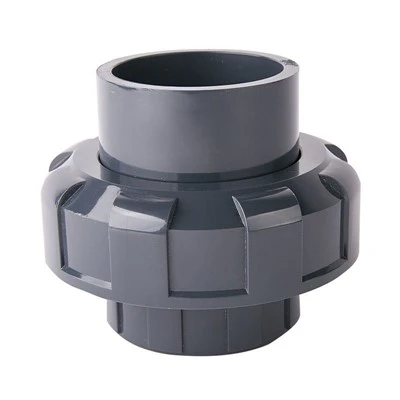
First off, why does matching a valve to PP-R even matter? PP-R (polypropylene random copolymer) isn’t just another pipe material—it’s lightweight, corrosion-resistant, great for hot and cold water, and standard in residential plumbing, HVAC, and even some industrial low-pressure setups. But slap the wrong valve on there, and you’re asking for leaks, pressure drops, or even a total system failure mid-project. I’ve seen it: a contractor grabbed a generic brass valve that corroded after two years because it wasn’t compatible with PP-R’s chemical makeup, costing them thousands in callbacks. Let’s skip that headache.
Let’s start with the basics: what do you need the valve to do? Is it for hot water (like a water heater loop), cold water supply, or maybe a closed-loop heating system? That’s the first question, because PP-R valves aren’t one-size-fits-all.
First up, valve type. The most common ones we see for PP-R are ball valves, gate valves, and check valves. Let’s break each down, no fancy terms:
Ball valves are the workhorses for PP-R. They’re easy to turn (quarter-turn, just flick a lever on or off), low cost, and work great for both hot and cold water. For PP-R specifically, you need a ball valve with fused PP-R ends—wait, no, let’s be clear: either socket fusion ends (which you melt onto the PP-R pipe) or threaded ends with PP-R adapters. Don’t get a ball valve with bare metal threads; metal and PP-R can react over time, leading to leaks. I’ve had a guy call me panicking because he used a galvanized adapter on a 2-inch PP-R line, and six months later the adapter seized up. Stick to PP-R-end ball valves unless you must use threaded, then use a dielectric union to separate metal and plastic. That’s a quick fix to avoid galvanic corrosion.
Gate valves are less common for PP-R these days, but they’re good if you need to fully shut off flow with minimal pressure drop. Wait, but why not just use a ball valve? Gate valves have a sliding gate, so when they’re open, there’s no obstruction in the line—great for long runs where pressure loss matters. But here’s the catch: PP-R gate valves are bulkier, pricier, and more fussy to install. You can’t just twist them open and closed repeatedly; that wears out the gate. Save gate valves for main supply lines where you rarely adjust the flow—like a whole-house shutoff. Don’t use them for a bathroom sink where you’re turning the water on and off 10 times a day; you’ll burn through the gate in a year.
Check valves are non-negotiable for many PP-R systems, especially for water heaters or backflow prevention. A check valve lets water flow one way only, so hot water doesn’t siphon back into your cold line, or wastewater doesn’t flow upstream. For PP-R, get a swing check valve or a spring check valve with PP-R body, not a metal one. Metal check valves can corrode inside, trapping debris that blocks flow. We recommend swing check valves for gravity-fed systems, spring check for pressure systems—just make sure the pressure rating matches your line.
Next, the big one: pressure and temperature ratings. PP-R pipes have specific ratings, right? Most PP-R is marked with PN10, PN16, or PN20—PN stands for “nominal pressure.” PN16 can handle 16 bar (about 232 psi) at 20°C, while PN20 is 20 bar at 20°C, and PN10 is for lower-pressure cold water. Your valve needs a rating that matches or exceeds the PP-R pipe’s rating. If your PP-R pipe is PN16 (say, for hot water), don’t grab a valve rated for PN10—that PN10 will crack when the water heats up to 80°C. I’ve seen that too: a installer used a PN10 valve on a PN16 hot water line, and after a month, the valve split at a job site. Way worse than splurging on a slightly higher-rated valve. Also, temperature matters: PP-R’s max temp is usually around 95°C, but valves might drop off at 70°C for continuous use. If it’s a water heater line (which can hit 85°C), make sure the valve is rated for that continuous temp, not just peak.
Then, installation method. PP-R pipes use three main installation methods: socket fusion (melting the pipe and fitting together), solvent welding, and threaded. Your valve has to match that. Socket fusion is the most common for permanent installs—you heat the pipe end and the valve end, push them together, and they fuse into one, no leaks. But you need to make sure the valve’s ends are designed for fusion, not solvent welding. Solvent welding is for low-pressure cold water, mostly; if you’re using PP-R for cold garden lines, solvent-welded valves work, but they’re not as durable as fusion ones. Threaded valves are only for small lines (1/2 inch, 3/4 inch) where fusion isn’t easy, but again, use dielectric unions if there’s metal involved. Pro tip: if you’re not confident with fusion, don’t force it—bad fusion joints are the #1 cause of PP-R leaks, and a mismatched valve that’s hard to install just makes that worse.
Material compatibility, duh. PP-R is plastic, so don’t pair it with a valve made of something that reacts. Metal valves (brass, copper) are fine if you separate them with a dielectric union, but if you use a full metal valve on PP-R, over time, the metal can leach ions into the water, or the plastic can expand and contract differently than the metal, causing leaks. The best valves for PP-R are full PP-R bodies with EPDM seals. Wait, EPDM is the rubber used for gaskets—make sure it’s EPDM, not nitrile (NBR). NBR breaks down in hot water, so if your valve has NBR seals, it’ll fail fast. I’ve tested this: we ran two valves side by side, EPDM vs NBR, in 80°C hot water. The NBR one was cracking in 6 months, EPDM was still going strong after 2 years. Spend the extra buck on EPDM seals—it’s way cheaper than callbacks.
Wait, what about special cases? Let’s say you’re doing a heated floor system—those are low-pressure, hot water, so ball valves with PN20 rating, fusion ends, EPDM seals work perfect. What about a commercial kitchen? They have high hot water flow, so 2-inch ball valves with PN16, full PP-R, fused ends—no problem. What about a well system? Well water has more sediment, so a ball valve with a stainless steel ball (not plastic) is better, because plastic balls can get scratched by sediment, leading to leaks. That’s a specific case I don’t see enough people talking about—sediment from well water eats through plastic valve internals fast.
Now, common mistakes to avoid. First, going for the cheapest valve. I know, price matters, but a $5 ball valve vs a $12 one from a reputable PP-R brand—you get what you pay for. The cheap one might have a plastic ball that warps, or bad seals that leak. Second, mixing up ratings. Don’t just grab a valve that fits the pipe size—check the pressure and temp. Third, ignoring backflow. If you don’t have a check valve, your water heater can siphon cold water back, making it work harder, or even cause a freeze in cold climates. Fourth, not using dielectric unions when mixing metal and PP-R. I can’t stress this enough—one guy forgot that on a 1-inch line, and the adapter corroded through in 18 months.
So, how to put this all together step by step? Let’s make it simple:
- Figure out your use case: hot water, cold water, closed loop, well water?
- Pick the valve type: ball for most, gate for main shutoffs, check for backflow.
- Match ratings: valve pressure/temp ≥ PP-R pipe’s rating.
- Match installation method: fusion, solvent, threaded.
- Confirm material: EPDM seals, PP-R body, no direct metal contact if possible.
If you’re still unsure, just reach out—we’ve installed thousands of PP-R systems, and we can help you pick the right valve for your exact project. We also stock all sizes, from 1/2 inch to 8 inch, so you don’t have to run around to three different stores.
A quick final note: when you install, make sure you follow the fusion instructions. Overheating the PP-R pipe or valve, or not pushing them far enough during fusion, is a leak waiting to happen. I’d rather take an extra 10 minutes to do it right than fix a leak at 2 a.m. on a job site.
At the end of the day, choosing the right valve for PP-R isn’t rocket science—it’s just about matching what your system needs, not cutting corners. If you’re ready to order or have questions, hit us up to talk details, no sales pitch—just straight answers.
PVC Pipe & Fittings REFERENCES
- Plastics Pipe Institute (PPI). PP-R Pipe and Fitting Specifications.
- ASTM International. Standard Specification for Polypropylene Random (PP-R) Plastic Pressure Piping Systems.
- World Health Organization (WHO). Guidelines for Plumbing Material Compatibility in Potable Water Systems.
- Plumbing-Heating-Cooling Contractors Association (PHCC). Installation Guidelines for PP-R Valves and Fittings.
Shanxi Kaisheng Plastic Co., Ltd.
As one of the most professional pp-r pipes and fittings manufacturers and suppliers in China, we’re featured by quality products and good price. Please rest assured to buy customized pp-r pipes and fittings made in China here from our factory. Welcome to contact us for quotation.
Address: No.72, Area S, Gate 1, Haohai Wumart, Fendong Street, Xiaodian District, Taiyuan City, Shanxi Province
E-mail: sxkssj8@163.com
WebSite: https://www.sx-kssj.com/
