As a check valve supplier with over a decade in the fluid control industry, I’ve lost count of how many times I’ve heard clients say, “We just need a basic check valve—why does quality matter so much?” The answer isn’t just about durability; it’s about avoiding catastrophic downtime, contaminated product batches, and costly safety hazards that can tank even the most well-run operations. Over the years, I’ve learned that ensuring check valve quality isn’t a one-step process—it’s a journey that starts long before a valve leaves our warehouse and continues long after it’s installed. Let me walk you through the practical, science-backed steps we take to make sure every check valve that bears our name doesn’t just meet, but exceeds, the standards our clients rely on. Check Valve
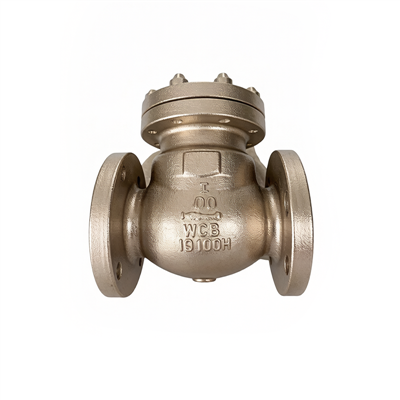
First, quality starts with the right material selection. I’ve seen too many suppliers cut corners here, grabbing cheap, low-grade metals that corrode or wear out in months, not years. For context, a check valve’s main job is to stop backflow, so if its internal components—the disc, seat, and spring—are made of the wrong material, even the best design won’t hold. Let’s break this down: for water and general industrial applications, we use 316 stainless steel because it resists rust and mineral buildup way better than 304, which pitting corrosion can damage over time. For corrosive environments like chemical processing or food and beverage production, we go with alloy 20 or Hastelloy—materials that can hold up against acids, solvents, and even food-grade caustics without leaching harmful particles. A client in the craft beer industry once told me they switched to our 316 stainless check valves because their old ones were leaving tiny metal shavings in the line, ruining a batch of IPA that cost them $12,000. That’s the kind of mistake we prevent by refusing to skimp on materials. We also test every raw material batch with a spectrometer to confirm its composition; no shortcuts here—if the spec doesn’t match, the whole lot gets sent back, no exceptions.
Next, design validation isn’t just for show—it’s the backbone of a reliable check valve. Too many small suppliers copy a design from a catalog without testing if it works for real-world conditions. For example, a swing check valve might look simple, but the angle of the disc, the weight of the swing arm, and the tension of the spring all affect how quickly it closes, which is critical for preventing water hammer—those loud, pipe-shaking jolts that can crack pipelines or burst tank connections. We don’t just rely on computer-aided design (CAD) models; we test every design in our in-house flow lab. Last year, we redesigned a swing check valve for a municipal water client because the original design closed too slowly, causing water hammer that damaged their pipe fittings. We ran 50+ tests with different flow rates (from 20 to 150 gallons per minute) and adjusted the disc’s counterweight until it closed in under 0.2 seconds, the sweet spot to eliminate hammer. For lift check valves, we test the spring’s tension too: a spring that’s too weak will leak, and one that’s too strong will require more force to open, which can cause pressure drops in the line. We also make sure our designs comply with industry standards like ISO 9001 and API 6D, but we don’t stop there—we customize designs for our clients’ specific needs, because a check valve that works for oil and gas won’t work for a pharmaceutical clean room.
Manufacturing precision is where a lot of quality gaps pop up. A check valve with a perfectly good design won’t perform if the seat isn’t machined flat, or if the disc has even a tiny burr that keeps it from sealing tightly. That’s why we use CNC machining for all critical components—manual machining is too inconsistent, even for skilled workers. We set tight tolerances: the seat’s surface finish has to be within 1.6 micrometers to ensure a tight, leak-proof seal; anything rougher and the disc won’t sit flush. After machining, every component goes through a deburring process, and we even do a manual check by our lead technicians to make sure no sharp edges or imperfections are left. For example, when we make ball check valves (used in high-pressure applications), the ball has to be perfectly round; we test each ball with a roundness gauge to make sure it doesn’t have any deviations that would cause it to wobble and leak. I once had a new hire skip the roundness check on a batch of balls, and when we tested the valves, 12% of them leaked at 150 PSI. We caught that before they shipped, fixed the process, and that incident taught us that even one skipped step can lead to costly mistakes.
Testing is non-negotiable—we test every check valve before it leaves our facility, not just a sample. There are two key tests we run: hydrostatic testing and seat leakage testing. Hydrostatic testing means filling the valve with water and pressurizing it to 1.5 times the maximum working pressure for five minutes to check for external leaks (from the body, connections, or gaskets). Seat leakage testing is more critical: we pressurize the upstream side of the valve and check if any fluid flows back through the seat, which would mean the valve isn’t sealing. For most industrial applications, we allow a maximum leakage of 1 drop per minute, but for clients like food processors or pharmaceutical manufacturers, we go even stricter—zero leakage. Last quarter, a batch of 20 check valves failed our seat leakage test; we traced the issue to a misaligned seat during assembly, so we added a laser alignment step in the assembly line to make sure that never happens again. We also do field testing with select clients before a new design is rolled out; a chemical plant in Texas let us install 10 of our new check valves in their pipeline, and we monitored their performance for six months before full production— that’s how we ensure quality in real conditions, not just in a lab.
Proper packaging and documentation are often overlooked, but they’re part of ensuring quality too. A check valve that’s machined perfectly can get scratched in shipping, which ruins the seat finish and causes leaks. So we package each valve in a foam-lined crate, with plastic caps on the ends of the ports to keep dirt and debris out, and we wrap internal components like the disc and spring in anti-corrosive paper for long-term storage. We also include a full set of documentation with every shipment: material test reports, test data sheets, and installation instructions. For clients in regulated industries, like pharmaceuticals, we provide compliance certificates to prove the valves meet FDA standards. A client once told us they saved $8,000 in installation costs because our instructions were clear, so their team didn’t have to call us back for help— that’s the kind of small detail that adds up to a quality experience.
Now, I know some of you might be thinking, “This all sounds good, but how do I make sure the check valve I buy is actually built this way?” The short answer is: work with a supplier that prioritizes transparency. Ask for their material test reports, their design validation data, and their in-house testing records. A reputable supplier won’t hide these things—they’ll be happy to share them. At the end of the day, a check valve is a small but critical part of your system; a faulty one can cause more problems than it’s worth. If you’re looking for a check valve supplier that stands behind the quality of every valve, we’re here to help. Whether you need a standard valve for a small plumbing project or a custom high-pressure valve for an oil and gas pipeline, we’ll work with you to make sure your valves perform as expected, every time. Reach out to us to discuss your specific needs and find the right check valve for your application.
Gate Valve References
API 6D (2020). Specification for Pipeline Valves. American Petroleum Institute.
ISO 9001:2015. Quality Management Systems — Requirements. International Organization for Standardization.
Miller, J. (2019). Fluid Control Valves: Selection, Application, and Maintenance (2nd ed.). Elsevier.
NACE MR0175/ISO 15156 (2021). Petroleum and Natural Gas Industries — Materials for Use in H2S-Containing Environments in Oil and Gas Production. NACE International.
Xiongxiang Valve Group Co., Ltd.
As one of the most professional check valve manufacturers and suppliers in China, we’re featured by quality products and good price. Please rest assured to wholesale cheap check valve for sale here from our factory. Contact us for more details.
Address: Building 1, No.306, 12th Binhai Road, Jinkai District, Wenzhou City, Zhejiang Province, China
E-mail: info@xiongxiangvalve.com.cn
WebSite: https://www.steelvalvegroup.com/
