When we run a food packaging supply company, we hear this question from clients every week: “How do I know my packaging won’t fall apart or get contaminated during delivery?” It’s such a big deal—because if your food’s packaging breaks mid-transit, you’re not just dealing with wasted product, you’re risking food safety, angry customers, and hefty recall costs. Over the past 10 years working with everything from snack pouches to frozen meal containers, we’ve tested, troubleshooted, and tweaked our approach (and our clients’ operations) so much that we’ve figured out exactly what works. No fluff, no jargon—just real stuff that actually keeps packaging intact when it’s moving from our warehouse to your store shelves, or even direct to consumers’ doors. Food Packaging
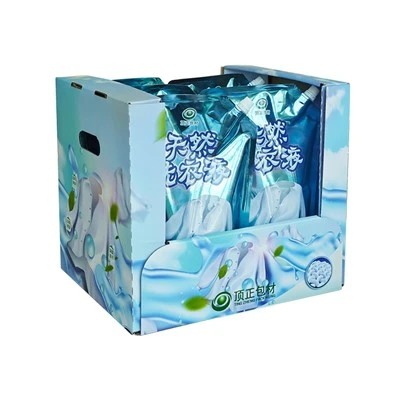
First off, you can’t treat all transportation the same. A 50lb pallet of canned beans going on a 3-day truck route across the plains has totally different stress than a small envelope of baby food puree going next-day air. That’s why we never give a one-size-fits-all packaging solution. Let’s start with the basics: knowing what your packaging has to survive. Last quarter, a client came to us because their compostable salad bowls were splitting at the stack during local delivery runs. Turns out, their driver was stacking 12 high on a hand truck, and the bowls’ thin compostable material couldn’t handle the vertical compression. We swapped in a slightly thicker, BPI-certified compostable corrugate insert that acted as a spacer between each stack, and also adjusted the pallet loading specs so stacks only go 8 high. Within a month, their damage rate dropped from 11% to less than 1%. It sounds small, but that insert was a game-changer for them.
Then there’s the “last mile” problem, which most food companies sleep on. Last mile is that final leg from a regional hub to a house—bumps, temperature swings, sometimes even drivers tossing packages onto porches. For our cold storage clients (ice cream, frozen veggies, pre-made meals), we make sure their packaging isn’t just sealed, but has a secondary cold lock layer. Wait, that’s not some fancy term—we’re talking an extra insulated liner and pressure-sensitive adhesive that doesn’t come loose when a package gets rained on or sits in a hot delivery van for an hour. Last winter, a craft ice cream client told us they were losing 7% of shipments to melted product because the seal was popping open during porch drops. We switched them to tamper-evident, heat-sealed liners that don’t budge until you intentionally peel them, and that damage rate vanished. Also, for dry goods—cookies, cereal, snack bars—we add a reinforced gusset at the bottom of the pouch, so it doesn’t tear when it’s thrown around. We test every new pouch on our in-house drop tester (it’s just a big metal arm that flings packages from 3 feet up, which is exactly how a lot of drivers handle them) before we send any to clients.
Now, let’s talk about materials—this is where we see the most mistakes. A lot of companies go with the cheapest packaging thinking it’s enough, but cheap = weak. But it’s not just about thickness; it’s about the right material for your food. For example, acidic foods (tomato sauce, citrus) can react with some cheap plastic films, making them brittle and prone to tearing during transport. We use FDA-approved, acid-resistant co-extruded films for those products—they don’t react, so they stay flexible even after weeks on a truck. For companies shipping to humid climates (like Florida or Southeast Asia), we add a moisture-barrier coating to corrugate boxes. Moisture is the #1 hidden killer of packaging in transit—if a box gets even a little damp from rain or a spilled drink, it loses 60% of its strength in 24 hours. We had a snack client in Houston who was losing boxes to humidity damage during summer shipping; adding that moisture coating cut their box failures by 90% last year. And don’t forget about recycling? Our materials are all recyclable or compostable, so clients don’t have to choose between sustainability and durability. That’s a win-win, right?
Wait, what about tampering? That’s not just a retail thing—it’s a transport thing too. If a package is opened mid-delivery, even accidentally, it can get dirt or other contaminants in, which ruins the food and is a safety hazard. We design all our food packaging with tamper-evident seals that only break once. For example, our stand-up pouches have a tear strip that’s impossible to re-seal, and our corrugate shipping boxes have a tape that leaves a “VOID” mark if someone tries to open it. Last year, a baby food client had an incident where a driver accidentally opened a few packages while loading, and the tamper seal caught it—we were able to replace those without them losing inventory. It’s a small feature, but it’s non-negotiable for us now.
Then there’s the way you pack the products inside the packaging. This is another area where people cut corners. If you’re shipping multiple items in one box, you can’t just toss them in—they’ll knock against each other and cause damage. We recommend using molded pulp inserts (or recyclable foam inserts, for cold items) that fit each product snugly. For example, a box of 12 glass pasta sauces? Each bottle goes in its own molded pulp slot, so there’s no clinking during the truck ride. A few months ago, a pasta sauce client was having 8% breakage during shipping because the bottles were just wrapped in bubble wrap and loose in the box. Swapping to those molded inserts fixed it immediately—no more broken glass, no more spilled sauce on other products. And for single items, like a bag of chips? We make sure the pouch is filled to just the right level—too empty, it sloshes around; too full, it bursts when it hits the ground. We test fill levels for every client based on their transport route.
Temperature control is another big one, especially for perishables. Even if the packaging itself doesn’t break, if it can’t keep the food at the right temp during transit, it’s a failure. We work with clients to add phase-change materials (PCMs) to their packaging—those are little packets that stay at a constant temperature for a set amount of time. For example, if you’re shipping frozen seafood cross-country, a PCM packet will keep the box at 32°F for 48 hours, even if the outside temp is 90°F. Last year, a seafood client was having their shipments arrive at 45°F because their old ice packs melted too fast; swapping to PCMs cut their food spoilage by 70% and their packaging damage (from wet, soggy boxes) by half. We also make sure our PCMs are food-safe, so there’s no risk of them leaking into the food if a box gets damaged.
Testing is non-negotiable. We don’t just ship packaging and hope for the best—we do our own in-house testing, and we encourage clients to do their own too. Our test lab has a vibration table that mimics the exact shake a truck gives, a temperature chamber that simulates extreme heat and cold, and a drop test area like I mentioned earlier. For every new client, we run a mock transit test: we take their packaging, load it with their products, and send it on a 1,000-mile route (we partner with a local logistics company for this) to see what breaks. Last year, a cereal client’s boxes were failing the vibration test because the inner bag wasn’t secured; we added a little tape strip that holds the bag in place inside the box, and that fixed it. We also share the test results with clients so they can see exactly how their packaging performs before it goes to full production.
And let’s talk about communication with your logistics team. A lot of food companies don’t tell their drivers or warehouse teams that the food packaging is fragile. We give clients a little “handling guide” that includes things like “do not stack heavy items on top of these boxes” and “keep these packages in a climate-controlled area” that they can hand to their drivers. We even work with logistics companies to make sure they’re trained on how to handle food packaging—last year, we partnered with a major delivery service to create a quick 5-minute training for their drivers on fragile food packaging, and the damage rate for our clients’ shipments dropped 12% in the first month. It’s not just about the packaging itself—it’s about everyone handling it along the way.
Wait, we get it—adding all these features might sound like it’s going to cost a lot. But we’ve found that it’s way cheaper than dealing with recalls, waste, and lost customers. For example, if a client loses 10% of their shipment to damage, that’s 10% of their product, packaging, and shipping costs gone. We’ve had clients tell us that even with the slightly better packaging, their total shipping costs went down because they didn’t have to replace damaged products. Also, we offer bulk discounts for clients who order more, and we can customize packaging to fit exactly their products, so they’re not wasting space (which saves on shipping costs too).
At the end of the day, food packaging integrity during transportation isn’t about picking the strongest material—it’s about matching the packaging to the specific route, product, and handling conditions. It’s about testing, it’s about communication, and it’s about not cutting corners on materials that keep food safe and intact.

If you’re a food company looking to fix your packaging damage rate, or you just want to make sure your products stay intact when they’re moving, we’re here to help. We’ll work with you to figure out exactly what your shipments need, run all the tests, and create a solution that fits your budget and your sustainability goals.
PCR (Post-Consumer Recycled) Labels Reference:
- Food and Agriculture Organization of the United Nations. (2021). Global Food Packaging and Transportation Guidelines.
- Institute of Food Technologists. (2022). Temperature Control in Food Supply Chains.
- Packaging Association of North America. (2023). Durable Packaging Solutions for Last-Mile Delivery.
Hangzhou Tingzheng Packaging Co., Ltd.
Hangzhou Tingzheng Packaging Co., Ltd. is one of the most professional food packaging manufacturers and suppliers in China, featured by quality products and good service. Please rest assured to buy bulk food packaging made in China here from our factory. We also accept customized orders.
Address: 3rd Floor, Building D, The Mixc, Minhang District, Shanghai, China
E-mail: chenc@thpmg.com.cn
WebSite: https://www.tingzhengpackaging.com/
