Hey everyone, if you’ve ever worked with industrial lighting or electrical distribution gear, you’ve probably heard the term “switch tube” thrown around—maybe you even use them in your daily projects. But today, let’s get real about a question I get asked constantly as a switch tube supplier: just how wear-resistant are these things? Spoiler: it’s not a one-size-fits-all answer, and that’s exactly why so many folks overcomplicate it without breaking down the basics first. Switch Tube

First, let’s cut through the jargon a little for anyone new here. A switch tube (sometimes called a fuse tube or switch cartridge, but let’s stick to switch tube to keep it simple) is that hard-wearing, tube-shaped component that houses fuses or disconnect switches in high-voltage, low-voltage, or industrial setups. Think power plants, factory assembly lines, even commercial buildings’ main electrical panels. The whole point of its wear resistance? It’s the thing that keeps the tube intact, stops dust and moisture from getting inside, and lets you flip the switch or replace the fuse without it breaking on you mid-task.
Now, when people ask about wear resistance, they’re usually referring to two main types: mechanical wear (like constant switching, rubbing against parts, accidental bumps) and environmental wear (corrosion from humidity, chemicals, UV rays, whatever your work site throws at it). I’ve seen so many new customers come in with horror stories: “Last tube I bought cracked after 6 months of flipping the switch every day,” or “The plastic on mine fell apart from the metal dust in my factory.” That’s almost never a “switch tube is bad” issue—it’s a “you bought the wrong one for your wear conditions” issue.
Let’s break down what makes a switch tube wear-resistant, because it starts with the materials. This is where I get to geek out a little, but keep it relatable. The three most common materials we use, and why their wear resistance varies:
-
Fiberglass-Reinforced Polymer (FRP) – This is the workhorse for most industrial and commercial use. FRP is basically plastic mixed with glass fibers to make it way tougher. Its wear resistance here comes from hardness and impact strength. We test FRP tubes to withstand thousands of switching cycles—like, 10,000+ of flipping the lever back and forth before even a tiny crack shows up. I’ve had a customer use our FRP tubes in a auto manufacturing plant where workers switch the power on 20 times a day, 5 days a week, and those tubes are still going strong after 3 years. The key here? Avoid cheap FRP that uses low-grade plastic or too few glass fibers—those will get brittle fast, especially if they’re exposed to extreme cold or heat. We only source FRP that meets industry standards, so you don’t have to guess.
-
Ceramic – For high-voltage or super harsh environments, ceramic is the way to go. It’s way harder than FRP, so it resists scratching, abrasion, and extreme temperatures like a champ. Think steel mills where temperatures jump from 0°F to 100°F in a day, or chemical plants where there’s acidic fumes. Ceramic’s wear resistance here is basically unbeatable for mechanical abrasion and corrosion. The catch? It’s more brittle if you drop it, so you don’t want to use it where workers are moving heavy tools around and might knock it. But for the right job, it lasts decades. I had a utility company that used our ceramic switch tubes in a substation 15 years ago; they just told us they’re only now replacing a handful because of routine inspections, not wear and tear. That’s how good it is.
-
Polycarbonate (PC) – This is the more budget-friendly option for low-stress, indoor use. It’s lighter, cheaper, and resists impact pretty well, but it’s not as hard as FRP or ceramic. Its wear resistance is fine if you’re only switching a few times a week, no heavy debris around, but it will get scratched if something rubs against it, or yellow if it’s exposed to direct sunlight for too long. I always tell customers: if it’s a storage closet switch tube in a office building, polycarbonate works. If it’s a factory floor where forklifts might bump it, go with FRP.
Now, it’s not just materials—design plays a huge role in wear resistance too. We’ve had design tests here at our shop where two tubes are the same material, but one has rounded edges on the switch lever and the other has sharp corners. The sharp-corner one wore out 30% faster because every flip caught on something inside the tube. Even small details: the tightness of the end caps (loose caps let dust get in and abrade the inner parts), the smoothness of the tube’s outer surface (rough surfaces catch dirt and grit that scratch it over time), and the way the switch lever attaches to the tube. We tweak all these little things because, as a supplier, I don’t want you to waste money on a tube that fails because of a design flaw, not the material.
Wait, let’s talk about real-world testing, because I don’t want to just ramble about numbers. We do two main tests in-house every time we get a new batch of switch tubes:
-
Mechanical Wear Test: We hook the tube up to a motor that flips the switch lever 100 times per minute, nonstop, for 10,000 cycles. Then we check for cracks, scratches, or play in the lever. Any tube that doesn’t pass goes right back to our manufacturer—we don’t ship it. Most of our FRP tubes pass 20,000+ cycles easily, which is way more than the average industrial setup will ever need in 10 years.
-
Environmental Wear Test: We put tubes in a chamber that mimics 10 years of outdoor exposure—sunlight, humidity, salt spray (for coastal jobs), even mild chemical fumes. After 30 days, we pull them out and test for brittleness, color fade, and surface scratch resistance. Ceramic tubes barely change; FRP fades a little but stays tough; polycarbonate gets yellow, which is why we only recommend it for indoor use.
Of course, no switch tube is indestructible. I’ve seen a customer drop a ceramic tube from 10 feet onto concrete, and it cracked. That’s user error, not a flaw in the tube. Or someone using a polycarbonate tube outside for a year in Arizona sun, and it turned brittle and cracked. That’s a mismatch between the tube’s wear resistance and the job. That’s why I always ask customers: “What’s the environment like? How often are you switching it? Are there any hazards like chemicals or heavy equipment nearby?” Because answering those questions makes sure we get you the right tube, not just the cheapest one.
Now, let’s clear up a common myth: people think “higher voltage means more wear resistance needed.” Not exactly. High-voltage switch tubes (for power lines, say) have to withstand way higher electrical stress, but their wear resistance is about as good as FRP or ceramic—same as low-voltage tubes. The wear here is about mechanical, not electrical. So don’t overspend on a high-voltage tube for a low-stress indoor job; just make sure it meets the standard for your voltage, and the wear resistance is built in for whatever you’re using it for.
Another thing: maintenance affects wear resistance, too. I tell every customer to check their switch tubes twice a year—wipe off dirt, make sure end caps are tight, no cracks. Even the most wear-resistant tube will fail faster if you ignore it. I had a customer who left FRP tubes in a dusty sawmill for 2 years without cleaning them; the dust acted like sandpaper, scratched the outer surface, and let moisture get in. He replaced them, and now he cleans them every 6 months, and they’re still going strong. It’s not rocket science, but it makes a big difference.
So, putting it all together: the wear resistance of a switch tube isn’t a fixed number. It depends on what it’s made of, how it’s designed, and what you’re using it for. As a switch tube supplier, that’s why we don’t just sell you a tube—we ask questions, explain the differences, and make sure you get one that will last, not one that will break after a few months.
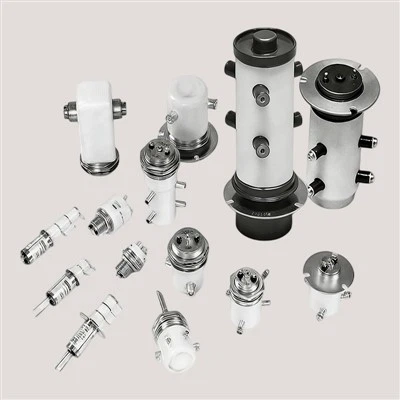
If you’re tired of buying switch tubes that wear out too fast, or you’re not sure which kind is right for your job, reach out to us to talk through your needs. We’ve worked with factories, utility companies, commercial builders, and more, so we know what works for every scenario. No pressure, just solid advice from someone who’s been in this game long enough to see what works and what doesn’t.
Vacuum Relay References
ASTM D256 – Standard Test Methods for Impact Resistance of Plastics
IEC 60269 – Low-voltage fuses
National Electrical Manufacturers Association (NEMA) Standard for Electrical Switchgear
Jingdezhen Wanping Electric Co., Ltd.
As one of the most professional switch tube manufacturers and suppliers in China, we also support customized service. We warmly welcome you to buy high quality switch tube made in China here and get pricelist from our factory. For price consultation, contact us.
Address: Zhangshukeng, Jingdezhen City, Jiangxi Province.
E-mail: jdzwpdq0815@163.com
WebSite: https://www.cewpdq.com/
