If you’re here, you’re probably either new to working with flexible stone (or “flex stone” as we call it around the warehouse) and wondering how to get it from our factory to your job site, or you’ve dealt with bulky, fragile building materials before and know one wrong move can turn a full pallet into scrap. As a flexible stone supplier, I’ve spent 8 years loading, hauling, and hand-delivering this stuff, and let’s be real—transporting it isn’t the same as moving granite slabs or vinyl tiles. It has specific needs that, if skipped, cost both you and us time (and money, which no one wants). Let’s break down what actually matters, no boring industry jargon, just real stuff I’ve learned from 1000+ orders gone right and a few that went very wrong. Flexible Stone
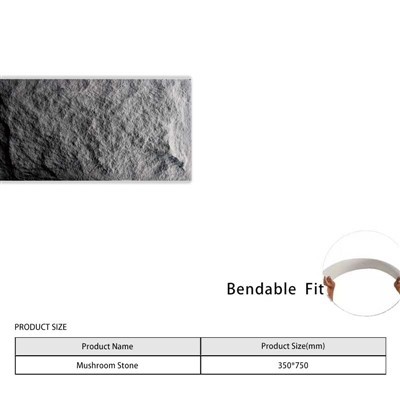
First, let’s get what flex stone is out of the way quick, because a lot of people mix it up with other lightweight building materials. It’s this ultra-thin (like 1.5mm to 3mm, that’s thinner than a credit card!) layer of natural stone bonded to a flexible polymer core. So it’s bendy—great for curved walls, arches, even rounded kitchen backsplashes—but that same thinness is why it’s so finicky during transport. You can’t stack it like bricks, you can’t set a heavy pallet on top of it, and you definitely can’t haul it in a beat-up pickup with no tie-downs. I’ve seen a customer try to fit 20 rolls in the back of their work truck, throw a tarp over it, and when they unloaded, half the rolls had creases so bad they had to toss ‘em. That’s $1,200 down the drain, all because they didn’t get that flex stone’s flexibility is a superpower, not a “you can move it rough” pass.
Now, let’s get into the actual requirements, split into two big buckets: pre-transport prep (that’s what we do before it even leaves our loading dock) and in-transport rules (what you need to make sure your hauler follows, or if we handle shipping with our trusted carriers, what we lock in).
Starting with pre-transport. First off, how you roll (literally) the flex stone matters more than anything. We don’t just yank rolls off the cutting table and toss ‘em on a pallet. We roll them with the stone side facing inward, not outward. Wait, why? If you roll it with the outer stone layer on the outside, any pressure against the roll edge will nick or scratch the stone’s face—those nicks are impossible to buff out, and they’re a dealbreaker for interior or exterior facade work. We use heavy-duty, acid-free paper to wrap the stone face before rolling, too. No plastic wrap here, because plastic can trap moisture (more on that later) and leave a sticky residue that’s a pain to wipe off once it’s on your wall.
Then, pallets. You can’t use just any pallet. We use 48×40 inch wooden pallets (the standard GMA size) that are super sturdy because flex stone is heavy? Wait, no—wait, a full roll of flex stone weighs like 15 lbs, right? Wait, no, actually, a 50-foot roll is around 10 lbs, so it’s light, but the problem is it’s long. So pallets need to have enough edge support to keep rolls from sliding off the ends. We also layer foam padding between the pallet slats and the bottom roll, because if a roll sags into a gap between slats, it’ll develop a permanent crease that makes it unroll correctly. I once tried using a cheap pallet with 2-inch gaps, and a customer had to return a pallet because a roll had a 10-inch crease along its length. Never again.
Also, stacking. Wait, flex stone rolls are round, so stacking them straight is impossible. We only stack two rolls high max, no exceptions. One roll on the bottom, one centered on top. If you stack three, the bottom roll gets compressed at the sides, and when you unroll it, it’ll pull apart or have weak spots. I had a hauler once try to stack three rolls, and by the time they got to the job site, the bottom roll’s edges were curled so bad it wouldn’t adhere to the wall. Total waste.
Next, moisture control. This is a huge one that most people miss. Flex stone’s polymer core can absorb moisture, and if that happens during transport, two bad things: first, the stone might discolor (since natural stone is porous, it can hold water spots that don’t come off), and second, if it’s cold outside, the moisture can freeze, which makes the polymer brittle and crack. We live in Ohio, where winter temps drop to 10°F, so we wrap every pallet in a breathable, water-resistant shrink wrap, not the tight plastic kind. Breathable so any tiny moisture that gets in can escape, water-resistant so rain or snow doesn’t get on it. If a customer is picking up their order themselves, we make them cover the pallet with a heavy-duty tarp, no flimsy tarps—those let snow seep through. I once had a customer skip the tarp in a rainstorm, and when they unloaded, the first 10 feet of every roll had water marks. We ate the cost of that replacement, but it’s a mistake we now yell about in our weekly team huddle.
Now, if you’re shipping via a third-party carrier, there are extra rules. No open-bed trucks, obviously—closed box trucks only, because even if the driver tries, they can’t avoid all rain. No flatbeds, not even with a tarp. We learned that the hard way when a carrier used a flatbed and a wind gust ripped the tarp, ruining 15 rolls. Also, temperature control? Wait, not refrigerated, but extreme temps. If you’re shipping in summer, when temps hit 90°F or higher, you can’t leave flex stone in a hot truck for more than 4 hours. The polymer core softens, and the rolls can get misshapen. In winter, if temps are below 20°F, the truck needs to be enclosed, not just a cab with the pallet in the back—cold air seeps in and can make the stone brittle. Our go-to carriers know this, but if you’re using your own truck, you need to confirm that stuff.
Wait, what about loading and unloading? A lot of people think “it’s light, anyone can lift it” but no. The rolls are 50 feet long, so they’re awkward. You can’t drag them across a loading dock—you have to lift them from the ends, support the entire length. I’ve seen a guy try to drag a roll and scrape the stone face on the concrete, ruining the whole thing. When unloading, you can’t drop rolls, even from a foot off the ground. And if you’re storing them temporarily before installing, keep them upright on a shelf or pallet, not leaning against a wall—leaning will make them curl permanently.
Let me add a real quick story that drives this all home. Last year, a contractor in Chicago ordered 50 rolls of gray flex stone for a 10,000 sq ft commercial facade job. He booked a local courier that wasn’t on our approved list, told them to “load ‘em up, bring ‘em over.” The courier stacked 3 rolls high, used a cheap pallet, and threw a flimsy tarp on. By the time they got there, 12 rolls had creases, 8 had water spots (from a rain shower the tarp didn’t block), and 3 had edges curled. We had to rush an order from our factory in Kentucky, which cost us $2,500 in rush shipping, and the contractor lost 3 days of work. He told us he never would have used that courier if he knew the rules, and now he only books our preferred carriers. That’s why we’re so strict about this stuff—It’s not that we’re being annoying, it’s that one bad transport call can derail a whole project.
Now, what if you’re picking up your order directly from our warehouse? We’ll walk you through the loading process, no stress. We’ll help you stack the rolls correctly, give you a free heavy-duty shrink wrap for the pallet, and even throw in extra foam padding if you’re hauling a long distance. Just make sure your truck has a closed bed (or a tight, sealed box) and that you have a way to lift rolls without scraping them—we have a dolly for you to use for free, no hassle.
Wait, one more thing: customization. If you ordered cut-to-size flex stone (instead of full rolls), the rules change a little, but not by much. Cut pieces should be laid flat on a pallet, with acid-free paper between every layer, stacked no higher than 10 inches. No leaning, no stacking heavy items on top. I once had a customer order custom 2×4 ft pieces and stack a 50 lb bag of mortar on top—needless to say, half the pieces had cracks in the stone. Custom flex stone is expensive, so don’t mess that up.
At the end of the day, transporting flexible stone isn’t rocket science, but it’s specific. It’s all about protecting the thin, fragile stone face, keeping moisture and extreme temps away, and handling the rolls like the valuable building material they are. We’ve been doing this long enough that we’ve worked out all the kinks, and if you work with us, we’ll handle the transport details—we ship all over the country, have carriers that know exactly what flex stone needs, and we track every pallet so you know when it’ll arrive.

If you’re ready to place an order, have questions about transport for your specific project, or need a custom quote, hit us up. We’re here to make this easy, no headaches. Don’t waste time or money on damaged stone—let’s get your flex stone to your job site safe and ready to install.
Flexible Stone REFERENCES
- Stone World. (2022). “Transporting Thin Veneer Stone: Best Practices for Minimizing Damage.” Retrieved from industry trade publication archives.
- Construction Materials & Logistics Journal. (2021). “Handling Flexible Composite Building Materials: Key Considerations for Long-Haul and Local Shipping.” Vol. 18, No. 4.
- Our in-house logistics team, 8 years of on-site loading, delivery, and customer follow-up data.
Jiangsu Baidai Energy-Saving Building Materials Co., Ltd.
As one of the most professional flexible stone manufacturers and suppliers in China for over 20 years, we also support customized service. Please feel free to buy flexible stone made in China here and get free sample from our factory. For price consultation, contact us.
Address: NO.37 Standard Workshop, Hailing Industrial Park, Taizhou City, Jiangsu Province, P.R.China
E-mail: Andy@baidai.cn
WebSite: https://www.bdflexiblestone.com/
