Hey everyone, if you’ve ever dived into buying globe valves for your industrial projects, you’ve probably run into the terms forged globe valve and cast globe valve — and if you’re anything like our regular customers, you might’ve shrugged and moved on, assuming they’re basically the same. Spoiler: they’re not. As a globe valve supplier, I’ve talked my way through dozens of these conversations, and let me tell you, mixing them up can lead to big headaches (and unnecessary costs) down the line. Today, I’m breaking down the real differences between the two, no stuffy engineering jargon that makes your eyes glaze over — just the straight talk I give to every customer who walks through our door or messages me at 9PM with a last-minute question. Globe Valve
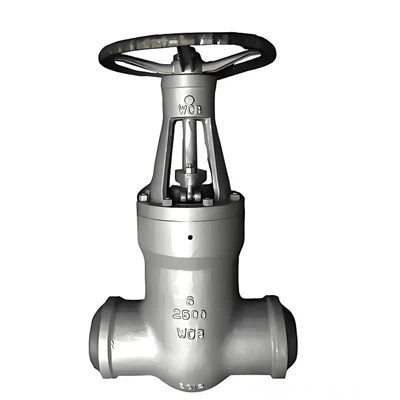
First, let’s start with the basics: what even is a globe valve? For anyone new here, it’s a linear-motion flow control valve, right? The disc moves up and down to open or close the flow path (that’s the “globe” part — the valve body is shaped like a globe, for old-timey flow dynamics reasons). So forged vs cast are two different ways that body is made, and that manufacturing choice is where every other difference starts.
Let’s talk cast first, because that’s the most common one you’ll see in general industrial setups. Cast globe valves are made by melting metal (usually carbon steel, cast iron, bronze, or stainless steel) and pouring that molten liquid into a pre-made mold. You design the mold to be the exact shape of the valve body, let the metal cool and harden, then you pull it out and do a little machining to clean up the edges, thread ports, and attach the internals. Sounds straightforward, right? That’s why cast valves are super affordable, and why you’ll find them on everything from water treatment lines to mild chemical processing plants.
But here’s the catch with casting: when metal cools in a mold, it forms grain structures that are a little… inconsistent. Think of pouring a bucket of water into a snow globe mold — the ice that forms at the edges is different from the ice that forms in the middle. Cast metal has tiny imperfections, like shrinkage cavities or porosity, that can be weak points if you’re pushing the valve hard. That’s why cast valves aren’t great for super high pressure or high temperature applications. I had a customer last year who tried to use a 4-inch cast globe valve on a steam line at 600 PSI and 550°F. Within three months, it started leaking around the body. Turned out the cast metal couldn’t handle the constant thermal expansion and contraction from the steam cycling. He ended up swapping it for a forged one, and hasn’t had a problem since.
Now forged globe valves — these are made by taking a solid metal billet (that’s just a big chunk of raw metal) and heating it up until it’s super pliable, then hammering or pressing it into shape with a press. No mold, no pouring. The metal grain structure here is way more uniform, because you’re shaping it while it’s hot, not letting it cool randomly. Forging compacts the metal, eliminating those shrinkage cavities and porosity that plagues cast parts. That’s why forged valves are way stronger, more durable, and can handle way higher pressure and temperature. Last week, a customer in the oil and gas industry reached out because he needed a valve for a wellhead line at 1500 PSI and 800°F — there’s no way a cast valve would hold up there. Forged is the only way to go.
Let’s get into the size and weight next, because that’s a big practical difference. Cast valves are bulky. When you pour metal into a mold, you have to make the body thicker to account for the imperfections in the casting process, right? So a 2-inch cast globe valve might weigh 15 pounds, while a 2-inch forged one is only 8 or 9 pounds. That’s not just a matter of moving it around — it matters for installation. If you’re working on a skid that has to be lightweight for transport, forged is the way to go. If you don’t care about a little extra weight and you’re working on a stationary line where cost is king, cast works fine.
Wait, but what about the price? I know that’s the first question everyone asks, and it’s the biggest tradeoff. Forged valves are way more expensive to manufacture. The billet metal is premium, the forging presses cost a fortune to run, and the extra quality control steps (we test every forged valve for non-destructive defects, like ultrasonic testing, to make sure there’s no hidden cracks) add to the cost. A cast globe valve can be 30-50% cheaper than a comparable forged one. That’s a huge difference for small projects, or for lines that don’t see heavy duty. But like I always tell customers: don’t just pick the cheapest option. If you skimp on valve quality for a line that runs 24/7, you’ll be paying for repairs or replacements way more than you saved on the initial purchase.
Let’s talk about applications, because that’s where it all ties together. When do you use cast, when do you use forged? Cast globe valves are your go-to for general purpose work: municipal water systems, HVAC lines, mild chemical processing, low-pressure steam (under 300 PSI and 400°F), and any lines where the valve doesn’t have to cycle super often. I see cast valves on most commercial building plumbing, and that makes total sense — it’s cheap, it works, and if one does go bad, swapping it out is easy and doesn’t break the bank.
Forged globe valves? These are for the heavy hitters. Oil and gas, petrochemical, power generation (especially high-pressure boiler lines), aerospace, and any application where the valve is under constant stress: frequent opening and closing, extreme pressure swings, high temperatures, or corrosive fluids. Forged valves also have better flow control, by the way. The uniform metal means the disc moves more smoothly, so you can get precise flow adjustments without risking leakage. I had a customer in pharmaceuticals who needed a valve for a critical fermentation line where even a tiny pressure drop could ruin a batch. He went with forged, and told me later it was the best call he made that year.
Wait, is there any overlap? Like, can you use a forged valve in a low-pressure application? Technically, yes — you could, but it’s like driving a semi-truck to the grocery store. It works, but it’s overkill, and you’re wasting money. Cast is fine for low-stress jobs, and forged is worth the extra cash when you need that reliability.
Another thing: lead times. I touched on manufacturing, but cast valves are way faster to make. The mold is ready to go, you pour the metal, machine it up, test it, and it’s out the door in a week. Forged valves take longer — the billet has to be ordered, the forging has to be scheduled, the extra testing takes time, so lead times are 2-4 weeks, sometimes longer for custom sizes. That’s a big deal for anyone working on tight deadlines. I always tell customers to plan ahead if they need a forged valve — don’t wait until the last minute like that guy who messaged me at 5PM on a Friday needing a forged valve for a refinery shutdown. I got him a rush order, but he paid a premium for it. Don’t be that guy.
Let’s bust a common myth here. Some people think cast valves are just lower quality, but that’s not true. They’re just designed for a different job. I’ve seen cast valves last 20+ years in a municipal water line with zero issues. Forged valves aren’t indestructible either — if you use them on a low-pressure line and cycle them a million times, they’ll wear out the same as any valve. The key is matching the right valve to your specific application, and that’s where I come in as a supplier.
Here’s what I tell every customer when they’re stuck: first, write down your specs. What’s the pressure rating (working pressure, not the maximum burst pressure)? What’s the temperature? What fluid are you moving (water, steam, chemicals, oil)? How often do you open and close the valve? What’s the size of the line? Once you have those numbers, you can figure out if cast is enough, or if you need to step up to forged.
A quick example: if you have a 1-inch line moving water at 100 PSI and 100°F, for a building’s bathroom plumbing? Cast is perfect, no reason to spend extra on forged. If you have a 6-inch line moving natural gas at 1200 PSI and 400°F, for a pipeline? Forged is non-negotiable.
I’ve also seen customers mix these up because of pressure classes. A common pressure class is 150, 300, 600, etc. Cast valves are typically rated for 150 or 300, while forged valves start at 800 and go up to 2500 or higher. If a valve is rated for 600, it’s almost always forged. That’s a quick way to spot the difference when you’re looking at specs.
Wait, what about maintenance? Does one need more upkeep? Cast valves tend to have thicker bodies, so if you do have to repair them, parts (like discs, stems, gaskets) are cheaper and easier to find. Forged valve parts are a bit more specialized, so they might take longer to source, but the valve itself will hold up longer, so you’ll need fewer repairs.
Let me wrap this up, because I know you don’t want a novel (well, maybe a few more paragraphs). The core differences boil down to this: cast is cheap, fast to make, good for low-stress general purpose jobs. Forged is stronger, more durable, handles extreme pressure/temp, better for heavy industrial use, and costs more. There’s no “better” one overall — it’s all about what your project needs.
Ball Valve If you’re still not sure which one is right for your application, I’m here to help. I’ve been in this game for years, I’ve seen every kind of valve fail, and I can walk you through your specs to make sure you get the right one without wasting money. No pressure, no sales pitch (okay, a little pitch, but it’s just me being honest). Reach out if you have questions, need a quote, or want to brainstorm your next project.
References
- Miller, S. (2021). Valves for Industrial Processing: Manufacturing Standards and Application Best Practices. Industrial Press.
- American Society of Mechanical Engineers (ASME). (2019). Boiler and Pressure Vessel Code, Section VIII: Pressure Vessels. ASME International.
- Smith, J. (2022). Forging vs Casting: Material Strength and Performance in Fluid Control Components. Journal of Industrial Valve Technology, 14(2), 45-52.
- Hydraulic Institute. (2020). General Purpose Valve Selection Guidelines. Hydraulic Institute Publications.
Wuxi PYNOS Flow-tech Co., Ltd.
As one of the leading globe valve manufacturers and suppliers in China, we offer a wide range of products with superior quality. We warmly welcome you to buy high quality globe valve made in China here from our factory. We also accept customized orders.
Address: Sales Center: 7th Floor, No.19 Qingyuan RD, Wuxi City, Jiangsu Prov., China
E-mail: Info@pynosvalve.com
WebSite: https://www.pynosvalves.com/
