The corrugated pipe machine is a remarkable piece of equipment that plays a crucial role in the production of corrugated pipes, which are widely used in various industries such as construction, agriculture, and telecommunications. As a supplier of corrugated pipe machines, I am often asked about the process of how these machines form the corrugation. In this blog, I will delve into the details of this fascinating process. Corrugated Pipe Machine
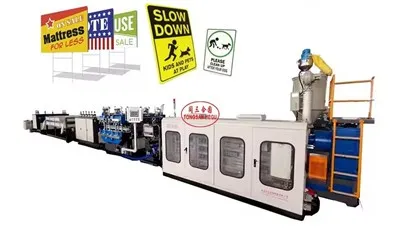
The Basics of Corrugated Pipe Production
Before we dive into the corrugation – forming process, it’s important to understand the overall context of corrugated pipe production. Corrugated pipes are typically made from materials such as plastic (e.g., polyethylene, polypropylene) or metal. The choice of material depends on the specific application of the pipe. For example, plastic corrugated pipes are lightweight, corrosion – resistant, and cost – effective, making them suitable for drainage and cable protection. Metal corrugated pipes, on the other hand, offer high strength and durability, and are often used in high – pressure or high – temperature applications.
The Corrugation – Forming Process
Extrusion
The first step in the production of corrugated pipes is extrusion. In this stage, the raw material (usually in the form of plastic pellets) is fed into the hopper of the extruder. The extruder consists of a screw that rotates inside a heated barrel. As the screw turns, it transports the plastic pellets along the barrel. The heat in the barrel melts the plastic, turning it into a viscous liquid.
The molten plastic is then forced through a die at the end of the extruder. The die gives the pipe its initial shape, which is usually a straight tube. The size and shape of the die can be adjusted according to the desired dimensions of the corrugated pipe. The extrusion process needs to be carefully controlled to ensure a consistent flow of plastic and a uniform wall thickness of the pipe.
Corrugation Formation
Once the pipe is extruded, it moves into the corrugation – forming section of the machine. There are two main types of corrugation – forming methods: the continuous process and the intermittent process.
Continuous Process
In the continuous process, the extruded pipe is fed into a set of rotating corrugation molds. These molds are usually made of metal and have a series of ridges and grooves that correspond to the desired corrugation pattern. As the pipe passes through the molds, the plastic is shaped into the corrugated form.
The molds are typically arranged in a circular or linear configuration. In a circular arrangement, the pipe passes through a series of rotating molds that gradually shape the corrugation. In a linear arrangement, the molds move along a straight path, and the pipe is pulled through them.
To ensure proper shaping, the temperature of the plastic at this stage is critical. The plastic needs to be at a temperature where it is still malleable enough to be formed into the corrugation but not so hot that it loses its shape. Cooling systems are often used to control the temperature of the molds and the pipe. Water – cooled jackets or air – cooling systems can be employed to rapidly cool the plastic after it has been formed into the corrugated shape.
Intermittent Process
The intermittent process is somewhat different from the continuous process. In this method, the extruded pipe is cut into sections of a certain length. Each section is then placed between two halves of a corrugation mold. The mold is closed, and pressure is applied to shape the plastic into the corrugated form.
This process is more suitable for producing short lengths of corrugated pipes or pipes with complex corrugation patterns. However, it is generally slower than the continuous process and may require more manual intervention.
Cooling and Cutting
After the corrugation is formed, the pipe needs to be cooled further to solidify its shape. This is usually done by passing the pipe through a cooling tank filled with water or by using air – cooling systems. The cooling process is crucial to ensure that the corrugation retains its shape and that the pipe has the required mechanical properties.
Once the pipe is cooled, it is cut to the desired length. Cutting can be done using various methods, such as sawing or hot – knife cutting. The cutting process needs to be precise to ensure that the ends of the pipe are smooth and that the length of the pipe meets the customer’s requirements.
Factors Affecting Corrugation Quality
Several factors can affect the quality of the corrugation formed by the corrugated pipe machine.
Material Properties
The properties of the raw material, such as its melt flow index, density, and molecular weight, can have a significant impact on the corrugation process. For example, a material with a high melt flow index will flow more easily during extrusion and corrugation, but it may also be more prone to deformation. On the other hand, a material with a low melt flow index may be more difficult to process but can result in a more rigid and stable corrugation.
Machine Settings
The settings of the corrugated pipe machine, such as the temperature of the extruder, the speed of the screw, and the pressure applied during corrugation, also play a crucial role in determining the quality of the corrugation. Incorrect settings can lead to issues such as uneven corrugation, poor adhesion between the layers of the pipe (in the case of multi – layer pipes), or even pipe breakage.
Mold Design
The design of the corrugation molds is another important factor. The shape, size, and surface finish of the molds can affect the shape and quality of the corrugation. For example, a mold with sharp edges may cause the plastic to crack during the corrugation process, while a mold with a smooth surface can result in a more uniform and aesthetically pleasing corrugation.
Our Role as a Corrugated Pipe Machine Supplier
As a corrugated pipe machine supplier, we are committed to providing high – quality machines that can produce corrugated pipes with excellent quality. Our machines are designed with the latest technology and are equipped with advanced control systems to ensure precise operation.
We offer a wide range of corrugated pipe machines to meet the different needs of our customers. Whether you need a machine for producing small – diameter pipes for cable protection or large – diameter pipes for drainage, we have the right solution for you.
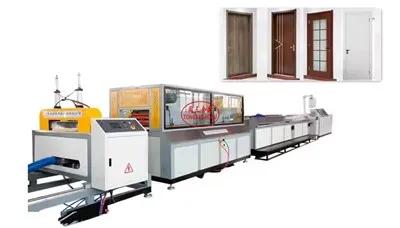
Our team of experts is always ready to provide technical support and training to our customers. We can help you choose the most suitable machine for your production requirements and assist you in setting up and operating the machine effectively.
PP Hollow Sheet Extrusion Line If you are in the market for a corrugated pipe machine, we encourage you to get in touch with us. Our sales team will be happy to discuss your specific needs and provide you with a detailed quotation. We believe that our machines and services can help you achieve high – quality corrugated pipe production and enhance your business competitiveness.
References
- Smith, J. (2018). Plastic Pipe Extrusion Technology. London: Elsevier.
- Brown, A. (2019). Corrugated Pipe Manufacturing: Principles and Practices. New York: Wiley.
- Johnson, R. (2020). Advances in Corrugated Pipe Production Machinery. Berlin: Springer.
Qingdao Tongsanhegu Plastic Machinery Manufacturing Co., Ltd.
With abundant experience, we are one of the most reliable corrugated pipe machine manufacturers and suppliers in China. We warmly welcome you to buy durable corrugated pipe machine for sale here from our factory. Quality products and reasonable price are available.
Address: West of Xixinzhi Village, Sanlihe District Jiaozhou, Qingdao City, Shandong Province, China
E-mail: info@tongsanhegu.com
WebSite: https://www.tongsanhegumachine.com/
