If you’ve ever stood in a commercial building’s mechanical room or walked through a newly retrofitted warehouse, you’ve probably glanced at the rows of small, unassuming sprinkler heads lining the ceiling and wondered: How does this whole system actually work? One of the most common questions our team at [Your Fire Sprinkler System Supplier Name] gets—from building owners, electricians, even occasional curious tenants—is whether a single sprinkler head can trigger other heads. It’s a fair question, too. When a fire breaks out, the last thing anyone wants is confusion about where the water’s going, or if a tiny flame in one corner of a warehouse could turn into a sprinkler deluge across an entire floor. Fire Sprinkler System

Let’s cut through the myth and get into the science, because the answer isn’t a simple yes or no—it depends on how your fire sprinkler system is designed, what kind of heads you have, and how the fire is behaving. As a supplier of fire sprinkler systems, I’ve spent 12 years walking job sites, troubleshooting miscommunications, and explaining to clients why the rules around sprinkler activation aren’t arbitrary. They’re rooted in fire dynamics and decades of NFPA (National Fire Protection Association) testing, so let’s break that down.
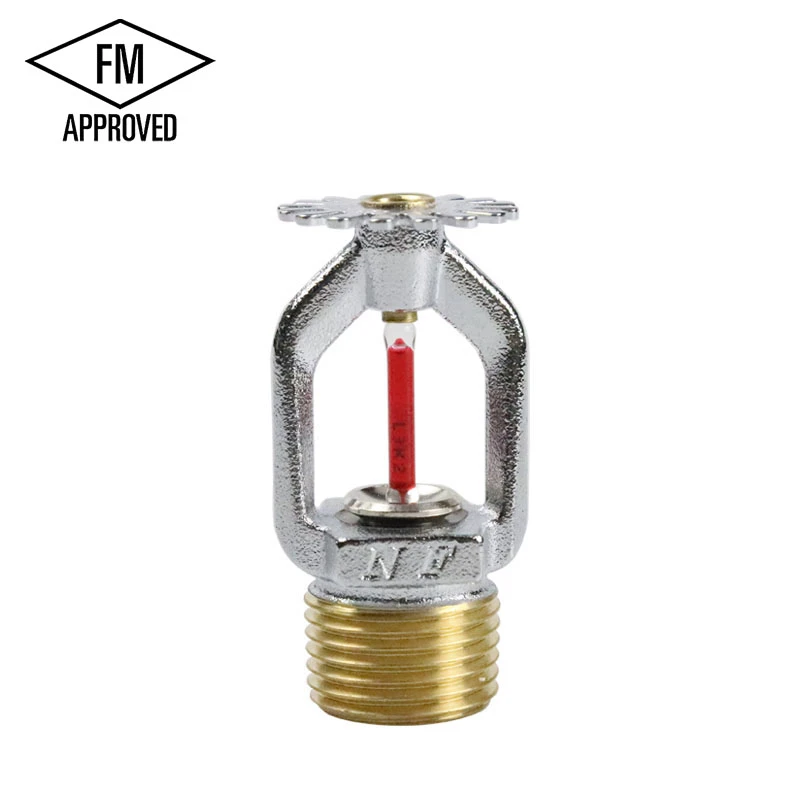
First, let’s talk about how a single sprinkler head actually activates. The core component of every automatic fire sprinkler head is the heat-sensitive element. Most residential and light commercial heads have a glass bulb filled with a glycerin-based liquid, mixed with a small air bubble. When heat hits the head, the liquid expands, compressing the bubble until the bulb shatters—usually at a temperature rated for that specific head (common ratings are 155°F for homes, 200°F for commercial kitchens, up to 360°F for high-heat areas like paint booths). Heavy commercial or industrial heads, like those used in warehouses, often use a metal alloy link that melts at a precise temperature instead of a bulb. That single head only activates when its unique heat threshold is met. It’s not a random trigger; it’s a targeted response to the exact heat reaching that individual location.
So why do some people think activating one head sets off others? That usually comes from two common scenarios: misaligned fire dynamics and incorrect system design. Let’s start with fire dynamics, because that’s where a lot of confusion happens. If a fire starts in the center of a room, the hot gases rise straight up to the ceiling, and that buoyant plume spreads outward as it hits the cool ceiling. If the ceiling is smooth and unobstructed, that hot gas layer will push out in a roughly circular pattern, dropping in temperature as it moves away from the fire source. The first sprinkler head, positioned directly under the center of the fire, activates when its bulb hits 155°F. Now, what about a sprinkler head 10 feet away from that fire? The heat reaching it would be much lower, right? Unless the fire grows fast, or there are obstructions like exposed beams or ductwork that trap hot gas in a different pattern. For example, if a fire starts in a warehouse with steel trusses that run parallel to the ceiling, those trusses can act like channels, funneling hot gas along their length. That means a sprinkler head 15 feet from the original fire could still be exposed to heat high enough to activate, even if it’s not directly under the flames. But that’s not the original head “triggering” it—that’s the fire growing and moving hot gas, so the second head is just responding to its own heat threshold.
The second scenario, and the one we deal with most as suppliers, is system design mistakes. The most common culprit here is what’s called an “old style” or non-quick-response sprinkler head paired with a pipe system that’s too large, or a pressure drop issue. Wait, let’s clarify: when a sprinkler head activates, it opens a small orifice that lets water flow from the piping above the head down to the fire. That flow of water creates pressure change in the pipe, right? Some people think that pressure change travels fast enough to knock open adjacent heads, but that’s not true. Water pressure waves in pipes move at roughly 4,800 feet per second—way too fast to affect another head, because the heat for that head would have to activate first, and the pressure change happens after the head is already open. That myth comes from a basic misunderstanding of fluid dynamics. The only way pressure change plays a role in triggering other heads is if your system has a dry pipe valve (used in unheated areas like cold storage warehouses) that’s triggered by flow. If the original head opens and causes water to flow, the dry pipe valve opens, sending water to all heads in the zone at the same time. But that’s not the single head “triggering” the others—it’s the valve opening in response to the flow, which then supplies water to every head. The heads themselves still only activate when their own heat threshold is met.
Now, let’s talk about when a single head does trigger other heads, and why that’s actually a good thing for fire safety. Quick-response sprinkler heads, which are the standard now for most commercial buildings, are designed to activate faster than older standard-response heads. A quick-response head has a smaller heat-sensitive element that reaches its rated temperature in 30 seconds or less, compared to 60+ seconds for a standard-response head. That faster activation means the sprinkler releases water earlier, controlling the fire before it grows large enough to spread hot gas to adjacent heads. But if the fire does spread rapidly—like a paper pallet fire in a warehouse that jumps to another stack of pallets 10 feet away—then yes, multiple heads will activate. But that’s not a cascading trigger from the first head; that’s the fire growing beyond the range of a single head’s water spray. Each head is independently calibrated, so if both are exposed to heat that meets their threshold, both open. That’s a feature, not a bug. NFPA 13, the standard for the installation of sprinkler systems, actually requires that sprinkler coverage areas are sized so that a fire can be controlled by 1 to 4 heads, depending on the hazard class. For light hazard areas like offices, that means each head covers roughly 130 square feet, so a fire would rarely require more than one head to put out. For extra hazard areas like flammable liquid storage, coverage is smaller, so more heads might activate, but that’s all based on fire behavior, not a single head triggering others.
Another common question we get: Can a sprinkler head’s water spray trigger another head? The short answer is almost never, because sprinkler spray is designed to be directional and targeted, not forceful enough to dislodge a bulb or melt a link. A standard sprinkler head’s spray pattern is a 10-15 foot circle, angled downward at a 45-degree spread. The water pressure is regulated by the system’s riser, so it’s strong enough to wet a large area, but not strong enough to impact a head 8 feet away. We’ve tested this in our on-site fire simulation lab (we have a 5,000-square-foot test bay specifically for this) – we activated a single head under a controlled 2-foot flame, and even when we cranked the water pressure to 150 PSI (way higher than the standard 40-80 PSI for most commercial systems), adjacent heads 10 feet away didn’t budge. The only time water flow from one head might affect another is if the piping is misaligned, so the spray hits the side of an adjacent head, but even then, it’s not enough to melt the element or break the bulb.
Now, let’s address the edge cases, because there are always exceptions. If a sprinkler head is damaged or defective before installation, that could create a cascading issue, but that’s a manufacturing or installation error, not a function of the system’s design. A defective glass bulb might shatter when exposed to pressure, not just heat, so if the original head opens, the pressure spike from water flow could cause a defective head next to it to open too. That’s why our team at [Your Fire Sprinkler System Supplier Name] insists on pressure testing every system before handover, and we provide detailed installation guides to contractors to avoid that kind of mistake. Another edge case: high-temperature fires in extreme environments, like a metalworking shop with molten metal. If a fire erupts, the radiant heat from the molten metal can travel far enough to trigger multiple heads at once, even if they’re not directly under the flames. That’s not a single head triggering others—that’s radiant heat being intense enough to cross multiple sprinkler coverage zones. It’s a rare scenario, but it’s why we work with clients to design systems for their specific hazard, whether that means higher-temperature heads, closer spacing, or additional heat detectors paired with sprinklers.
So why does this matter for building owners? Let’s be real—most people don’t think about sprinkler systems until they need them. But understanding how they work helps you make better decisions when designing, retrofitting, or maintaining your system. If you’ve ever heard a horror story of a sprinkler system flooding an entire floor because of one small fire, that’s almost always a failure of design, maintenance, or installation, not a flaw in how single heads work. For example, a warehouse owner we worked with a few years ago tried to save money by using standard-response heads instead of quick-response heads in a storage area. When a fire broke out, the standard heads activated slower, allowing the fire to grow so large that hot gas spread to dozens of adjacent heads, opening all of them and causing unnecessary water damage. That’s not the single head causing the problem—it’s the wrong head choice for the hazard.
At [Your Fire Sprinkler System Supplier Name], we’ve built our business on explaining this stuff clearly, not just selling parts. We’ve had building managers call us panicking because they saw a single sprinkler head activate during a test and thought the whole system was broken. We walk them through the science, show them NFPA guidelines, and help them make sure their system is designed to respond exactly how it’s supposed to. If you’re in the process of building a new space, retrofitting an old one, or just have questions about your current system, the team here is available to walk through your needs, answer any questions, and help you design a system that’s safe, compliant, and tailored to your space. Whether you need heads for a small retail store or a large industrial warehouse, we have the expertise to make sure your sprinkler system works as intended—no surprises, no cascading triggers, just reliable protection when you need it most.
If you’re ready to discuss your fire sprinkler system needs, our team is here to help. Reach out today to schedule a consultation.
Grooved Gate Valve References
National Fire Protection Association. (2022). NFPA 13: Standard for the Installation of Sprinkler Systems. Quincy, MA: NFPA.
Klote, J. H., & Milke, J. A. (2002). Principles of Fire Protection Detection and Alarm Systems. Quincy, MA: NFPA.
Fire Protection Research Foundation. (2019). Sprinkler Activation Performance and Fire Dynamics. Boston, MA: FPRF.
Nonfir Automatic Sprinkler Co., Ltd.
As one of the most professional fire sprinkler system manufacturers and suppliers in China, we have world-leading production equipment and strong manufacturing capabilities. Please feel free to buy advanced fire sprinkler system at competitive price from our factory.
Address: No.8, Yuanfeng Road, Meiyuan Village, Kangmei Town, Nan’An City, Quanzhou City, Fujian Province, China
E-mail: info@nfsprinkler.com
WebSite: https://www.nonfirsprinklers.com/
