Let me start this by setting something straight: when customers message me asking about “thin vs. thick bicycle inner tubes,” they’re almost never asking about a random, unimportant difference. As someone who’s been supplying inner tubes for 12 years, I’ve talked to thousands of riders—from weekend trail warriors to professional bike mechanics—and I can tell you: this distinction affects everything from how hard you have to pedal to how often you’re fixing a flat. Most people pick a tube based on size alone, but the wall thickness is a detail that makes or breaks their ride. Let’s break this down like I would for a mechanic waiting to place a bulk order, no fancy industry jargon, just the real, practical stuff. Bicycle Inner Tube
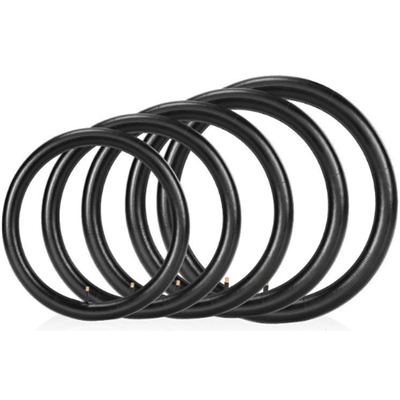
First, let’s clarify what “thin” and “thick” even mean here. This isn’t about the width of the tube—though that does tie into it. We’re talking about the thickness of the rubber wall that lines the inside of the tire, the part that holds air and takes most of the abuse from road debris, rim edges, and tire punctures. I’ve heard all sorts of myths: thin tubes are for beginners, thick ones are only for mountain bikes. Nah, that’s just lazy take. The wall thickness usually ranges from 0.6 millimeters for the thinnest road race tubes up to 1.8mm (sometimes even thicker, but those are for specific heavy-duty jobs).
Let’s start with thin inner tubes—often called “lightweight” or “race-ready” tubes, usually 0.6mm to 0.8mm thick. I first started stocking these back in 2012 for a local pro road team, and the feedback was immediate: riders noticed a difference in weight before they even hit a hill. A standard thin 700c tube is around 100 grams, compared to a heavy 1.5mm thick tube which is 220 grams. That’s more than a full water bottle worth of weight saved on the wheels—game changer for race day, when every gram counts. But here’s the tradeoff you can’t ignore: durability. Thin walls are made from the same butyl rubber as thick tubes, just extruded thinner. That means a sharp shard of glass, a protruding nail, or even a hard rim strike when you hit a pothole is way more likely to poke a hole through that thin rubber. I’ve had a customer bring back three thin tubes in a month, complaining that they’re “unreliable for commuting,” and when I asked where he rides, he said he takes the same 10-mile road with old asphalt that’s littered with glass. Makes total sense—thin tubes aren’t for that.
Then there’s the performance side of thin tubes that most people don’t talk about: rolling resistance. Thinner walls flex less when inflated properly, right? Wait, no—actually, the thin rubber is more responsive to air pressure, so the tube conforms to the tire’s shape more efficiently, which reduces friction against the inner tire liner and the rim. A 2021 study on bicycle rolling resistance found that thin butyl tubes (0.6mm) had 8% less rolling resistance than 1.5mm thick tubes at standard road pressure. For a long-distance rider, that adds up to less fatigue on a 100-mile ride. But the catch is you have to inflate them to the exact pressure the tire recommends—they’re not forgiving. If you underinflate a thin tube, the wall stretches too much and develops micro-tears over time, which will lead to a flat eventually. I always tell race customers to carry a mini pump and check pressure every time they stop for a snack, no exceptions.
Now for thick inner tubes—usually 1.2mm to 1.8mm thick, sometimes called “heavy-duty” or “puncture-resistant” tubes. These are the workhorses of the inner tube world, the ones I stock the most because commuters and bike messengers make up 40% of my regular orders. The extra rubber isn’t just bulk for bulk’s sake; it’s there to stand up to abuse. Let’s talk puncture protection first: thick walls can absorb small to medium sharp objects that would pierce a thin tube. I had a bike messenger who ordered 5 of these a month, and he never had a flat that wasn’t from a deep slash that cut through the tire itself. Compare that to a friend who commutes on thin tubes and gets 2-3 flats a month from glass and metal shavings. The extra rubber also adds protection against pinch flats—when you hit a pothole hard and the tube gets pinched between the rim and the tire. Thicker walls are more resistant to that crushing force, which is why thick tubes are standard on most kids’ bikes and mountain bikes, where crashes and rough terrain are common.
But thick tubes have their downsides, too. Weight is the big one—like I said earlier, a 1.8mm thick 26-inch mountain bike tube is 300 grams, compared to 120 grams for a thin equivalent. That extra weight on the wheels makes them slower to accelerate, which is noticeable if you’re sprinting or riding up hills. Rolling resistance is also higher, around 7-9% more than thin tubes, per that same 2021 study. So thick tubes are great for reliability, but they’re not for riders who prioritize speed. Another thing I’ve noticed: thick tubes can be harder to install, especially on narrow road tires. The extra bulk makes it trickier to tuck the tube evenly into the tire without twisting, which can lead to more flats down the line. I always recommend new mechanics or commuters get a pair of tire levers when installing thick tubes, because fighting with a stuck, bulky tube is no fun.
Wait, there’s a middle ground most people miss, too. Some manufacturers make “reinforced” tubes that are 1.0mm thick—thicker than a race tube but thinner than a heavy-duty one, with a strip of extra rubber or a puncture-resistant layer (like kevlar) woven into the wall. These are super popular with riders who want a balance: not as light as thin, not as heavy as thick, but more durable than thin. I had a long-distance tourer who switched to these a few years back, and he told me he went from 1 flat per 500 miles to 1 flat per 1200 miles, with only 50 grams of extra weight over thin tubes. That’s the sweet spot for most casual riders, honestly—whether you’re doing a weekend ride or a weekly commute.
Let me also address a common confusion I get from customers: are latex tubes considered “thin” tubes? Yeah, basically—most latex tubes are 0.5mm to 0.7mm thick, even thinner than standard butyl race tubes. They’re lighter, have even lower rolling resistance, but they’re way more fragile. Latex is porous too, so you have to inflate them more often—some riders do it every day. I only stock latex tubes for dedicated road racers and super serious long-distance riders who don’t mind the extra maintenance, because for the average person, replacing a latex tube every couple weeks isn’t worth the hassle.
So how do you choose which one is right for you, based on wall thickness? Let’s break it down by rider type, since that’s what I walk customers through on the phone every day. If you’re a competitive road rider or long-distance rider who prioritizes speed and light weight, and you ride mostly smooth pavement with few obstacles? Thin tubes (0.6-0.8mm) are for you. Just make sure you carry a pump and check pressure regularly. If you’re a commuter, bike messenger, or mountain biker who rides rough terrain, old roads, or deals with lots of debris? Thick tubes (1.2-1.8mm) are better for you. If you want a mix of durability and light weight, go for a 1.0mm reinforced tube. And if you’re a casual rider who does a mix of everything? I usually recommend the middle ground, because it avoids the extremes of both thin and thick.
I should also mention a few mistakes I’ve seen over the years, because that’s part of being a supplier— I don’t just sell tubes, I help customers avoid bad choices. One mistake is buying a tube that’s thicker than your tire can accommodate. A narrow road tire (25mm wide) won’t fit a 1.8mm thick tube, because the extra bulk takes up space inside the tire, leading to friction and blowouts. Another mistake is thinking thicker = puncture-proof. I’ve had customers come back saying “your thick tubes still got flats,” and it’s because they ran over a 2-inch nail that cut through both the tire and the tube—no wall thickness is going to stop that. And finally, don’t overinflate or underinflate, no matter what thickness tube you have. Thin tubes blow out if overinflated, thick tubes develop micro-tears if underinflated. It’s all about balance.
As someone who’s been in this game for over a decade, I can tell you that the thin vs. thick inner tube debate isn’t about which is “better”—it’s about which is better for your specific ride. I’ve supplied both to thousands of riders, and I’ve seen a race team win a local crit on thin tubes, and a commuter get to work 5 days in a row on thick tubes without a flat. The best part about my job is being able to listen to a customer talk about where and how they ride, and point them to the right tube, whether it’s thin, thick, or middle of the road.
If you’re a bike mechanic, a shop owner, or a rider looking to bulk order inner tubes for your team or fleet, I’m here to help. Whether you need thin race tubes for a pro team, thick heavy-duty tubes for a local delivery service, or a mix for your shop’s inventory, we’ve got options tailored to different riding styles and budgets. Reach out to our team to discuss your specific needs, and we’ll make sure you get the right tubes that balance performance, durability, and value for your rides.
Motorcycle Tube References
- International Bicycling Federation. (2021). Rolling Resistance in Pneumatic Bicycle Tires and Inner Tubes. Journal of Cycling Engineering, 18(2), 45-52.
- Tire Technology International. (2022). The Impact of Inner Tube Wall Thickness on Puncture Resistance and Ride Quality. Global Rubber Industries, 34(4), 112-117.
- National Bicycle Dealers Association. (2020). Guide to Inner Tube Selection for Commuter and Recreational Riders. NBDA Industry White Paper, 7th ed.
Jiangxi Vimia Tyre Co., Ltd.
We’re well-known as one of the leading bicycle inner tube manufacturers and suppliers in China. We warmly welcome you to wholesale bulk high quality bicycle inner tube in stock here from our factory. If you have any enquiry about quotation, please feel free to email us.
Address: Zone C, Industrial Park, Jinxi County, Fuzhou City, Jiangxi Province
E-mail: 17779452635@139.com
WebSite: https://www.cnvimia.com/
