If you’ve ever walked past a busy garment factory, a home textiles warehouse, or even a craft supply shop, you’ve probably touched solid polyester staple fiber (PSF) without giving it a second thought. This versatile material is the backbone of everything from cozy sweatshirt lining to plush upholstery, from stuffed toys to non-woven geotextiles that protect roads and farmland. As a solid PSF supplier, I get asked this question all the time: “What actually makes high-quality solid polyester staple fiber stand out? How do I tell the difference between a batch that will hold up for years and one that will pill, shed, or fall apart after a few washes?” Solid Polyester Staple Fiber
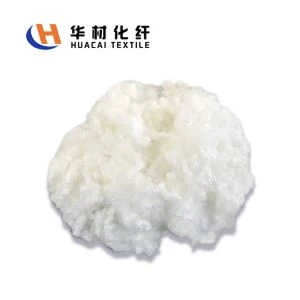
It’s not a simple answer—quality in solid PSF isn’t just about being “strong” or “white.” It’s a combination of interlocking standards: molecular structure, physical properties, chemical consistency, and even how the fiber behaves in real-world use. Over the 12 years I’ve worked in this business, I’ve seen too many buyers cut corners by choosing cheaper fiber that costs less upfront but leads to returns, unhappy customers, and wasted time. Today, I want to pull back the curtain on what I (and every reputable solid PSF supplier) uses as our quality standard—why each part matters, and what you should look for when vetting a provider.
Let’s start with the foundation of PSF: the polymer it’s made from. Solid PSF isn’t the recycled fiber you might think of for lower-cost applications; it’s made from virgin polyethylene terephthalate (PET) resin, right? Well, not all virgin PET is the same. The molecular weight of the resin is non-negotiable here. Think of molecular weight like the strength of a thread in the polymer chain: higher molecular weight means longer, more tightly bonded chains, which translate to a stronger, more durable fiber.
Most reputable solid PSF suppliers target an intrinsic viscosity (IV) of 0.62 to 0.68 dL/g for standard-grade fiber. Wait, what’s intrinsic viscosity? It’s a test that measures how easily the polymer flows when melted, which directly ties to molecular weight. If the IV is too low (below 0.60 dL/g), the polymer chains are short and weak. You’ll end up with a fiber that breaks easily during spinning, frays when woven or knitted, and pills like crazy after the first wash. I’ve had a customer come to me three years ago with a batch of kids’ sleepwear that pilled so bad, they had to throw out 20% of their inventory—it turned out their old supplier used resin with an IV of 0.58, which is too low for apparel.
On the flip side, an IV above 0.68 is overkill for most applications. It makes the polymer too stiff to spin evenly, leading to fiber that’s brittle and prone to snapping. That’s another mistake I see new buyers make: they think “higher is better,” but in fiber manufacturing, consistency is key. We test every batch of virgin resin we receive with a lab viscometer to lock in that 0.62–0.68 range. No exceptions.
Once we have the right resin, the next step is fiber geometry. Solid PSF isn’t just a long, thin string—its diameter and crimp (the tiny wavy patterns along its length) determine almost everything about how it feels and performs.
Fineness, measured in denier, is the weight per 9,000 meters of fiber, and it’s tailored to use case. For apparel like sweatshirts or t-shirts, we use 1.2 to 1.5 denier fiber—it’s soft, breathable, and drapes well. For home textiles like mattress pads or upholstery, we go a bit thicker: 1.5 to 2.0 denier, which is more durable and resists compression. For non-woven applications like cleaning wipes or geotextiles, we might go up to 3.0 denier or higher for extra strength.
The crimp is just as important. Most solid PSF has either helical crimp (for bulk and softness) or compression crimp (for rigidity in applications like padding). The crimp rate—how many crimps per inch—should be consistent within 5% of the target. If crimp is too low, the fiber is flat and lacks bulk; if it’s too high, it tangles during processing, leading to uneven fabric and higher scrap rates. I test crimped fiber under a microscope every time a new production run starts—one time, a machine error made our crimp rate 12% too high, so we scrapped the first 5,000 kg instead of sending it to customers. That’s the kind of call that builds trust: short-term cost vs. long-term reputation.
Then there’s the all-important color and brightness. Solid PSF is used for bright white garments, soft pastel bedding, and even neon activewear, so color consistency is non-negotiable. We use RAL color codes and a spectrophotometer to match every customer’s exact shade, down to the difference between “pure white” and “warm white.” Brightness, measured by the L* value on the CIELAB color scale, should be at least 82 for standard white fiber. If brightness is too low, the fiber will look gray or yellowish, even after one wash—another common issue with cheap fiber made from lower-grade resin. I once worked with a custom furniture maker who switched to a no-name solid PSF supplier because they underquoted, and their couch cushions came out looking dull and yellow. It cost them $50,000 in returned orders. We matched their shade exactly, kept our prices fair, and they’ve been with us for 10 years.
Strength is another core quality marker for solid PSF. We measure tenacity, which is the force needed to break a fiber, in grams per denier. For standard apparel-grade fiber, we target 4.5 to 5.0 grams per denier. For industrial-grade fiber like rope or geotextiles, it’s up to 5.5 grams per denier. Tenacity that’s too low means the fiber will snap during knitting, weaving, or cutting, leading to waste and higher production costs. Tenacity that’s too high makes the fiber stiff and uncomfortable—bad for apparel, great for heavy-duty applications. We test tenacity with an automated tensile tester on every batch, pulling individual fibers until they break to confirm we hit the mark.
Elongation at break is tied closely to tenacity. That’s how much the fiber stretches before it breaks. Apparel-grade fiber needs an elongation of 30 to 40%—it should stretch with movement, not snap when you bend an elbow. Industrial fiber might have a lower elongation (20 to 30%) for rigidity. If elongation is too high, the fiber is too stretchy and loses shape after use; too low, it’s brittle and prone to tearing. I can’t tell you how many times a customer has complained that their knitted sweaters stretch out after a few wears—nine times out of 10, it’s because the PSF had elongation above 45%, so it didn’t bounce back.
Pilling resistance is a big one for end-users, and it’s something we test in our lab too. Pilling is those tiny fuzz balls that form on fabric after friction (rubbing against furniture, washing, wearing). We use the Martindale abrasion test, which rubs the fabric with a standardized fabric for a set number of cycles, then rates pilling on a scale of 1 to 5 (5 is no pilling). For premium apparel, we aim for a rating of 4 or higher. For budget apparel, 3 is acceptable, but we make sure every customer knows what they’re getting—no overpromising “pill-free” fiber when it’s only mid-grade.
Moisture regain might seem like a small detail, but it’s critical for processing. Polyester is hydrophobic, meaning it repels water, but the residual moisture in the fiber can cause problems during spinning and dyeing. We keep moisture regain below 0.4% for all our solid PSF. If moisture is too high, the fiber will “steam” during extrusion, leading to bubbles in the final product, uneven dyeing, and even broken machines. I once had a production line go down for 8 hours because a truck driver delayed delivery of resin, and the fiber absorbed too much humidity from rain. We had to re-dry all the material at a cost of $1,200, but we never shipped wet fiber to customers.
Now, it’s not just about lab numbers—real-world performance matters too. A great solid PSF supplier will test their fiber in the actual applications customers use it for, not just in a lab. For example, a customer making non-woven face masks will care about how the fiber holds up to high-temperature sterilization, not just tenacity. A customer making winter coats will care about thermal insulation, which ties directly to fiber bulk.
I also think transparency is part of quality. If a supplier won’t share their test results, IV numbers, or process details, that’s a red flag. We provide our customers with a Certificate of Analysis (COA) for every batch, listing every quality metric: IV, denier, crimp rate, tenacity, elongation, brightness, pilling resistance. No hidden data, no fine print.
As a solid PSF supplier, our job isn’t just to sell fiber—it’s to help our customers succeed. That means knowing that a small batch of high-quality fiber that works well for their application is better than a large batch of cheap fiber that causes problems. I’ve built my business on that approach: when I started, I turned down a big order from a fast-fashion brand that wanted 50,000 kg of low-IV fiber for $0.20 per kg. The price was way below our cost for consistent quality, and I knew that fiber would pill and get them in trouble. I referred them to a reputable supplier that specialized in budget fiber, and two years later, they came back to us for their premium line, saying they’d learned their lesson.
At the end of the day, the quality standard for solid polyester staple fiber is a balance between science and practicality. It’s not about chasing the highest numbers just for the sake of it—it’s about matching the right properties to the right use case, staying consistent, and being transparent about what you’re delivering. If you’re a manufacturer working with PSF, don’t settle for “good enough.” Ask for the COA, ask for test results, and work with a supplier that stands behind their product.

If you’re tired of dealing with PSF that pills, frays, or doesn’t hold up, reach out to our team to discuss your specific needs. We can share batch test reports, help you pick the right fiber for your product, and deliver consistent quality every time. Let’s build something that lasts, together.
Polyester Tow References
- ASTM D4603-19, Standard Test Method for Intrinsic Viscosity of Poly(ethylene Terephthalate) (PET) Resin
- ISO 2062:2019, Textiles — Yarns from packages — Determination of single-end breaking force and elongation at break using constant rate of extension (CRE) tester
- ASTM D4970-21, Standard Test Method for Pilling Resistance of Textile Fabrics (Martindale Abrasion Tester Method)
- Textile Institute. (2019). Polyester Staple Fiber: Production, Properties, and Applications. Textile Progress, 51(3), 187-242.
Huacai Group
Huacai Group is well-known as one of the leading solid polyester staple fiber manufacturers and suppliers in China, featured by quality products and good service. Please feel free to buy bulk solid polyester staple fiber at competitive price from our factory.
Address: No.188 Zhenyang Road, Qingyang Town, Jiangyin City, Jiangsu Province, China
E-mail: sales@huacaifiber.com
WebSite: https://www.huacaifiber.com/
