Hey there, if you’re running a CO₂ recovery device supply biz like me, you already know this: tech doesn’t stay static—especially when it’s all about capturing carbon that’s supposed to be reclaimed, not wasted. A lot of my recent messages have been from small to mid-sized plant managers, or even folks who already own one of my CO₂ recovery units, asking how to level their gear up without ripping out the whole thing and starting over. Who’s got time (or cash) for a full overhaul when your current unit’s just hitting its stride? CO₂ Recovery Device

Let’s cut the fluff—this isn’t some corporate whitepaper full of jargon. I’m gonna walk you through real upgrades I’ve helped clients pull off in the last 6 months, ones that actually made their capture rates go up, energy bills go down, and didn’t take forever to install. No guesswork here—all of this is stuff that’s worked for breweries, food processing plants, and even a small biogas farm that hit me up last month.
First off, let’s talk about the biggest bang for your buck: upgrading the adsorption core. That’s the part of your CO₂ recovery device where the magic happens—where waste gas hits the material that grabs the CO₂ and separates it from the rest of the mix. Old-school adsorbents? They’re often regular zeolites or activated carbon that get clogged fast, or only work in a narrow temperature range. A lot of people don’t know you can swap out the adsorbent bed (not the whole core unit) for something called a metal-organic framework, or MOF—wait, but not the fancy, super-expensive lab kind. I’ve tested mid-grade MOFs with a pore size tuned for industrial flue gas, and clients who did this saw a 12-18% jump in pure CO₂ output. One craft brewery I supply to was burning 3% of the beer fermentation gas before this—now they’re recapturing almost all of it, enough to sell to a local soda maker.
Here’s the pro tip: if your adsorbent bed is already modular (which most mid-range recovery devices are these days), you don’t need to replace the entire vessel. Just yank out the old granules, screen out the fines, and dump in the new MOF pellets. The whole job takes 2-3 days, no downtime for the rest of your plant. I even had a client who scheduled it during their annual cleaning shutdown—perfect. If your bed’s non-modular, no sweat—most suppliers (hey, that’s me) can modify your vessel on-site to make it modular, or ship a pre-packed bed insert that slips right in.
Next up: ditch the old pressure swing adsorption (PSA) control system. Wait, PSA is the standard process for most recovery devices—you push gas through the adsorbent at high pressure, then drop it low to release the CO₂. The problem? Old controllers run on basic timers, not real-time data. I ran into a pasta maker last quarter whose unit was wasting 10% of the CO₂ because the timer would let gas bleed during the desorption step, even when the bed wasn’t fully stripped. The fix? Swapping the analog timer for a smart IoT sensor suite.
Wait, don’t panic about IoT—this isn’t hooking it up to your home Wi-Fi to watch cat videos. We’re talking about small, low-power pressure and temperature sensors that tap into your unit’s existing pneumatic valves. The new controller adjusts the pressure and flow on the fly, instead of sticking to a fixed schedule. For that pasta guy, it cut their energy use by 9% because they weren’t pumping extra gas through a stripped bed, and their CO₂ purity went from 92% to 97%—big deal because pure CO₂ gets better resale value. The whole system pairs with a basic dashboard that shows you live capture rates, energy use, and even sends a text alert if something’s off. No need for a data scientist to figure it out—it’s super simple.
Another upgrade that’s flown under the radar: optimizing the heat integration system. A lot of recovery devices use steam or hot water to strip the CO₂ from the adsorbent, right? If your heat lines are running cold because of insulation gaps, or you’re wasting hot water that could be reused, that’s a hidden cost. I’ve had clients add reflective foil insulation to their desorption lines (the ones that carry the hot stuff to the adsorbent bed) and a small heat exchanger that captures the leftover warm water from the desorption step and uses it to pre-heat incoming feed gas. One of my beer clients cut their steam use by 15% with this, which is huge when steam is one of the biggest utility bills for food and beverage plants.
Wait, here’s a mistake I see all the time: people upgrade the core and controls but skip the post-capture purification. If you’re selling CO₂, you can’t have even tiny amounts of contaminants like nitrogen or moisture. Old purification systems use basic dryers that get saturated fast, so you have to replace them weekly, or use a single-stage filter that doesn’t catch everything. The fix? Add a two-stage polishing filter, plus a small pressure swing purification unit (you can get a mini one that slots into your existing line) that strips out the last 1% of impurities. For a biogas client I worked with, this let them sell their recaptured CO₂ to a bottled water company, which is 3x the price they were getting from selling it as low-grade industrial CO₂. No more dumping excess because it didn’t meet specs—they’re making extra cash now.
But hold up—before you run off ordering parts, do a quick audit of your current unit. Too many people skip this and waste money on upgrades they don’t need. Last year, a concrete plant hit me up saying their unit was “broken” and needed a full overhaul. I went onsite, did a 2-hour walkthrough, and realized their problem was a clogged inlet filter—not the adsorbent or controls. Replacing that $500 filter fixed everything, and they saved $10k on upgrades they were about to buy. So here’s my step-by-step pre-upgrade checklist, no cost, just 2 hours of your time:
- Pull the latest 3 months of data from your unit: Look for times when capture rates dropped, or energy spiked. That’ll tell you what’s actually wrong, not just what you think is wrong.
- Check your adsorbent: Pull a small sample. If it feels damp, or has a lot of black gunk on it, that’s contamination—so the adsorbent needs replacing, not necessarily a different upgrade. If it looks dry and has minimal fines, it’s probably fine for a tune-up.
- Inspect all lines and valves: Check for leaks (use soapy water—if it bubbles, you’ve got a leak) and make sure valves are opening and closing smoothly. A small leak in the desorption line can kill your purity faster than anything else.
Another big thing I tell people: don’t skip training. I’ve seen clients spend $50k on upgrades, then have their operators break the smart controller because they don’t know how to use it. We offer free 1-hour remote training for any upgrade we sell, and on-site training for bigger jobs. It’s not a hassle, and it keeps your unit running at peak performance.
Wait, what if your unit is really old—like 10+ years old? Should you upgrade or replace? I’d say 9 times out of 10, upgrading makes more sense. A full replacement can cost 2-3x more than a good tune-up, and most old units have a lot of life left if you swap out the wear parts. I had a bread factory with a 12-year-old unit that was capturing 60% of its fermentation gas. We upgraded the adsorbent, the controls, and the purification system for $18k, and now it captures 94% of the gas. If they’d replaced it, that would’ve been $60k minimum. The payback was 8 months.
But if your unit is over 15 years old and has had multiple major repairs, maybe a full replacement is worth it. But even then, we can customize a new unit to fit your existing space, so you don’t have to remodel your whole plant to fit it. No more dealing with construction delays that shut down your production line.
Here’s the part I always leave out of other “upgrade tips” posts: think about future-proofing. When you upgrade, pick parts that are compatible with upcoming green regulations. A lot of states (and countries) are starting to offer tax credits for high-purity CO₂ that’s used for carbon sequestration or industrial reuse. The smart IoT controller I mentioned earlier logs all your capture data, which you can use to prove your emission cuts for those tax credits. That’s free money on top of whatever you save on energy or make selling better CO₂.
I know, it’s easy to get overwhelmed—there’s a million different parts, numbers, and jargon that makes your head spin. That’s why I always tell clients to hit us up for a quick chat, no obligation. We’ll walk through your current unit, go over what upgrades make sense for your budget and goals, and even give you a rough quote same day. No sales pitch, just real advice from someone who’s been doing this for years, not some corporate guy who’s never touched a CO₂ recovery unit.
At the end of the day, upgrading doesn’t have to be hard or expensive. It’s about finding the weak spots in your existing unit and fixing them, instead of starting over. Whether you’re a small brewery that wants to cut gas bills, a food plant that wants to sell high-grade CO₂, or a farm that’s turning waste into cash, there’s an upgrade that fits your needs.
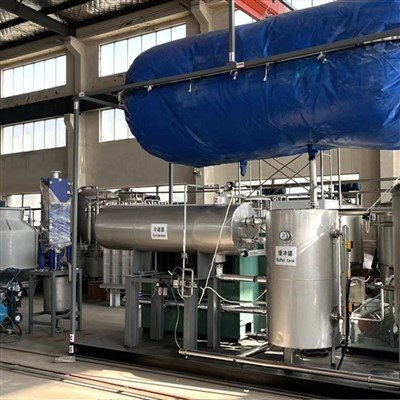
If you’re ready to stop wasting money on underperforming CO₂ recovery, hit us up to chat. We’ll work with your timeline and budget to figure out the best upgrades for your gear. No pressure, no fine print, just straight talk.
Compressor And Expander References:
- International Energy Agency. (2022). Industrial CO₂ Capture: Technology Trends and Cost Reduction Opportunities. IEA Publications.
- American Chemical Society. (2021). Metal-Organic Frameworks for Industrial CO₂ Adsorption: A Comparative Analysis of Commercial and Lab-Scale Materials. ACS Applied Materials & Interfaces.
- U.S. Environmental Protection Agency. (2023). Smart Sensor Integration for Industrial Process Optimization: Case Studies of Low-Carbon Retrofits. EPA Office of Air and Radiation.
Xinxiang Jiale Intelligent Equipment Co., Ltd.
As one of the most professional co₂ recovery device manufacturers and suppliers in China, we’re featured by quality products and good service. Please rest assured to buy durable co₂ recovery device for sale here from our factory. We also accept customized orders.
Address: No.3913, 9th Floor, Unit 3, East Commercial and Office Complex, Baolong City Plaza, Hongqi District, Xinxiang City, Henan Province, China
E-mail: cc2397410@gmail.com
WebSite: https://www.jiale-asu.com/
